Why Some Brands Connect and Others Are Forgotten

Discover why some brands build strong emotional connections while others fade away, through brand experiences and neuromarketing. People don’t remember brands. They remember how brands made them feel.In a world where every brand communicates, posts, and advertises nonstop, only a few manage to do something truly powerful: connect. The rest simply blend in… and disappear. This isn’t about logos, colors, or catchy slogans. The difference between a brand that stays and one that’s forgotten lies in experience, emotion, and how it activates the consumer’s mind. In this article, we explore why some brands connect while others are forgotten, and how brand experiences and neuromarketing play a decisive role. What Does It Mean for a Brand to Connect? A brand connects when it generates an emotional response, conscious or unconscious. It’s not just about recognition it’s about memory. To connect means: Being relevant Being memorable Being coherent Generating trust When a brand connects, it doesn’t need to explain itself too much.You simply feel it. The Brain Decides Before Logic Neuromarketing shows us that most decisions are not rational.The emotional brain acts first; logic comes later to justify the choice. How the Brain Processes a Brand Emotion → Attention Attention → Memory Memory → Decision Brands that fail to trigger emotion never reach memory.And what isn’t remembered, isn’t chosen. Why Some Brands Are Forgotten 1. They Don’t Offer a Clear Experience When everything feels generic, nothing stands out. 2. They Communicate Features, Not Feelings They talk about what they sell, not how they make people feel. 3. They Lack Consistency They say one thing and do another. The brain detects incoherence instantly. 4. They Don’t Create Memorable Stimuli Visuals, sounds, stories, or interactions with no emotional impact. The Role of Brand Experiences Brands that connect don’t just communicate they design experiences. A well-designed brand experience: Activates emotion Engages the senses Tells a story Invites participation From physical activations to digital or immersive experiences, experience turns a brand into something lived, not just seen. Neuromarketing: Connecting Beyond Words Neuromarketing helps brands understand: What captures attention What builds trust What gets remembered What gets ignored Brands that apply neuromarketing design messages, visuals, and experiences aligned with how the brain truly works not assumptions. Conclusion Connection isn’t about budget it’s about understanding.Brands that last are the ones that understand how people think, feel, and remember. Brands that intentionally design experiences and communicate through emotion, not just products. Today, connection is the real competitive advantage. Memorable brands are not improvised.At HYPER, we design brand experiences built to connect, activate emotion, and stay in people’s minds.
Por qué algunas marcas conectan y otras se olvidan
Descubre por qué algunas marcas logran conectar emocionalmente con las personas mientras otras pasan desapercibidas, desde la experiencia de marca y el neuromarketing. Las personas no recuerdan marcas recuerdan cómo las hicieron sentir en un mercado donde todos comunican, publican y venden, solo unas pocas marcas logran algo realmente valioso: conectar. El resto simplemente pasa… y se olvida. No se trata solo de logos, colores o slogans. La diferencia entre una marca que permanece y una que desaparece está en la experiencia, la emoción y la forma en que activa la mente del consumidor. En este artículo exploramos por qué algunas marcas conectan y otras no, y cómo el neuromarketing y las experiencias de marca juegan un papel clave en esa conexión. ¿Qué significa que una marca conecte? Una marca conecta cuando logra generar una respuesta emocional, consciente o inconsciente, en las personas. No es solo reconocimiento, es recordación. Conectar significa: Ser relevante Ser memorable Ser coherente Generar confianza Cuando una marca conecta, no necesita explicar tanto. Se siente. El cerebro decide antes que la lógica Desde el neuromarketing sabemos que la mayoría de las decisiones no son racionales. El cerebro emocional actúa primero; la razón llega después para justificar. Cómo procesa una marca el cerebro Emoción → Atención Atención → Memoria Memoria → Decisión Las marcas que no activan emoción no llegan a la memoria Y lo que no se recuerda, no se elige. Por qué algunas marcas se olvidan 1. No tienen una experiencia clara Si todo se siente genérico, nada destaca. 2. Comunican solo características Hablan de lo que venden, no de lo que hacen sentir. 3. Son inconsistentes Dicen una cosa, hacen otra. El cerebro detecta la incoherencia. 4. No generan estímulos memorables Visuales, sonidos, historias o interacciones sin impacto.. El rol de las experiencias de marca Las marcas que conectan no solo comunican, diseñan experiencias. Una experiencia de marca bien pensada: Activa emociones Involucra los sentidos Cuenta una historia Hace participar al usuario Desde una activación física hasta una experiencia digital o inmersiva, la experiencia convierte la marca en algo vivido, no solo visto. Neuromarketing: conectar con lo que no se dice El neuromarketing permite entender: Qué capta la atención Qué genera confianza Qué se recuerda Qué se ignora Las marcas que lo aplican diseñan mensajes, visuales y experiencias alineadas con cómo funciona realmente el cerebro, no con suposiciones. conclusión Conectar no es cuestión de presupuesto, es cuestión de entendimiento. Las marcas que perduran son las que comprenden cómo piensan, sienten y recuerdan las personas. Las que diseñan experiencias con intención y comunican desde la emoción, no solo desde el producto. Hoy, la conexión es la verdadera ventaja competitiva. Las marcas que se recuerdan no se improvisan.En HYPER diseñamos experiencias de marca pensadas para conectar, activar emociones y quedarse en la memoria.
Videos FOOH: How Brands Are Achieving Virality

Discover what FOOH videos are and how brands use 3D production and visual effects to create viral content on social media. Brands are no longer just competing for attention. They’re competing for impact. In a feed overloaded with ads, only content that surprises, breaks visual logic, and feels impossible can stop the scroll. That’s where FOOH (Fake Out Of Home) videos come in. These videos aren’t meant to exist in the real world they’re designed to take over social media. By combining high-end 3D production, hyper-realistic visual effects, and a strong creative idea, FOOH videos trigger an instant reaction: “Is this real?”. In this article, we explore what FOOH videos are, why they go viral, and how brands are using them as a high-impact digital advertising format. What Are FOOH Videos? FOOH (Fake Out Of Home) videos are audiovisual pieces created with 3D production and visual effects that simulate large-scale advertising actions in real urban environments even though they never physically happened. Their goal isn’t the street. It’s the feed: social media, Reels, TikTok, and digital campaigns designed to be shared. What Makes the FOOH Format Unique Realistic integration of 3D elements into real locations Recognizable urban settings Immediate “wow” effect Short, visually driven storytelling Designed specifically for virality Why Do FOOH Videos Go Viral? FOOH works because it understands how people consume content today. They Spark Conversation Comments do the amplification:“Is this real?” · “How did they make this?” What Brands Are Using FOOH Videos? Fashion & luxury: exaggerated, elegant, and memorable visuals Entertainment: launches that generate hype without over-explaining Technology: futuristic products showcased in spectacular ways Brands don’t use FOOH to explain. They use it to position themselves. Benefits of FOOH for Brands Increased organic reach High engagement rates Innovative and creative brand positioning More flexibility than real-world activations Global reach with no physical limitations How to Create an Effective FOOH Video FOOH is more than CGI it’s creative strategy. Key Elements A strong concept from the start High-quality, realistic 3D production3. Short duration (6–15 seconds)4 Mobile-first format5 Immediate visual impact conclusion FOOH videos aren’t a passing trend. They represent a new form of digital advertising, where creativity and visual perception matter more than physical presence. Brands that embrace this format aren’t just chasing virality they’re building memorability, conversation, and positioning. Can you imagine an impossible idea turned into viral content?At HYPER, we create FOOH videos and 3D content designed to stand out, surprise, and stay in people’s minds.
Interactive Experiences That Convert: The End of Passive Browsing
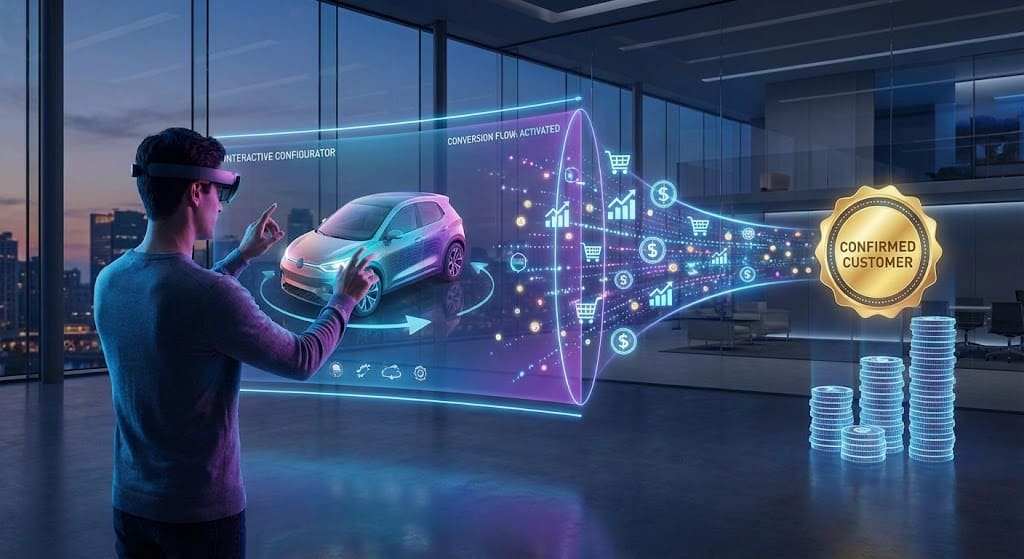
Interactive Experiences That Convert: The End of Passive Browsing Why is static content no longer enough? In a saturated digital ecosystem, attention is the scarcest asset. Interactive experiences that convert have shifted from being an «innovative luxury» to a strategic necessity. At Hyper Reality Company, we have proven that when the user stops being a spectator and becomes a protagonist, purchase intent skyrockets. Why does a 3D configurator sell more than a photo gallery? In this article, we analyze the psychology behind interactivity and how to apply it to maximize Return on Investment (ROI) for your platform. The Science of Interactive Conversion Interactive experiences work better because they target three fundamental psychological biases: 1. The Endowment Effect When a user interacts with a product virtually—rotating it, changing its color, placing it in their space via AR—their brain begins to develop a sense of ownership. It is much harder to «give up» something you feel already belongs to you. 2. Eliminating Decision Paralysis Interactive tools, such as smart quizzes or virtual try-ons, guide the user through the sales funnel, simplifying complex options and reducing friction at checkout. 3. Gamification and Dopamine Interacting is fun. By turning browsing into a playful experience, we increase dwell time on the site—a critical factor for both SEO and brand retention. Use Cases: From Interaction to Transaction 3D Product Configurators: Allowing customers to customize every detail reduces returns by 30% and increases confidence. Virtual Showrooms: Spaces where users navigate at their own pace, interacting with hotspots that offer information and direct purchase buttons. WebAR (Web-based Augmented Reality): Without needing to download apps, the user tests the product in their home, shortening the decision cycle from days to minutes. How to Optimize Your Interactive Assets for SEO To ensure these experiences not only convert but also rank on Google, at Hyper Reality Company we follow these rules: Lightweight Interactivity: Ensure that interaction scripts do not penalize Core Web Vitals (loading speed). Google Analytics Events: Measure every click within the experience to understand where conversion happens. Alt Text on 3D Models: Describe every interactive element (e.g., Interactive configurator by Hyper Reality Company for custom footwear). Mobile First: Interactivity must be tactile, fluid, and responsive on any mobile device. Conclusion In short, interactive experiences that convert work because they respect the active nature of human beings. At Hyper Reality Company, we design solutions where technology is not the end, but the means to create an unbreakable commercial connection. Do you want to transform your traffic into real customers? Schedule a strategic consultation and discover the potential of interactivity.
Marketing 7.0: La era de la mente y el consumidor aumentado
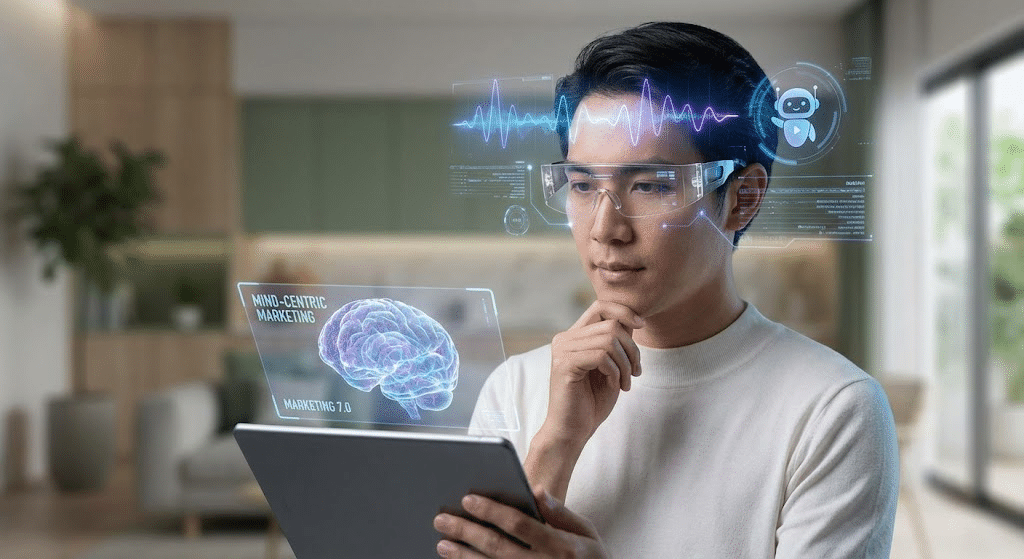
La era de la mente y el consumidor aumentado ¿Pensabas que el metaverso (Marketing 6.0) era la última frontera? Piénsalo de nuevo. Mientras el mundo apenas se adapta a la inmersión, el padre del marketing moderno, Philip Kotler, ya ha señalado el siguiente gran salto. El Marketing 7.0 ya no se trata solo de la tecnología que usamos, sino de cómo esa tecnología ha recableado el cerebro de nuestros clientes. Si el Marketing 5.0 era «Tecnología para la humanidad» y el 6.0 era «Inmersión», el Marketing 7.0 es «Inteligencia para la Mente». En este artículo, exploramos cómo dejar de obsesionarnos con los algoritmos para volver a entender lo más complejo del universo: la mente humana en la era de la IA. ¿Qué es exactamente el Marketing 7.0? El Marketing 7.0 se define como un enfoque «Mind-Centric» (Centrado en la Mente). Surge como respuesta a un problema crítico: la saturación de la automatización. Con tanta IA generando contenido y optimizando campañas, las marcas han perdido la capacidad de pensar y empatizar. El Marketing 7.0 propone usar la IA no solo para «hacer más rápido», sino para decodificar cómo piensa, siente y decide el nuevo consumidor. No es data-driven (impulsado por datos), es mind-driven (impulsado por la mente). El protagonista: El Consumidor Aumentado Para entender el 7.0, debes entender a quién le vendes. Tu cliente ya no es una persona «normal». Es un Humano Aumentado. Memoria externalizada: No recuerda datos, los busca en segundos. Decisión asistida: No elige solo; usa comparadores, reseñas de IA y asistentes virtuales. Filtro de autenticidad: Su cerebro ha evolucionado para ignorar inconscientemente el contenido generado por IA que carece de «alma». El reto para tu marca: ¿Cómo persuades a una mente que tiene un asistente digital filtrando tus anuncios? Los 3 Pilares del Marketing 7.0 1. De la «Personalización» a la «Predicción Empática» El Marketing 6.0 te permitía crear una tienda en el metaverso. El 7.0 analiza los micro-gestos de tu avatar y el tono de tu voz para entender tu estado de ánimo antes de que compres. No te muestra lo que buscaste ayer, sino lo que tu mente necesita hoy emocionalmente. 2. Creatividad Crítica vs. Creatividad Algorítmica Cualquiera puede pedirle un copy a ChatGPT. El valor en la era 7.0 está en el pensamiento crítico. Las marcas que ganarán no son las que mejor usen la IA, sino las que mejor planteen las preguntas estratégicas que la IA no puede formular. 3. Ética y Transparencia Radical En un mundo de deepfakes y realidades sintéticas, la verdad es el activo más caro. El Marketing 7.0 exige que la tecnología sea invisible pero la ética sea transparente. Si usas un influencer virtual, dilo. Si usas IA, úsala para servir, no para manipular. Cómo Hyper Reality Company aplica el Marketing 7.0 Nosotros no solo creamos experiencias inmersivas (6.0); diseñamos para la mente del usuario (7.0). Inmersión con propósito: No hacemos VR por «wow effect». Diseñamos entornos que reducen la carga cognitiva y facilitan la toma de decisiones del consumidor aumentado. Humanización tecnológica: Usamos la IA para eliminar la fricción, permitiendo que la interacción humana brille donde más importa. Conclusión El Marketing 7.0 es el recordatorio final de que la tecnología es el medio, no el fin. En un mundo digitalmente saturado, la victoria es para quien logra conectar mente con mente. ¿Tu estrategia de marketing está hablándole al algoritmo o al humano detrás de la pantalla? En Hyper Reality Company, sabemos hablar ambos idiomas. Hablemos del futuro de tu marca hoy.
