In the current e-commerce landscape, the customer’s inability to physically interact with a product is the main obstacle to conversion. Static photographs and text descriptions often leave doubts, which translates into abandoned carts and high return rates. This is where Augmented Reality (AR) is positioned as the digital bridge that connects the online shopping experience with the tangibility of physical retail. Implementing AR to increase sales is no longer a luxury, but a competitive necessity. AR provides consumers with the visual confidence they need: it allows them to try on glasses, place a sofa in their living room, or view the internal workings of an engine—all from the comfort of their smartphone. This level of personalized immersion reduces uncertainty, shortens the purchase decision cycle, and directly boosts spending. Is your brand using AR strategically or just as a novelty? In this article, we will explore the five most effective AR strategies, with detailed examples, that you can implement today to transform the shopping experience and sustainably increase your sales.
AR as a Solution to E-commerce Uncertainty
Customer doubt is the main enemy of online sales. Traditionally, the digital experience lacked the «try-on» capability offered by the physical store. AR, by superimposing high-fidelity digital images onto the user’s real environment, attacks this uncertainty at its root. This visual and contextualized approach significantly reduces purchase friction and improves key performance metrics. Companies that integrate AR report not only an increase in conversion rates (often between 10% and 30%) but also a notable decrease in returns (up to 25% in sectors such as furniture and fashion), a crucial factor that directly impacts profitability.
5 Effective AR Strategies for Increasing Sales
Leading brands are implementing AR across multiple channels to influence every stage of the sales funnel. These are the five most powerful tactics for using AR to increase sales:
1. Virtual Try-On (VTO) and Contextual Preview
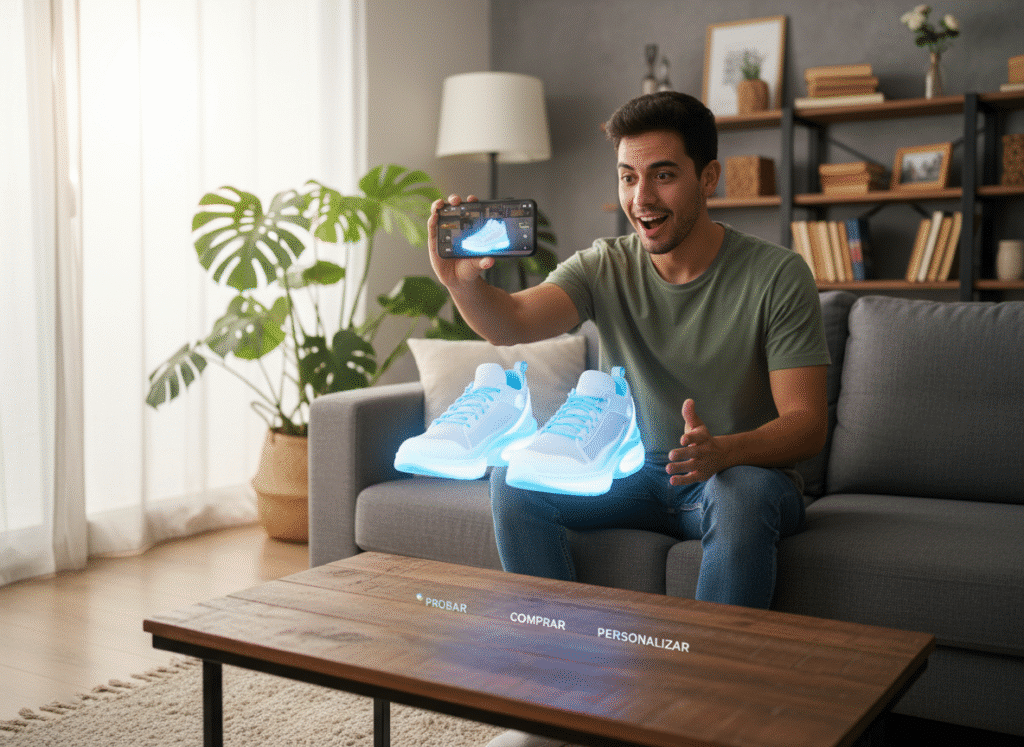
This strategy is fundamental in industries where the fit and look are critical. Virtual try-on allows the customer to use their device’s camera to «try on» products digitally. In the fashion and beauty sector, Virtual Try-On (VTO) allows customers to see how makeup, hair color, glasses, or clothing look on them without leaving home. Cosmetic brands have integrated virtual mirrors that use the front camera to map the user’s face and apply textures and shades with impressive accuracy. This is not only convenient but also a playful and viral experience. On the other hand, contextual preview (as offered by IKEA Place or Houzz) allows furniture and decor customers to place life-sized 3D objects in their own rooms. This visualization removes the guesswork about whether the item will fit in the space, if the color will be suitable, or if the size is correct. By providing this visual confidence, the purchase decision is accelerated, as the product ceases to be an abstract image and becomes a visually validated solution in the customer’s environment. This immersive process becomes a powerful differentiator against competition that only offers flat images.
2. Detailed and Exploded 3D Product Experiences
For technical or complex products, AR offers an understanding that 2D images and videos cannot achieve. This strategy focuses on transparency and education. Instead of simply showing a photo of an electronic device, AR allows the user to virtually «disassemble» the product. The customer can rotate an engine, view the airflow inside a vacuum cleaner, or understand the arrangement of internal computer components. This functionality is invaluable for high-value or high-tech products, where technical knowledge drives the sale. AR tools allow sales teams (B2B and B2C) to present complex features in a highly digestible way. By breaking down the product into interactive layers, the perceived value is increased and the price is justified, as the customer feels they have acquired deep knowledge before committing to the purchase. This is especially effective in the consideration phase of the sales funnel.
3. Gamification and Viral Content Through Social Media
AR integrated into social platforms like Instagram, Snapchat, and TikTok turns promotion into an interactive and organic game. Using branded AR filters is one of the quickest and most cost-effective ways to generate virality. A sportswear brand can create a filter that simulates a race, or a beverage brand can create a fun filter that playfully incorporates its logo. These filters act as user-driven advertising. User-Generated Content (UGC) that utilizes AR has a much higher engagement rate than static advertisements. Every time a user shares a story with the AR filter, they expose the brand to their network of contacts authentically. Furthermore, these experiences can include a discrete CTA, such as a direct link to purchase the featured product in the filter, thus closing the marketing loop from top-of-funnel to direct sale. The key here is ease of use and high shareability.
4. AR at Physical Points of Sale (Immersive Retail)
AR doesn’t just benefit e-commerce; it also revolutionizes the experience within the physical store. Through smart mirrors, QR codes, or mobile applications, AR can enrich the retail environment. For example, a customer can scan a wine label to see the vineyard’s history and pairing suggestions superimposed on the bottle, or scan a piece of clothing to see it in different colors without having to go to the fitting room. This improves staff efficiency and customer experience. Augmented signage allows stores to guide customers to specific products or provide additional information about the item’s provenance. This translates into a coherent omnichannel experience, where the customer uses their digital device to enhance their interaction with the physical space, ultimately resulting in an increase in the average purchase ticket and greater overall satisfaction.
5. Post-Sale Manuals and User Guides with AR
Although this is post-sale, this strategy is crucial for reducing returns and strengthening loyalty, which indirectly increases future sales. Customers often return products because they don’t know how to use or install them correctly. AR solves this problem by offering immersive visual guides. For example, when buying a coffee machine, the customer can scan the machine with their phone and see superimposed digital arrows indicating where to place the filter, how to fill the reservoir, or where to press the power button. This minimizes frustration, reduces customer service calls, and most importantly, validates the customer’s purchase. A customer satisfied with the installation or use is much more likely to become a repeat customer and a brand advocate. This support strategy reduces the hidden costs of the sale (returns and technical support) and guarantees future sales.
How is Augmented Reality (AR) used to increase sales?
Augmented Reality is used to increase sales by reducing friction and uncertainty in the purchase. Through tools like Virtual Try-On (VTO) and 3D product preview in the customer’s real environment, AR generates the confidence necessary for conversion. Furthermore, AR experiences on social media and in physical retail boost engagement and increase the perceived value of the product.
Conclusion
The strategic implementation of AR to increase sales has already proven its return on investment. AR solves the fundamental problem of digital commerce: the lack of touch and context. From virtual try-on that minimizes returns in fashion to detailed 3D visualization that justifies the price of technical products, this technology acts as a powerful conversion accelerator. The future of retail is immersive, and brands that fail to integrate AR experiences into their sales funnel risk falling behind. It is time to transform the way your customers interact with your products. Is your e-commerce ready to integrate Augmented Reality and see an immediate increase in conversions? Schedule a free demonstration at Hyper Reality Company, experts in designing a personalized AR strategy focused on boosting your sales.
In the current e-commerce landscape, the customer’s inability to physically interact with a product is the main obstacle to conversion. Static photographs and text descriptions often leave doubts, which translates into abandoned carts and high return rates. This is where Augmented Reality (AR) is positioned as the digital bridge that connects the online shopping experience with the tangibility of physical retail. Implementing AR to increase sales is no longer a luxury, but a competitive necessity. AR provides consumers with the visual confidence they need: it allows them to try on glasses, place a sofa in their living room, or view the internal workings of an engine—all from the comfort of their smartphone. This level of personalized immersion reduces uncertainty, shortens the purchase decision cycle, and directly boosts spending. Is your brand using AR strategically or just as a novelty? In this article, we will explore the five most effective AR strategies, with detailed examples, that you can implement today to transform the shopping experience and sustainably increase your sales.
AR as a Solution to E-commerce Uncertainty
Customer doubt is the main enemy of online sales. Traditionally, the digital experience lacked the «try-on» capability offered by the physical store. AR, by superimposing high-fidelity digital images onto the user’s real environment, attacks this uncertainty at its root. This visual and contextualized approach significantly reduces purchase friction and improves key performance metrics. Companies that integrate AR report not only an increase in conversion rates (often between 10% and 30%) but also a notable decrease in returns (up to 25% in sectors such as furniture and fashion), a crucial factor that directly impacts profitability.
5 Effective AR Strategies for Increasing Sales
Leading brands are implementing AR across multiple channels to influence every stage of the sales funnel. These are the five most powerful tactics for using AR to increase sales:
1. Virtual Try-On (VTO) and Contextual Preview
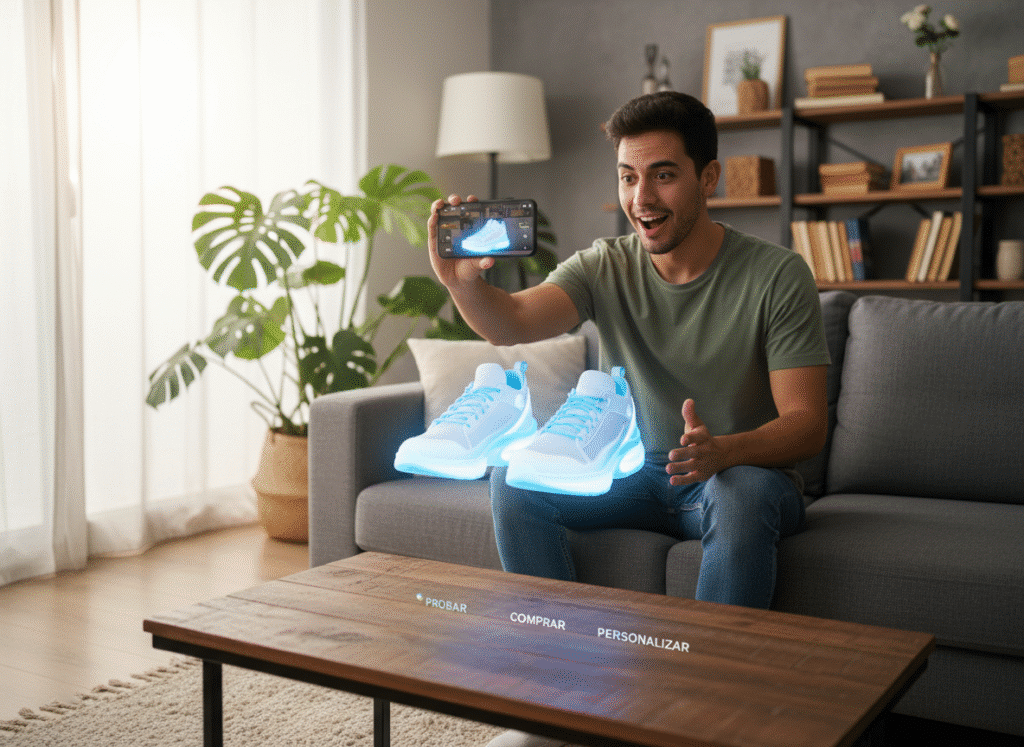
This strategy is fundamental in industries where the fit and look are critical. Virtual try-on allows the customer to use their device’s camera to «try on» products digitally. In the fashion and beauty sector, Virtual Try-On (VTO) allows customers to see how makeup, hair color, glasses, or clothing look on them without leaving home. Cosmetic brands have integrated virtual mirrors that use the front camera to map the user’s face and apply textures and shades with impressive accuracy. This is not only convenient but also a playful and viral experience. On the other hand, contextual preview (as offered by IKEA Place or Houzz) allows furniture and decor customers to place life-sized 3D objects in their own rooms. This visualization removes the guesswork about whether the item will fit in the space, if the color will be suitable, or if the size is correct. By providing this visual confidence, the purchase decision is accelerated, as the product ceases to be an abstract image and becomes a visually validated solution in the customer’s environment. This immersive process becomes a powerful differentiator against competition that only offers flat images.
2. Detailed and Exploded 3D Product Experiences
For technical or complex products, AR offers an understanding that 2D images and videos cannot achieve. This strategy focuses on transparency and education. Instead of simply showing a photo of an electronic device, AR allows the user to virtually «disassemble» the product. The customer can rotate an engine, view the airflow inside a vacuum cleaner, or understand the arrangement of internal computer components. This functionality is invaluable for high-value or high-tech products, where technical knowledge drives the sale. AR tools allow sales teams (B2B and B2C) to present complex features in a highly digestible way. By breaking down the product into interactive layers, the perceived value is increased and the price is justified, as the customer feels they have acquired deep knowledge before committing to the purchase. This is especially effective in the consideration phase of the sales funnel.
3. Gamification and Viral Content Through Social Media
AR integrated into social platforms like Instagram, Snapchat, and TikTok turns promotion into an interactive and organic game. Using branded AR filters is one of the quickest and most cost-effective ways to generate virality. A sportswear brand can create a filter that simulates a race, or a beverage brand can create a fun filter that playfully incorporates its logo. These filters act as user-driven advertising. User-Generated Content (UGC) that utilizes AR has a much higher engagement rate than static advertisements. Every time a user shares a story with the AR filter, they expose the brand to their network of contacts authentically. Furthermore, these experiences can include a discrete CTA, such as a direct link to purchase the featured product in the filter, thus closing the marketing loop from top-of-funnel to direct sale. The key here is ease of use and high shareability.
4. AR at Physical Points of Sale (Immersive Retail)
AR doesn’t just benefit e-commerce; it also revolutionizes the experience within the physical store. Through smart mirrors, QR codes, or mobile applications, AR can enrich the retail environment. For example, a customer can scan a wine label to see the vineyard’s history and pairing suggestions superimposed on the bottle, or scan a piece of clothing to see it in different colors without having to go to the fitting room. This improves staff efficiency and customer experience. Augmented signage allows stores to guide customers to specific products or provide additional information about the item’s provenance. This translates into a coherent omnichannel experience, where the customer uses their digital device to enhance their interaction with the physical space, ultimately resulting in an increase in the average purchase ticket and greater overall satisfaction.
5. Post-Sale Manuals and User Guides with AR
Although this is post-sale, this strategy is crucial for reducing returns and strengthening loyalty, which indirectly increases future sales. Customers often return products because they don’t know how to use or install them correctly. AR solves this problem by offering immersive visual guides. For example, when buying a coffee machine, the customer can scan the machine with their phone and see superimposed digital arrows indicating where to place the filter, how to fill the reservoir, or where to press the power button. This minimizes frustration, reduces customer service calls, and most importantly, validates the customer’s purchase. A customer satisfied with the installation or use is much more likely to become a repeat customer and a brand advocate. This support strategy reduces the hidden costs of the sale (returns and technical support) and guarantees future sales.
How is Augmented Reality (AR) used to increase sales?
Augmented Reality is used to increase sales by reducing friction and uncertainty in the purchase. Through tools like Virtual Try-On (VTO) and 3D product preview in the customer’s real environment, AR generates the confidence necessary for conversion. Furthermore, AR experiences on social media and in physical retail boost engagement and increase the perceived value of the product.
Conclusion
The strategic implementation of AR to increase sales has already proven its return on investment. AR solves the fundamental problem of digital commerce: the lack of touch and context. From virtual try-on that minimizes returns in fashion to detailed 3D visualization that justifies the price of technical products, this technology acts as a powerful conversion accelerator. The future of retail is immersive, and brands that fail to integrate AR experiences into their sales funnel risk falling behind. It is time to transform the way your customers interact with your products. Is your e-commerce ready to integrate Augmented Reality and see an immediate increase in conversions? Schedule a free demonstration at Hyper Reality Company, experts in designing a personalized AR strategy focused on boosting your sales.

 osuna
osuna