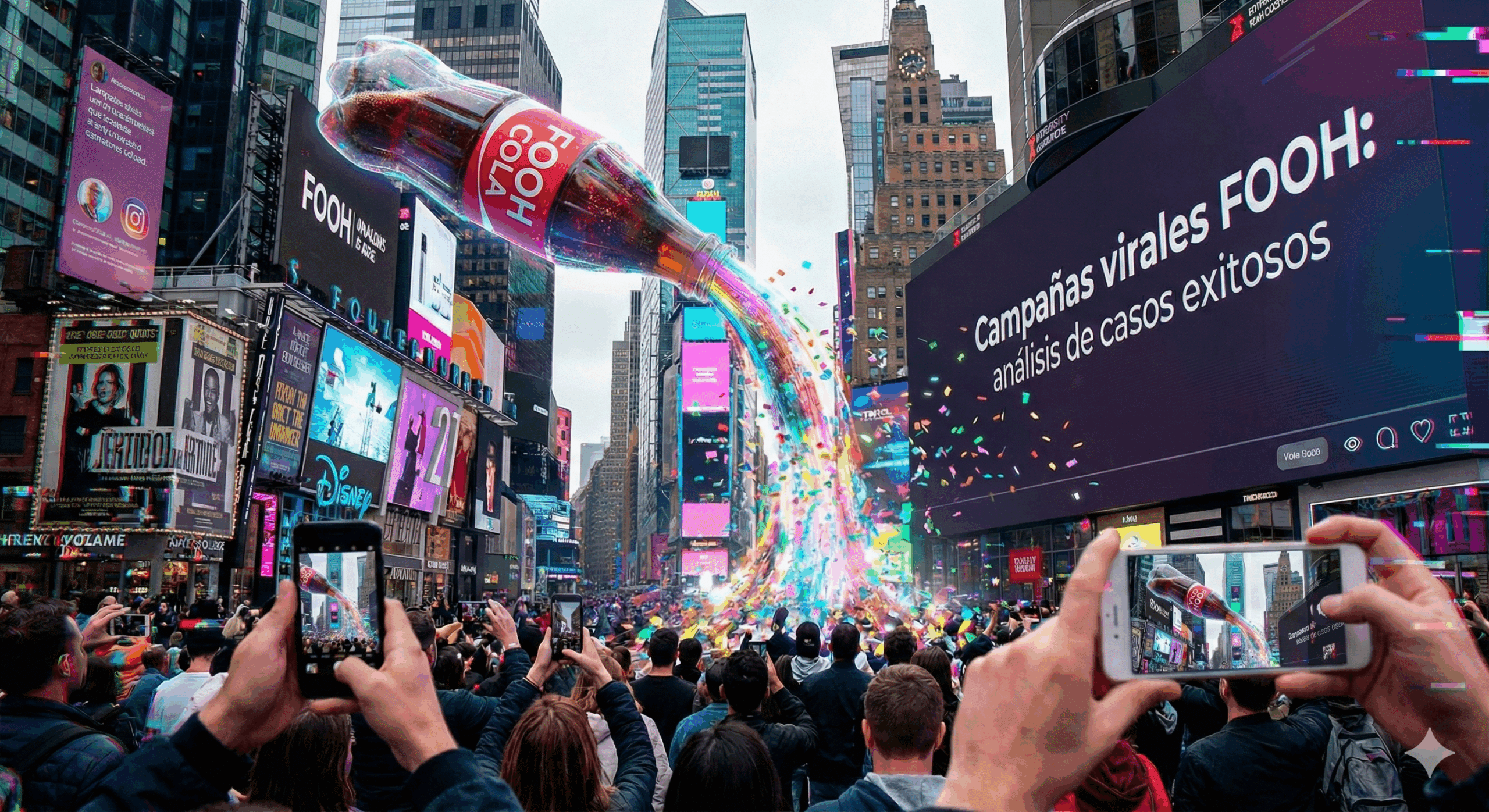
Discover how FOOH campaigns use social proof and augmented reality to create viral marketing that captures attention and delivers real impact
Viral FOOH campaigns are transforming the way brands compete for attention in increasingly saturated digital environments. By blending augmented reality, digital creativity, and real-world settings, these campaigns create visual experiences that feel surprising yet credible. When combined with social proof, their impact grows even stronger—people don’t just watch, they engage, share, and amplify the message organically. This article explores what makes FOOH campaigns successful, the patterns they share, and how brands can use this strategy to build visibility, spark conversation, and strengthen long-term brand perception.
In this article, we analyze successful FOOH campaigns that managed to gain organic traction on social media, spark conversation, and strengthen brand perception. What do they have in common? Why do they work? And how can brands replicate this strategy in a smart and effective way?
If you want to understand why FOOH has become one of the most effective tactics in today’s digital marketing landscape, this analysis breaks it down for you.
What Are FOOH Campaigns and Why Do They Go Viral?
FOOH (Fake Out Of Home) campaigns simulate advertising interventions in physical spaces using digital effects and augmented reality. Although they don’t actually happen in the real world, they are designed to feel authentic.
Their virality can be explained by three key factors:
Immediate visual impact
Easy sharing on social media
A strong sense of innovation and technology
Unlike traditional advertising, FOOH doesn’t interrupt—it sparks curiosity. And when content feels “too real to be fake,” the audience becomes the message amplifier.
The Role of Social Proof in FOOH Campaigns:
Social proof is one of the most powerful psychological drivers in marketing. In FOOH campaigns, it acts as a trust accelerator.
When people see that:
others are commenting “Is this real?”
influencers are reacting authentically
the content is being shared repeatedly
The campaign validates itself. Even if it’s later revealed that digital effects were used, the impact has already happened.
Comments, Reactions, and Credibility:
Organic comments, spontaneous reactions, and duets or stitches on social platforms reinforce the sense of authenticity. Audiences trust what other people validate far more than what a brand claims directly.
Analysis of Successful FOOH Campaigns:
The most effective FOOH campaigns share clear patterns:
The product is integrated naturally
They don’t over-explain
They let the audience discover the “trick”
In many recent viral cases, the goal isn’t immediate sales, but positioning the brand as innovative and staying top of mind over time.
Creativity + Well-Applied Technology
It’s not just about impressive visual effects. The real value lies in using technology to tell a short, clear, and memorable story. When the message is simple, the impact is stronger.
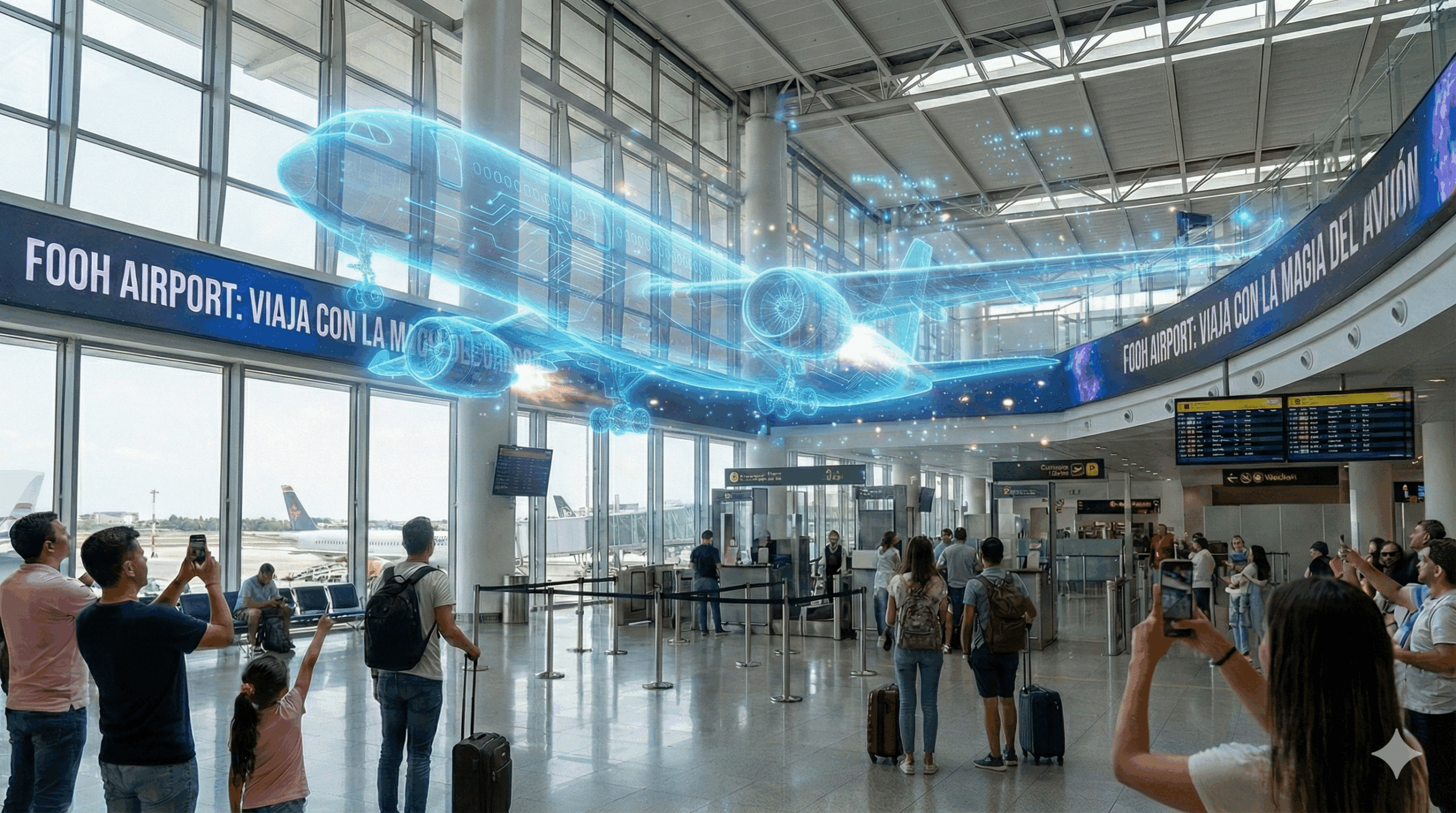
Why Does FOOH Work for Innovative Brands?
Brands that invest in FOOH usually share one thing: a desire to stand out. This format is ideal for:
Product launches
Rebranding efforts
Technology-driven positioning
Awareness campaigns
It also allows brands to maximize organic reach with a lower investment than traditional high-impact advertising.
FOOH and the Future of Experiential Marketing
The rise of FOOH shows that consumers no longer seek just information, but memorable visual experiences. The combination of augmented reality, creativity, and social proof is shaping a new phase of digital marketing.
At Hyperreality Company, we see FOOH as a strategic tool not just to surprise, but to communicate value, innovation, and a forward-thinking vision.
Viral FOOH campaigns respond to an overcrowded market by combining authenticity, creativity, and technology to drive real impact and lasting brand value.