
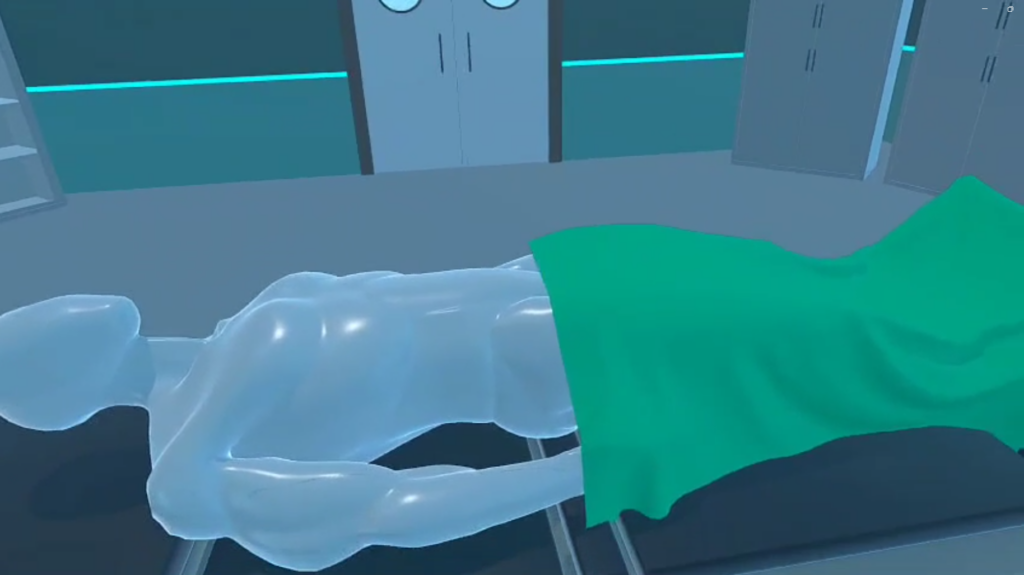

In healthcare, every decision can make a difference. That is why medical training must go beyond theory and provide hands-on experiences that allow professionals to practice complex procedures without putting patients at risk.
Hospital simulators powered by Virtual Reality (VR) and immersive technologies are transforming the way doctors, nurses, and medical students develop their skills. Today, it is possible to recreate operating rooms, emergency departments, consultation rooms, and critical care scenarios with a level of realism that enhances learning and reduces errors.
What Are Hospital Simulators?
Medical simulators are digital experiences designed to recreate clinical procedures and real-life healthcare scenarios within a virtual or interactive environment.
Using technologies such as Virtual Reality, healthcare professionals can practice procedures repeatedly before performing them on real patients.
These simulators can be used to train everything from basic clinical skills to highly specialized surgical techniques.
How Do They Work?
Using a Virtual Reality headset and specialized controllers, users enter a fully immersive environment where they can interact with medical instruments, virtual patients, and hospital equipment.
Depending on the simulation, users can:
- Perform surgeries step by step.
- Practice emergency response protocols.
- Simulate cardiopulmonary resuscitation (CPR).
- Treat patients with different medical conditions.
- Learn how to properly operate medical equipment.
- Practice nursing procedures.
All of this takes place in a safe environment where making mistakes becomes part of the learning process.
Benefits of Medical Simulators
1. Improved Patient Safety
Mistakes happen during training—not during real patient care.
This allows healthcare professionals to be better prepared for critical situations.
2. Faster Learning
Medical staff can repeat procedures as many times as needed until they master them.
Learning is no longer limited to real clinical cases.
3. Reduced Costs
Hospitals can reduce the use of disposable materials required for traditional training.
They also lower expenses associated with physical simulation laboratories.
4. Standardized Training
Every healthcare professional receives the same high-quality training experience.
This helps ensure consistent clinical protocols across the organization.
5. Performance Evaluation
Medical simulators can track valuable data such as:
- Procedure completion time.
- Errors made.
- Accuracy.
- Protocol compliance.
- Participant progress.
These insights make it easier to objectively evaluate each professional’s performance.
Applications of Hospital Simulators
Medical Residency Training
Residents can practice complex procedures before treating real patients.
Nursing Education
Nurses can train in clinical protocols, medication administration, and emergency response.
Surgical Training
Surgeons can rehearse specific procedures before performing them in real operating rooms.
This is especially valuable for rare or highly complex surgeries.
Emergency Medicine
Virtual simulations can recreate situations such as:
- Cardiac arrest.
- Multi-casualty incidents.
- Severe trauma.
- Natural disasters.
- Mass patient care scenarios.
Medical Equipment Training
Before introducing new hospital technology, healthcare teams can learn how to operate equipment through immersive simulations.
Simulators for Medical Schools and Universities
Hospitals are not the only institutions benefiting from this technology.
Medical schools and universities use simulators to help students develop clinical skills early in their education.
This improves confidence, decision-making, and practical learning before students begin working with real patients.
Why Does Virtual Reality Improve Medical Learning?
Research has shown that immersive learning improves knowledge retention because participants actively engage in the experience.
Instead of simply watching a demonstration, healthcare professionals make decisions, interact with the environment, and face situations similar to those they will encounter in real clinical practice.
Additionally, simulators make it possible to recreate scenarios that would be difficult—or impossible—to reproduce in a traditional classroom, such as critical emergencies or highly specialized medical procedures.
The Future of Medical Training
Artificial intelligence and data analytics are taking medical simulation to the next level.
Modern systems can already adjust the difficulty based on user performance, generate virtual patients with different medical conditions, and provide personalized feedback to accelerate learning.
In the coming years, these technologies will become increasingly common in hospitals, universities, and healthcare training centers, helping prepare better-qualified professionals and improving the quality of patient care.
Conclusion
Hospital simulators represent a major advancement in healthcare education. By combining Virtual Reality, immersive environments, and real-time performance assessment, they enable medical professionals to develop clinical skills in a safe, efficient, and measurable way.
For hospitals, universities, and healthcare organizations, this technology not only enhances training programs but also helps reduce errors, increase staff confidence, and improve patient outcomes.
At Hyper Reality Company we develop a wide range of immersive technologies that help businesses increase sales, boost brand visibility, and create unforgettable customer experiences.