How to Create an Effective AR Experience for Your Brand

Make an impact on your customers with AR

LinkedIn

Introduction

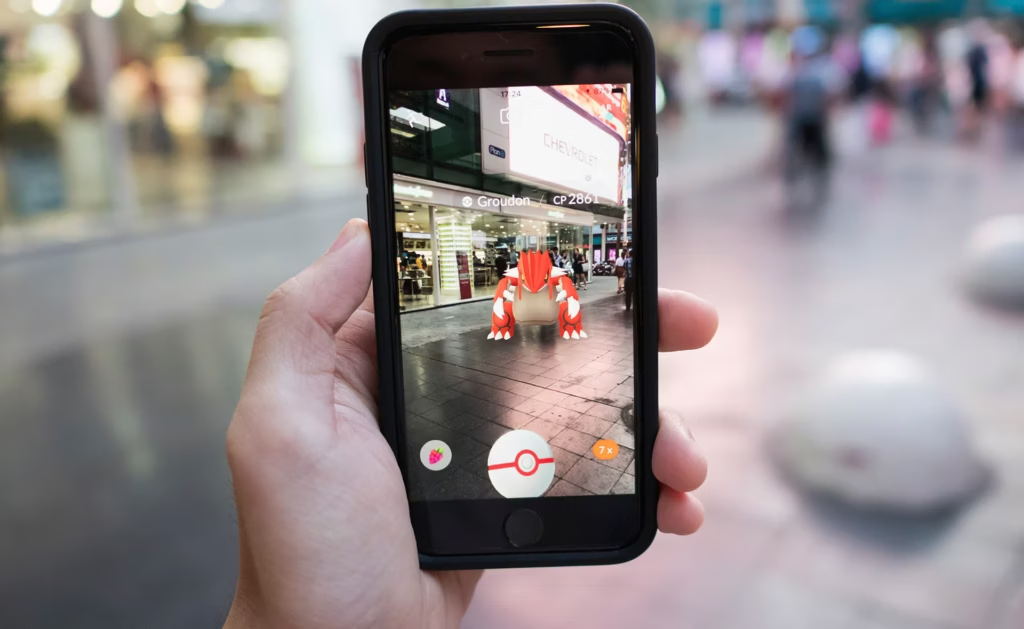
Augmented Reality (AR) has revolutionized the way brands interact with their consumers by providing immersive experiences that not only grab attention but also foster customer loyalty. If your company is looking for innovative solutions, you’re in the right place. In this article, we’ll explore how you can use AR to create immersive experiences that transform how your customers interact with your brand.

1. Define the Objectives of Your AR Experience

Before you start designing your AR experience, it’s crucial to be clear about the objectives you want to achieve. Are you looking to increase brand awareness? Improve customer interaction? Or perhaps increase conversions in your online store?
Some examples of specific objectives include:


  • Increasing product interaction.
  • Improving the shopping experience.
  • Boosting customer retention.

Having these goals clear will help guide the design of your experience and ensure that it meets your brand’s expectations.


2. Know Your Audience

Understanding your audience is key to designing an experience that resonates with them. How do they consume content? What devices do they use? Be sure to create experiences that are adapted to their level of knowledge and technological preferences.
Points to consider:

  • The age and interests of your audience.
  • The most common devices (smartphones, tablets, AR glasses).
  • Your audience’s familiarity with AR technology.
 

3. Choose the Type of AR Experience

There are different types of AR experiences you can use depending on your brand’s objectives.
Some options include:


  • AR filters on social media: Perfect for increasing engagement on platforms like Instagram or Facebook.
  • Virtual try-ons: Like clothing or makeup try-ons, allowing users to try products from their phone.
  • 3D tours or interactive maps: Ideal for real estate or brands wanting to offer a more immersive experience.
  • FOOH activations: A great option for creating interactive experiences in public spaces.
 
Choose the type of experience that best aligns with your audience’s interests and your brand’s goals.


4. Design an Attractive and Simple Interface

The AR experience must be intuitive and easy to use. If the design is complicated, users may get frustrated and abandon the experience. Make sure the interface is clear, with visible buttons and simple processes.
Tips:
  • Keep the interface clean and simple.
  • Provide clear instructions for users interacting with the experience for the first time.
  • Optimize the experience to work well on different devices.
 

5. Optimize for Conversion

A successful AR experience must have a clear goal: conversion. Whether it’s making a purchase, signing up on a website, or sharing the experience on social media, make sure each interaction guides users toward the desired action.
Examples of calls to action (CTA):
  • “Buy now and get an exclusive discount”
  • “Download our app for full access”
  • “Share your AR experience and win prizes”
 

6. Test and Continuously Improve

Once your AR experience is live, it’s essential to test and optimize it. Analyze user behavior and adjust the experience based on feedback and data you receive. Continuous improvement is key to maintaining user interest.
Key metrics to track:

  • Product interaction rate.
  • Average experience duration.
  • Completed actions (purchase, sign-up, share).
 

7. Promote Your AR Experience

Promoting the experience is crucial to ensure your audience is aware of it. Use social media, email marketing, and influencers to spread the word.
Promotion strategies:
  • Social media: Post on Instagram, TikTok, and Facebook to generate engagement.
  • Email marketing: Send emails to your current customers inviting them to try the experience.
  • Collaborations with influencers: Let influencers interact with your experience and share it with their followers.

Conclusion

Creating an effective AR experience for your brand not only increases engagement but also improves conversions and builds customer loyalty. By following these steps, you can offer an immersive experience that combines innovation, technology, and a great return on investment.
Are you ready to take your brand to the next level with AR? Contact us and discover how our personalized AR, CGI, and VR solutions can help you achieve it.

Ready to integrate AR into your business? Contact Hyper Reality Company to get a personalized solution and transform your digital marketing.
Facebook
Twitter
LinkedIn

Contactanos:

How to Create an Effective AR Experience for Your Brand

How to Create an Effective AR Experience for Your Brand

Make an impact on your customers with AR

LinkedIn

Introduction

Augmented Reality (AR) has revolutionized the way brands interact with their consumers by providing immersive experiences that not only grab attention but also foster customer loyalty. If your company is looking for innovative solutions, you’re in the right place. In this article, we’ll explore how you can use AR to create immersive experiences that transform how your customers interact with your brand.

1. Define the Objectives of Your AR Experience

Before you start designing your AR experience, it’s crucial to be clear about the objectives you want to achieve. Are you looking to increase brand awareness? Improve customer interaction? Or perhaps increase conversions in your online store?
Some examples of specific objectives include:


  • Increasing product interaction.
  • Improving the shopping experience.
  • Boosting customer retention.

Having these goals clear will help guide the design of your experience and ensure that it meets your brand’s expectations.


2. Know Your Audience

Understanding your audience is key to designing an experience that resonates with them. How do they consume content? What devices do they use? Be sure to create experiences that are adapted to their level of knowledge and technological preferences.
Points to consider:

  • The age and interests of your audience.
  • The most common devices (smartphones, tablets, AR glasses).
  • Your audience’s familiarity with AR technology.
 

3. Choose the Type of AR Experience

There are different types of AR experiences you can use depending on your brand’s objectives.
Some options include:


  • AR filters on social media: Perfect for increasing engagement on platforms like Instagram or Facebook.
  • Virtual try-ons: Like clothing or makeup try-ons, allowing users to try products from their phone.
  • 3D tours or interactive maps: Ideal for real estate or brands wanting to offer a more immersive experience.
  • FOOH activations: A great option for creating interactive experiences in public spaces.
 
Choose the type of experience that best aligns with your audience’s interests and your brand’s goals.


4. Design an Attractive and Simple Interface

The AR experience must be intuitive and easy to use. If the design is complicated, users may get frustrated and abandon the experience. Make sure the interface is clear, with visible buttons and simple processes.
Tips:
  • Keep the interface clean and simple.
  • Provide clear instructions for users interacting with the experience for the first time.
  • Optimize the experience to work well on different devices.
 

5. Optimize for Conversion

A successful AR experience must have a clear goal: conversion. Whether it’s making a purchase, signing up on a website, or sharing the experience on social media, make sure each interaction guides users toward the desired action.
Examples of calls to action (CTA):
  • “Buy now and get an exclusive discount”
  • “Download our app for full access”
  • “Share your AR experience and win prizes”
 

6. Test and Continuously Improve

Once your AR experience is live, it’s essential to test and optimize it. Analyze user behavior and adjust the experience based on feedback and data you receive. Continuous improvement is key to maintaining user interest.
Key metrics to track:

  • Product interaction rate.
  • Average experience duration.
  • Completed actions (purchase, sign-up, share).
 

7. Promote Your AR Experience

Promoting the experience is crucial to ensure your audience is aware of it. Use social media, email marketing, and influencers to spread the word.
Promotion strategies:
  • Social media: Post on Instagram, TikTok, and Facebook to generate engagement.
  • Email marketing: Send emails to your current customers inviting them to try the experience.
  • Collaborations with influencers: Let influencers interact with your experience and share it with their followers.

Conclusion

Creating an effective AR experience for your brand not only increases engagement but also improves conversions and builds customer loyalty. By following these steps, you can offer an immersive experience that combines innovation, technology, and a great return on investment.
Are you ready to take your brand to the next level with AR? Contact us and discover how our personalized AR, CGI, and VR solutions can help you achieve it.

Ready to integrate AR into your business? Contact Hyper Reality Company to get a personalized solution and transform your digital marketing.
Facebook
Twitter
LinkedIn
Facebook
Twitter
LinkedIn

Contactanos:

Contactanos: