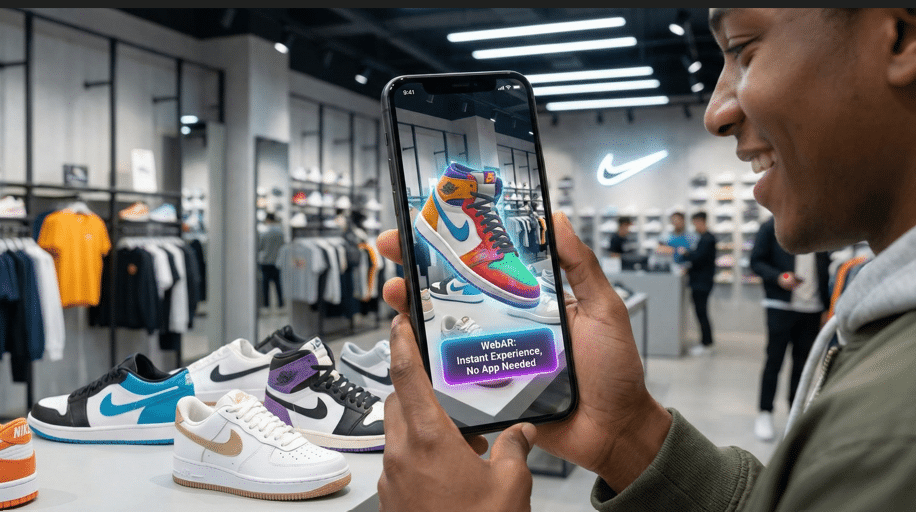
Discover how WebAR enables app-free brand experiences, removes friction, and helps brands connect with people directly from their mobile devices.
App-free interaction has become a priority for brands looking to connect with audiences in a fast and effective way. Today, downloading an app is a barrier: it takes time, storage, and attention. In a world where every second matters, asking users to install an app often means losing them before the experience even starts.
This is where WebAR comes in. Web-based augmented reality allows brands to create immersive experiences directly in the mobile browser, with no downloads or complex setups required. With a simple QR code or link, users can interact with a brand in seconds.
In this article, we explore how brands are using WebAR to remove friction, improve user experience, and create more natural and memorable interactions. Why does it work so well? What advantages does it offer over traditional apps? And how can it be integrated into a modern marketing strategy?
En este artículo exploramos cómo las marcas están usando WebAR para eliminar fricción, mejorar la experiencia del usuario y generar interacciones más naturales y memorables. ¿Por qué funciona tan bien? ¿Qué ventajas ofrece frente a las apps tradicionales? ¿Y cómo puede integrarse en una estrategia de marketing moderna?
What Is WebAR and Why Does It Remove Friction?
WebAR (Web-based Augmented Reality) is a form of augmented reality that runs directly in a mobile web browser. It doesn’t require app downloads, installations, or prior configuration.
Fewer Steps, More Engagement
Every extra step reduces the chance of interaction. WebAR removes friction by allowing users to access experiences instantly, increasing participation rates and reducing drop-off.
Accessible to More People
WebAR works on most modern smartphones, both iOS and Android, making it an inclusive and scalable solution for brands.

How Brands Use WebAR to Connect Better
WebAR is not just a technology—it’s a strategic tool to enhance brand experiences.
Interactive Experiences from the Mobile Phone
Brands can showcase products in 3D, activate filters, animations, or immersive experiences that feel intuitive and engaging, all directly from the user’s phone.
Integration with Physical Spaces
In retail environments, events, or shopping malls, a simple QR code can turn a physical space into an interactive digital experience without interrupting the consumer journey.
WebAR vs. Traditional Apps
While apps require long-term commitment, WebAR responds to immediate user intent.
Apps: higher friction, lower download rates, higher abandonment.
WebAR: instant access, broader reach, and stronger initial engagement.
For marketing campaigns, temporary activations, or product launches, WebAR is often the more efficient choice.
WebAR as Part of a Modern Marketing Strategy
WebAR doesn’t replace apps it complements them. It’s ideal for capturing attention, driving quick interactions, and creating positive first experiences with a brand.
In a world where attention is limited, brands that remove friction and make interaction easy gain a clear competitive advantage.
Conclusion
Interacting with a brand without downloading an app is no longer a trend—it’s an expectation. WebAR allows brands to show up at the right moment, without barriers or complications, creating smoother, more accessible, and more memorable experiences.
Brands that invest in WebAR don’t just simplify the user experience—they build stronger, more natural connections in an increasingly saturated digital landscape.