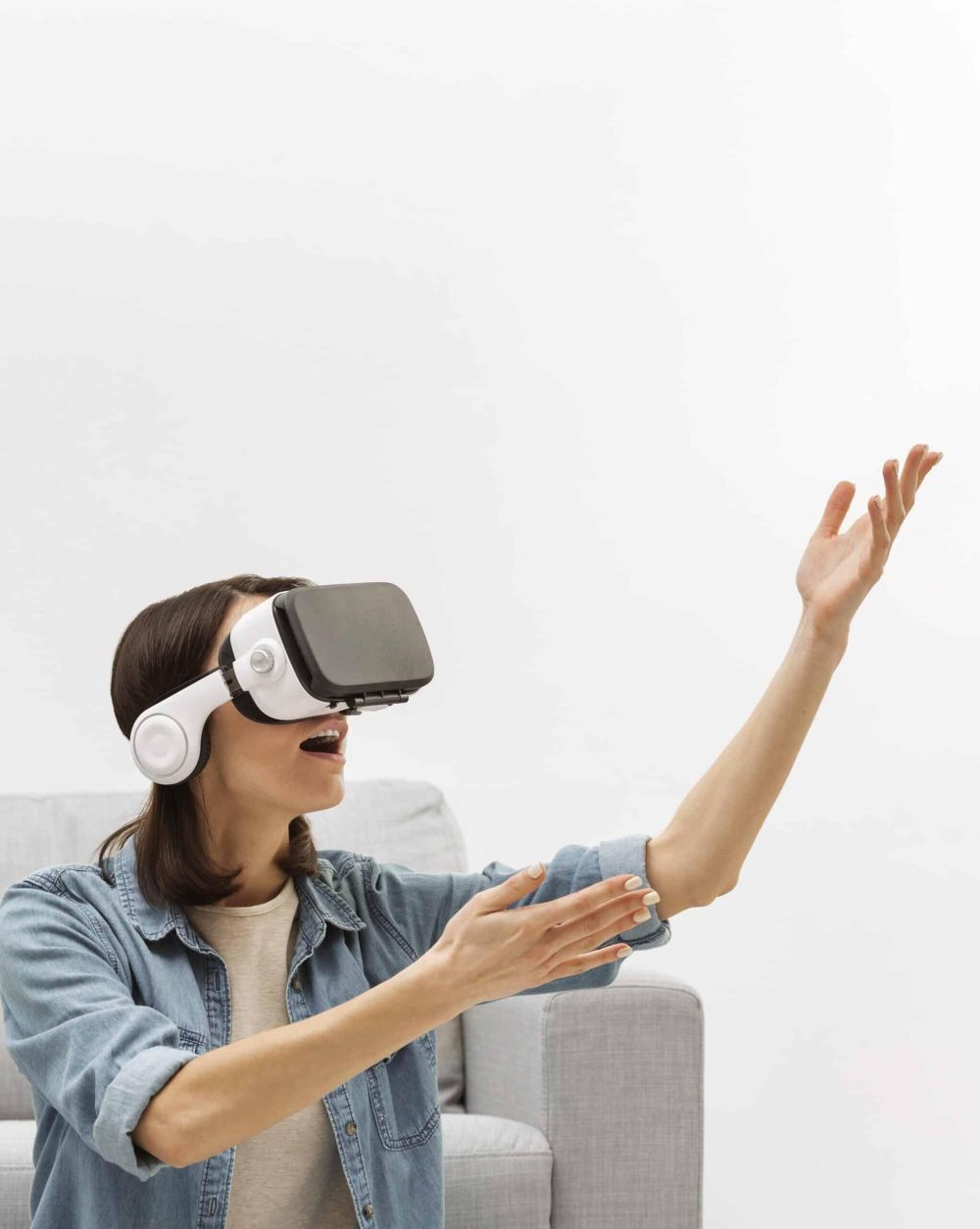
Virtual Reality
LinkedIn
Introduction
Virtual reality (VR) is revolutionizing the way brands communicate with consumers, taking digital advertising to new heights of immersion, creativity, and personalization. What were once conventional ads or static videos are now transformed into lived experiences, where users don’t just observe but fully immerse themselves in the brand’s world. Unlike traditional advertising methods, where the brand-consumer relationship is limited to viewing ads, VR allows brands to offer interactive experiences that enable consumers to explore products, try services, and, most importantly, feel part of the story the brand wants to tell.
This evolution is ushering in a new era where advertising strategies no longer focus solely on raising awareness or showing product features, but rather on creating emotions and building deeper relationships with the audience. The immersive experiences made possible by virtual reality not only capture consumers’ attention immediately but also leave a lasting impression. This type of advertising allows brands to tell their stories in a much more creative and personalized way, creating an atmosphere where the consumer can actively participate.
As brands look to differentiate themselves in an information-saturated market, VR emerges as a tool that not only increases engagement but also allows brands to stand out significantly from their competition. The ability to create an emotional bond between products or services and consumers becomes a key factor in the long-term success of advertising campaigns. Consumers no longer want to be mere spectators; they want to be active participants in the stories of the brands they choose.
In this article, we will delve into how virtual reality is transforming advertising strategies, opening new opportunities to emotionally connect with customers, enhance loyalty, increase engagement, and most importantly, create unique experiences that not only capture attention but also stay in the consumers’ memory. From fashion brands to cars and cosmetics, we will explore examples of how brands are maximizing the potential of VR to tell stories that captivate their audience and change the rules of traditional marketing.
Are you ready to discover how virtual reality can transform the way your brand communicates with the world, creating a deeper, more authentic, and emotional connection with your consumers?
Immersion: The Key to Modern Advertising
Immersion is, without a doubt, the factor that sets virtual reality apart from traditional forms of advertising. While conventional ads offer a passive experience where the consumer simply observes, VR transforms that interaction by allowing the user to become an active part of the story. Instead of being just another viewer, the consumer has the opportunity to interact with products, explore them in depth, and experience a full sensory journey, from sight to touch in some cases.
This ability to engage consumers in the experience makes ads not only more memorable but also more effective. Users aren’t just exposed to a brand message; they immerse themselves in it, creating a much stronger emotional connection. Immersion not only enhances brand perception but also increases message recall and retention since consumers are less likely to forget an experience that was so intense.
In comparison with traditional advertising, where contact is brief and superficial, VR offers a lasting experience that can leave a deep emotional mark. This makes virtual reality a powerful tool for creating ads that are not only seen but felt.
VR vs Traditional Advertising: What Makes the Difference?
Compared to traditional ads, which typically rely on static images or pre-recorded videos, virtual reality goes much further by allowing active, dynamic interaction between the consumer and the product or service. While conventional ads only allow the viewer to observe the content, VR invites users to actively participate. Consumers don’t just see the product; they get the opportunity to explore it in detail, try it out, and in many cases, even simulate its use in a virtual environment that mirrors the real-world experience.
This interactivity not only grabs attention but also generates greater engagement, which translates into better retention of the brand’s message. Users are not just watching an ad; they are living it, making the brand much more memorable.
Greater Emotional Connection with Consumers
One of the most powerful advantages of virtual reality in advertising is its ability to create a deep emotional impact on consumers.
VR engages multiple senses at once sight, sound, and even touch, in some cases strengthening the emotional connection users feel toward the brand. By involving the consumer in a full sensory experience, VR has the ability to move people emotionally in ways traditional ads cannot. This emotional connection not only enhances the customer experience but also increases brand loyalty because the consumer associates the brand with a positive, memorable experience.
Differentiation in a Saturated Market
In an increasingly saturated market of traditional advertising content and digital platforms, brands that adopt virtual reality stand out significantly. Instead of competing for consumer attention with the same formats, brands offering VR experiences can captivate and fascinate their audience in a unique and different way. VR turns brands into innovation leaders by providing an unforgettable experience that consumers not only remember but also share with others. This constant innovation generates a memorable experience that associates the brand with modernity, creativity, and technological leadership. Brands that implement VR not only offer products or services; they deliver transformative experiences that reinforce their positioning as pioneers in their sector.
Increase in Engagement and Brand Recall
The interactivity VR offers makes consumers more deeply involved with the brand. Unlike traditional ads, where the viewer is a passive observer, VR allows users not just to see the product but to experience it in a 3D environment. This type of active interaction doesn’t just increase consumer engagement but also creates an emotional connection that can increase brand message retention. Experiencing products or services in a virtual and personalized context makes it far more likely the consumer will remember the brand. The multisensory experiences VR provides, such as the ability to touch, explore, and simulate product use, ensure the brand stays ingrained in memory far more effectively than traditional ads. Thus, VR outperforms conventional ads by offering a personalized experience that goes beyond the visual.
Are You Ready to Take the Next Step in Your Brand’s Digital Advertising?
At Hyper Reality Company, we transform the way brands connect with people by designing immersive experiences powered by AI, creative programming, 3D technology, VR, and AR. Our mission is to create unforgettable experiences that leave a real emotional impact on consumers and change the way they perceive brands.
How is Virtual Reality Transforming Digital Advertising?
Virtual reality provides an immersive experience that allows consumers to interact with products and services actively, improving engagement and increasing brand recall.
Conclusion
Virtual reality is more than just a technological tool; it’s a key strategy in digital advertising. The ability to create immersive and personalized experiences is taking marketing to a completely new level. Brands that leverage this technology today will not only create innovative advertising but also build a stronger emotional connection with their audience.