AR and Virtual Tours: The Future of Real Estate Sales
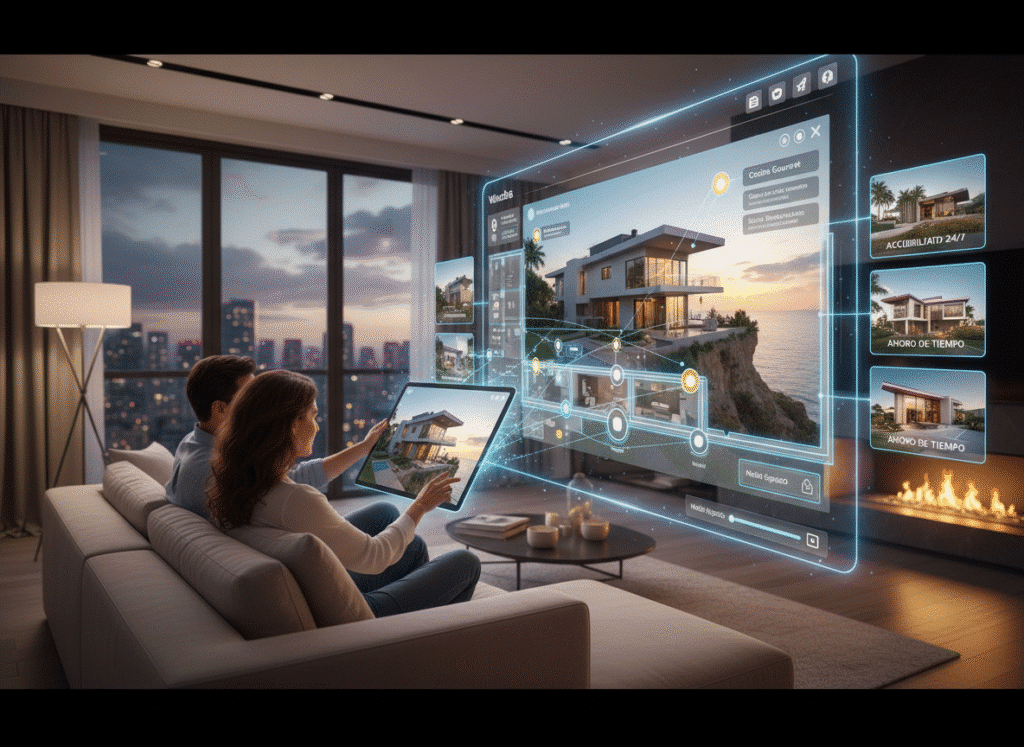
The future of real estate LinkedIn Introduction Augmented Reality (AR) is not just a technological trend; it is the tool that is completely redefining the real estate sector. A few years ago, viewing a property meant coordinating schedules, traveling, and often dealing with properties that didn’t meet expectations, especially in luxury or international markets. Today, the buying experience is changing drastically, evolving from an inconvenient transaction to an immersive exploration.The great challenge for the real estate agent has always been translating the potential of a physical space into the client’s mind. How does an empty house look with furniture? What will the environment be like once the building is finished? Augmented Reality in the real estate sector solves these questions, allowing clients to «live» a property without setting foot in it. In this article, we will thoroughly explore the impact of AR and virtual tours, and we promise you will discover how this technology not only facilitates the sale but also becomes your biggest competitive advantage and an essential brand differentiator. What is Augmented Reality (AR) and Why Does It Matter in Real Estate? AR is the technology that superimposes virtual elements such as 3D models, interactive graphics, floor plans, or detailed information onto the real world, viewed through a device’s camera (phone, tablet, or glasses). Unlike Virtual Reality (VR), which immerses the user in a completely digital world (separating them from their physical environment), AR enhances, complements, and enriches the existing reality.In the real estate sector, AR is crucial because it simultaneously solves the problems of distance and imagination. The technology no longer just shows the property; it allows the user to interact with it virtually. Clients no longer have to strain their minds to visualize how an empty apartment would look with their furniture, or how a renovation would turn out; the technology does it for them, in real-time and to scale, from the comfort of their living room. Detailed Benefits of Augmented Reality for Agents and Clients The strategic implementation of AR offers tangible advantages that directly impact the final result: Acceleration of the Sales Cycle: By offering a complete and immediate understanding of the property, the number of necessary visits is reduced, and visualization-based objections are minimized, shortening the time from first contact to closing. Reduction of Operational Costs: Drastically decreases the costs of staging (physical furnishing of model properties), travel, and logistics for multiple in-person tours. Unparalleled Personalization: Allows the client to virtually modify the space (change wall color, floor textures, lighting, and even furniture arrangement) before the purchase, giving them an anticipated sense of ownership. Global Reach and De-seasonalization: Agents can showcase exclusive or luxury properties to international clients in any time zone without them traveling. This keeps interest and sales active throughout the year, regardless of weather conditions or travel restrictions. Interactive Marketing and Brand Differentiation: Offering AR experiences on your website or mobile app positions the agency as innovative and technologically advanced, attracting a younger and more digitized clientele. 3D Virtual Tours: The Foundation of the Immersive Experience The main exponent of AR and VR in the sector is the 3D virtual tour. This tool allows potential buyers to navigate a property online, offering a 360-degree view of every corner of the space. It is the foundation upon which the Augmented Reality experience is built. Taxonomy of Immersive Real Estate Tours To optimize your content and appear in Featured Snippets, here are the key types of tours that use immersive technology, from basic to advanced: 360° Tours (Basic Photogrammetry): Consist of a series of linked panoramic photographs. They are ideal for ready-to-sell properties and offer a sense of presence, but navigation is limited and does not allow for environment modification. Interactive 3D Models (Digital Twins): Created using 3D laser scanners (like Matterport). They allow the user to move freely through a digital twin of the property, measure spaces, and view the house in Dollhouse View. AR is integrated here to allow the user to measure and annotate within that twin. Future Project Visualization (VR/AR): The client uses their mobile or goggles to view a building that does not yet exist superimposed on the empty lot (site visualization). This is vital for pre-sales of real estate developments. Remote Walk-Through Experiences (Collaborative AR): The agent and client access the same virtual tour simultaneously and can interact, point out elements, and talk, replicating a guided tour remotely. Advanced Use Cases and Examples of Business Success Leading brands are implementing Augmented Reality not only in sales but also in personalization, interior design, and asset management. Virtual Home Staging and Interior Design Virtual Home Staging powered by AR allows for furnishing, decorating, and redecorating empty spaces in seconds. If a client doesn’t like the kitchen color, AR changes it immediately. This is infinitely faster and more economical than physical staging. Success Example (Retail-Real Estate): Furniture brands (like IKEA Place or Houzz) have popularized the use of AR. The client scans their living room with their phone and can virtually place a table, sofa, or rug from the catalog to scale. The real estate sector integrates this same functionality so the client can see how their own furniturewould look in the house they are considering buying. Added Value: Some developers offer the AR experience as part of the purchase package, allowing the client to choose finishes and materials through the app, visualizing them in real-time in the model property. Remote Sales and High-Value Clients AR and VR are essential in luxury real estate markets, where buyers are often international and their time is extremely valuable. Practical Application: Luxury real estate agencies in markets like Miami, London, or Dubai use VR and AR tours to make high value closings with buyers from Asia or Europe who can only make one final physical visit. This has been shown to reduce sales cycles from months to weeks. Technical Aspects and Optimization for the Real Estate Sector Effectively implementing Augmented Reality requires the integration of specific technologies and a clear data
RA y Recorridos Virtuales: El Futuro de la Venta Inmobiliaria
El futuro de la inmobiliaria LinkedIn Introducción La Realidad Aumentada (RA) no es solo una moda tecnológica, es la herramienta que está redefiniendo por completo el sector inmobiliario. Hace unos años, ver una propiedad significaba coordinar agendas, desplazarse, y a menudo, lidiar con inmuebles que no cumplían las expectativas, especialmente en mercados de lujo o internacionales. Hoy, la experiencia de compra está cambiando drásticamente, pasando de ser una transacción incómoda a una exploración inmersiva.El gran desafío del agente inmobiliario siempre ha sido traducir el potencial de un espacio físico a la mente del cliente. ¿Cómo se ve una casa vacía con muebles? ¿Cómo será el entorno una vez terminado el edificio? La Realidad Aumentada en el sector inmobiliario resuelve estas interrogantes, permitiendo a los clientes «vivir» una propiedad sin poner un pie en ella. En este artículo, exploraremos a fondo el impacto de la RA y los recorridos virtuales, y te prometemos que descubrirás cómo esta tecnología no solo facilita la venta, sino que se convierte en tu mayor ventaja competitiva y un diferenciador de marca esencial. ¿Qué es la Realidad Aumentada (RA) y por qué importa en Inmuebles? La RA es la tecnología que superpone elementos virtuales como modelos 3D, gráficos interactivos, planos de planta o información detallada sobre el mundo real, visualizados a través de la cámara de un dispositivo (teléfono, tableta o gafas). A diferencia de la Realidad Virtual (RV), que sumerge al usuario en un mundo completamente digital (separándolo de su entorno físico), la RA mejora, complementa y enriquece la realidad existente.En el sector inmobiliario, la RA es crucial porque resuelve el problema de la distancia y la imaginación de manera simultánea. La tecnología ya no solo muestra el inmueble, sino que permite al usuario interactuar con él virtualmente. Los clientes ya no tienen que forzar su mente para visualizar cómo se vería un apartamento vacío con sus muebles, o cómo quedaría una remodelación; la tecnología lo hace por ellos, en tiempo real y a escala real, desde la comodidad de su sala. Beneficios Detallados de la Realidad Aumentada para Agentes y Clientes La implementación estratégica de la RA ofrece ventajas tangibles que impactan directamente en el resultado final: Aceleración del Ciclo de Venta: Al ofrecer una comprensión completa e inmediata de la propiedad, se reduce el número de visitas necesarias y se minimizan las objeciones basadas en la visualización, acortando el tiempo desde el primer contacto hasta el cierre. Reducción de Costos Operacionales: Disminuye drásticamente los gastos de staging (amueblamiento físico de propiedades modelo), viajes y logística de múltiples tours presenciales. Personalización Inigualable: Permite al cliente modificar virtualmente el espacio (cambiar color de paredes, texturas de pisos, iluminación e incluso la disposición de los muebles) antes de que se realice la compra, dándole un sentido de pertenencia anticipado. Alcance Global y Desestacionalización: Los agentes pueden mostrar propiedades exclusivas o de lujo a clientes internacionales en cualquier zona horaria, sin que estos viajen. Esto mantiene el interés y las ventas activas durante todo el año, independientemente de las condiciones climáticas o las restricciones de viaje. Marketing Interactivo y Diferenciación de Marca: Ofrecer experiencias de RA en tu sitio web o aplicación móvil posiciona a la agencia como innovadora y tecnológicamente avanzada, atrayendo a una clientela más joven y digitalizada. Recorridos Virtuales 3D: La Base de la Experiencia Inmersiva El principal exponente de la RA y RV en el sector es el recorrido virtual 3D. Esta herramienta permite a los potenciales compradores navegar por una propiedad en línea, ofreciendo una vista de 360 grados de cada rincón del espacio. Es la base sobre la cual se construye la experiencia de Realidad Aumentada. Taxonomía de Recorridos Inmobiliarios Inmersivos Para optimizar tu contenido y aparecer en los Featured Snippets, aquí están los tipos clave de recorridos que utilizan tecnología inmersiva, de lo básico a lo avanzado: Tours 360° (Fotogrametría Básica): Consisten en una serie de fotografías panorámicas enlazadas. Son ideales para propiedades listas para la venta y ofrecen una sensación de presencia, pero la navegación es limitada y no permite modificar el entorno. Modelos 3D Interactivos (Gemelos Digitales): Creados mediante escáneres láser 3D (como Matterport). Permiten al usuario moverse libremente por un gemelo digital de la propiedad, medir espacios y ver la casa en vista de plano (Dollhouse View). La RA se integra aquí para permitir al usuario medir y anotar dentro de ese gemelo. Visualización de Proyectos Futuros (RV/RA): El cliente utiliza su móvil o gafas para ver un edificio que aún no existe superpuesto en el terreno baldío (site visualization). Esto es vital para las preventas de desarrollos inmobiliarios. Experiencias de Walk-Through Remoto (RA Colaborativa): El agente y el cliente acceden al mismo recorrido virtual al mismo tiempo y pueden interactuar, señalar elementos y hablar, replicando una visita guiada a distancia. Casos de Uso Avanzados y Ejemplos de Éxito Empresarial Las marcas líderes están implementando la Realidad Aumentada no solo en la venta, sino en la personalización, el diseño de interiores y la gestión de activos. Home Staging Virtual y Diseño de Interiores El Home Staging Virtual impulsado por RA permite amueblar, decorar y redecorar espacios vacíos en segundos. Si un cliente no le gusta el color de la cocina, la RA lo cambia inmediatamente. Esto es infinitamente más rápido y económico que el staging físico. Ejemplo de Éxito (Retail-Inmobiliario): Marcas de muebles (como IKEA Place o Houzz) han popularizado el uso de la RA. El cliente escanea su sala con el móvil y puede colocar virtualmente una mesa, un sofá o una alfombra del catálogo a escala real. El sector inmobiliario integra esta misma funcionalidad para que el cliente pueda ver cómo quedarían sus propios muebles en la casa que está considerando comprar. Valor Añadido: Algunos promotores ofrecen la experiencia de RA como parte del paquete de compra, permitiendo al cliente elegir acabados y materiales a través de la aplicación, visualizándolos en tiempo real en la propiedad modelo. Venta Remota y Clientes de Alto Valor La RA y RV son esenciales en los mercados
