
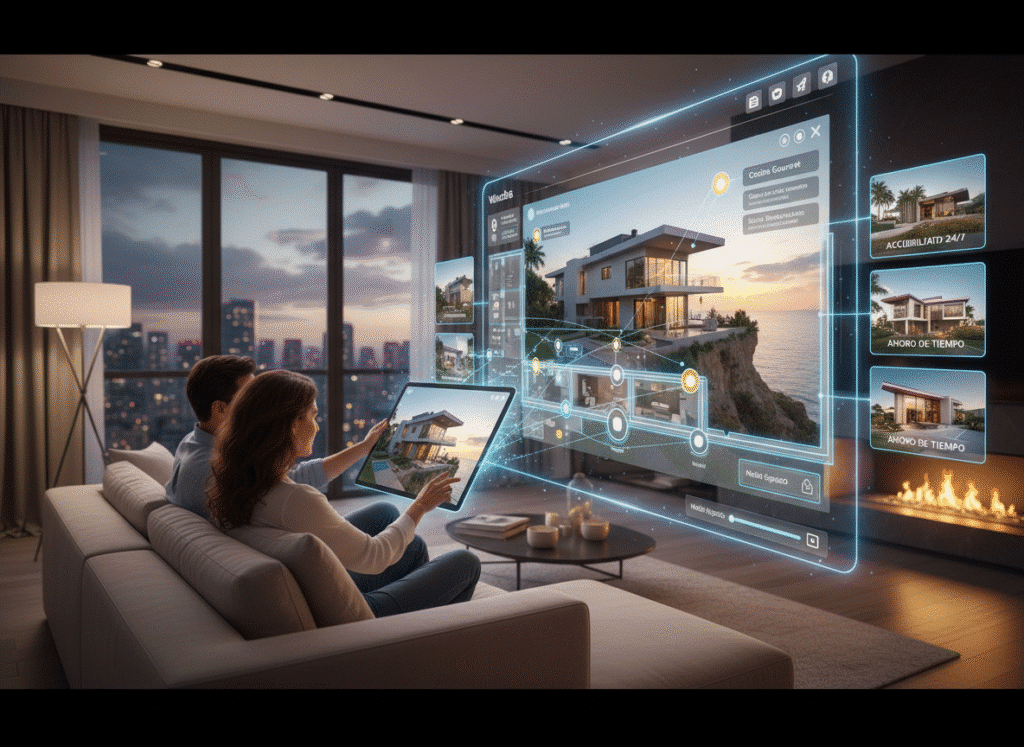

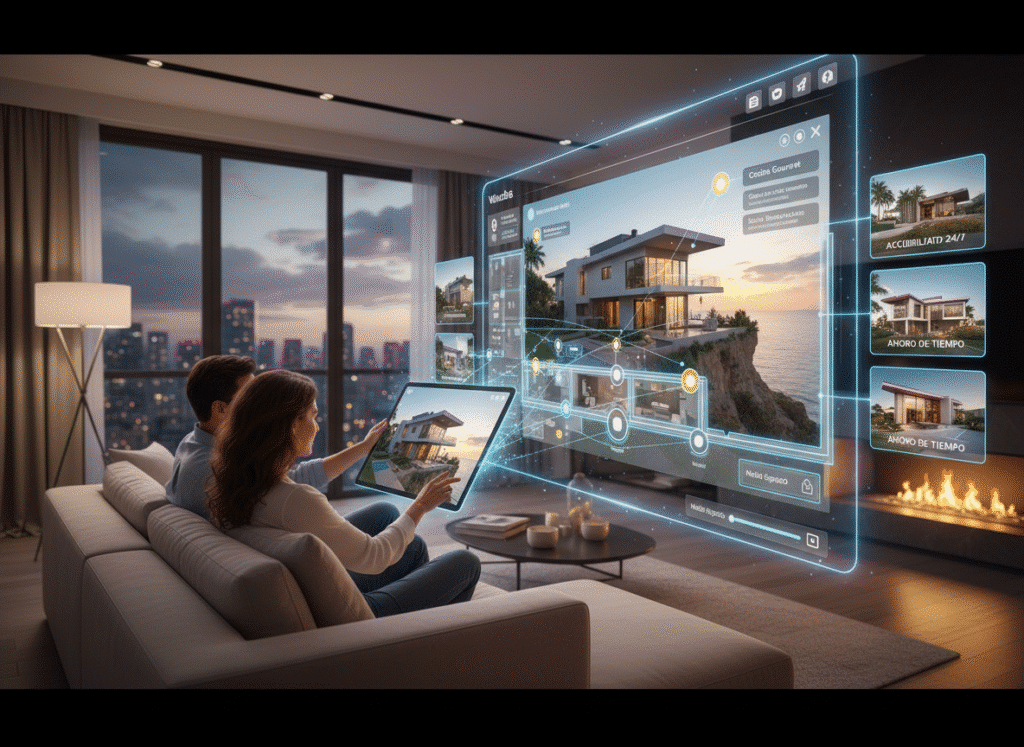
The future of real estate
Introduction
Augmented Reality (AR) is not just a technological trend; it is the tool that is completely redefining the real estate sector. A few years ago, viewing a property meant coordinating schedules, traveling, and often dealing with properties that didn’t meet expectations, especially in luxury or international markets. Today, the buying experience is changing drastically, evolving from an inconvenient transaction to an immersive exploration.
The great challenge for the real estate agent has always been translating the potential of a physical space into the client’s mind. How does an empty house look with furniture? What will the environment be like once the building is finished? Augmented Reality in the real estate sector solves these questions, allowing clients to «live» a property without setting foot in it. In this article, we will thoroughly explore the impact of AR and virtual tours, and we promise you will discover how this technology not only facilitates the sale but also becomes your biggest competitive advantage and an essential brand differentiator.
What is Augmented Reality (AR) and Why Does It Matter in Real Estate?
AR is the technology that superimposes virtual elements such as 3D models, interactive graphics, floor plans, or detailed information onto the real world, viewed through a device’s camera (phone, tablet, or glasses). Unlike Virtual Reality (VR), which immerses the user in a completely digital world (separating them from their physical environment), AR enhances, complements, and enriches the existing reality.
In the real estate sector, AR is crucial because it simultaneously solves the problems of distance and imagination. The technology no longer just shows the property; it allows the user to interact with it virtually. Clients no longer have to strain their minds to visualize how an empty apartment would look with their furniture, or how a renovation would turn out; the technology does it for them, in real-time and to scale, from the comfort of their living room.
Detailed Benefits of Augmented Reality for Agents and Clients
The strategic implementation of AR offers tangible advantages that directly impact the final result:
- Acceleration of the Sales Cycle: By offering a complete and immediate understanding of the property, the number of necessary visits is reduced, and visualization-based objections are minimized, shortening the time from first contact to closing.
- Reduction of Operational Costs: Drastically decreases the costs of staging (physical furnishing of model properties), travel, and logistics for multiple in-person tours.
- Unparalleled Personalization: Allows the client to virtually modify the space (change wall color, floor textures, lighting, and even furniture arrangement) before the purchase, giving them an anticipated sense of ownership.
- Global Reach and De-seasonalization: Agents can showcase exclusive or luxury properties to international clients in any time zone without them traveling. This keeps interest and sales active throughout the year, regardless of weather conditions or travel restrictions.
- Interactive Marketing and Brand Differentiation: Offering AR experiences on your website or mobile app positions the agency as innovative and technologically advanced, attracting a younger and more digitized clientele.
3D Virtual Tours: The Foundation of the Immersive Experience
The main exponent of AR and VR in the sector is the 3D virtual tour. This tool allows potential buyers to navigate a property online, offering a 360-degree view of every corner of the space. It is the foundation upon which the Augmented Reality experience is built.
Taxonomy of Immersive Real Estate Tours
To optimize your content and appear in Featured Snippets, here are the key types of tours that use immersive technology, from basic to advanced:
- 360° Tours (Basic Photogrammetry): Consist of a series of linked panoramic photographs. They are ideal for ready-to-sell properties and offer a sense of presence, but navigation is limited and does not allow for environment modification.
- Interactive 3D Models (Digital Twins): Created using 3D laser scanners (like Matterport). They allow the user to move freely through a digital twin of the property, measure spaces, and view the house in Dollhouse View. AR is integrated here to allow the user to measure and annotate within that twin.
- Future Project Visualization (VR/AR): The client uses their mobile or goggles to view a building that does not yet exist superimposed on the empty lot (site visualization). This is vital for pre-sales of real estate developments.
- Remote Walk-Through Experiences (Collaborative AR): The agent and client access the same virtual tour simultaneously and can interact, point out elements, and talk, replicating a guided tour remotely.
Advanced Use Cases and Examples of Business Success
Leading brands are implementing Augmented Reality not only in sales but also in personalization, interior design, and asset management.
Virtual Home Staging and Interior Design
Virtual Home Staging powered by AR allows for furnishing, decorating, and redecorating empty spaces in seconds. If a client doesn’t like the kitchen color, AR changes it immediately. This is infinitely faster and more economical than physical staging.
-
Success Example (Retail-Real Estate): Furniture brands (like IKEA Place or Houzz) have popularized the use of AR. The client scans their living room with their phone and can virtually place a table, sofa, or rug from the catalog to scale. The real estate sector integrates this same functionality so the client can see how their own furniturewould look in the house they are considering buying.
-
Added Value: Some developers offer the AR experience as part of the purchase package, allowing the client to choose finishes and materials through the app, visualizing them in real-time in the model property.
Remote Sales and High-Value Clients
AR and VR are essential in luxury real estate markets, where buyers are often international and their time is extremely valuable.
-
Practical Application: Luxury real estate agencies in markets like Miami, London, or Dubai use VR and AR tours to make high value closings with buyers from Asia or Europe who can only make one final physical visit. This has been shown to reduce sales cycles from months to weeks.
Technical Aspects and Optimization for the Real Estate Sector
Effectively implementing Augmented Reality requires the integration of specific technologies and a clear data capture strategy.
Key Tools for Property Capture
The quality of the AR experience depends on the accuracy of the initial 3D model:
- Laser Scanners (LIDAR): Provide extremely accurate measurements, essential for the measuring function in AR. LIDAR technology, present in many high-end smartphones, facilitates fast and detailed capture.
- Photogrammetry: Consists of taking multiple photos from different angles to reconstruct a photorealistic 3D model.
- Rendering Software (Unity/Unreal Engine): Gaming engines used to create high-fidelity interactive virtual environments.
Data Integration and SEO for Immersive Experiences
AR not only improves visualization but also generates valuable data. It is fundamental that AR tools integrate with the agency’s CRM for tracking:
- Interaction Metrics: Track which rooms the client explored the most, what virtual furniture they placed, or what modifications they made. This offers insights into their true design preferences.
- Search Optimization: AR/VR content must be accompanied by text and SEO tags. Use Alt Text on 3D images and screenshots of virtual tours (Example: Alt Text: Interactive 3D model of a house for sale using Augmented Reality).
- Loading Times: Ensure that AR applications have optimized files so that mobile loading is near-instantaneous.
The Immediate Future: From Smart Glasses to the Real Estate Metaverse
The future of Augmented Reality in the real estate sector is even more ambitious and points towards the disappearance of smartphones as intermediaries.
Next-Generation Hardware
Lightweight smart glasses (like those being developed by Apple and Meta) will allow agents and clients to view information superimposed on the property transparently, without needing to hold a phone. An agent could point to a faucet during the visit, and the glasses would instantly show the client the brand, price, and specifications.
Digital Properties and the Metaverse
While it may sound futuristic, the Metaverse is already playing a role in the sector. Agencies and developers are opening virtual offices where clients can buy and visit properties using their avatars. This serves as a brand showcase that transcends the physical, allowing agencies to interact with a new generation of buyers.
Conclusion
In summary, Augmented Reality in the real estate sector is not an option; it is a requirement for survival and growth. Virtual tours have gone from being a plus to a modern client expectation. This technology offers unprecedented transparency, saves time and resources for both parties, and most importantly, provides an emotionally appealing, personalized, and far superior buying experience than the competition.
If your agency still relies solely on static photographs and generic descriptions, it’s time to evolve. AR technology is here to transform your sales processes, optimize your time, and redefine your relationship with clients.
Ready to integrate Augmented Reality and leave behind obsolete viewings, positioning your agency as a leader in innovation?
Contact us today for a consultation and discover our personalized 3D virtual tour solutions and start closing sales faster.