Marketing 7.0: La era de la mente y el consumidor aumentado
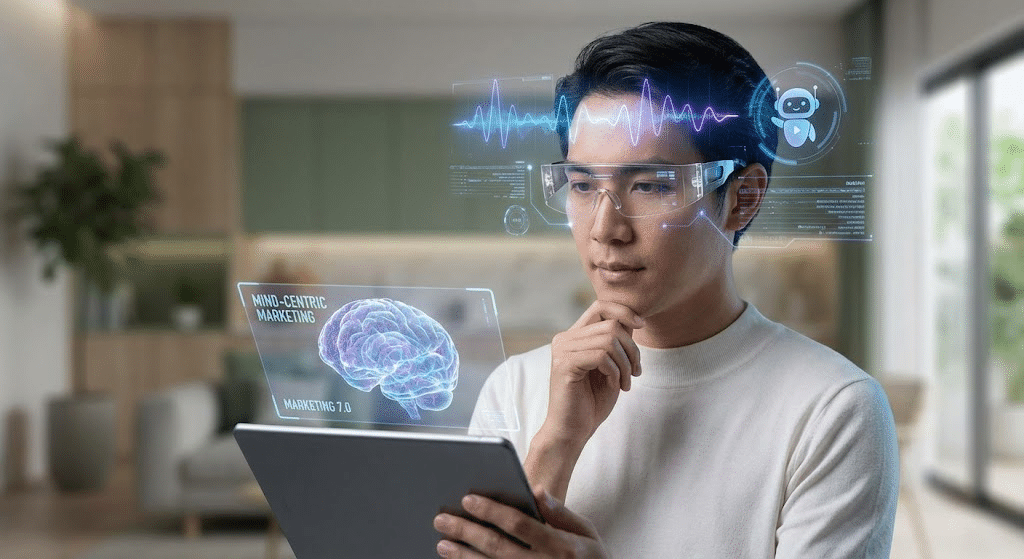
La era de la mente y el consumidor aumentado ¿Pensabas que el metaverso (Marketing 6.0) era la última frontera? Piénsalo de nuevo. Mientras el mundo apenas se adapta a la inmersión, el padre del marketing moderno, Philip Kotler, ya ha señalado el siguiente gran salto. El Marketing 7.0 ya no se trata solo de la tecnología que usamos, sino de cómo esa tecnología ha recableado el cerebro de nuestros clientes. Si el Marketing 5.0 era «Tecnología para la humanidad» y el 6.0 era «Inmersión», el Marketing 7.0 es «Inteligencia para la Mente». En este artículo, exploramos cómo dejar de obsesionarnos con los algoritmos para volver a entender lo más complejo del universo: la mente humana en la era de la IA. ¿Qué es exactamente el Marketing 7.0? El Marketing 7.0 se define como un enfoque «Mind-Centric» (Centrado en la Mente). Surge como respuesta a un problema crítico: la saturación de la automatización. Con tanta IA generando contenido y optimizando campañas, las marcas han perdido la capacidad de pensar y empatizar. El Marketing 7.0 propone usar la IA no solo para «hacer más rápido», sino para decodificar cómo piensa, siente y decide el nuevo consumidor. No es data-driven (impulsado por datos), es mind-driven (impulsado por la mente). El protagonista: El Consumidor Aumentado Para entender el 7.0, debes entender a quién le vendes. Tu cliente ya no es una persona «normal». Es un Humano Aumentado. Memoria externalizada: No recuerda datos, los busca en segundos. Decisión asistida: No elige solo; usa comparadores, reseñas de IA y asistentes virtuales. Filtro de autenticidad: Su cerebro ha evolucionado para ignorar inconscientemente el contenido generado por IA que carece de «alma». El reto para tu marca: ¿Cómo persuades a una mente que tiene un asistente digital filtrando tus anuncios? Los 3 Pilares del Marketing 7.0 1. De la «Personalización» a la «Predicción Empática» El Marketing 6.0 te permitía crear una tienda en el metaverso. El 7.0 analiza los micro-gestos de tu avatar y el tono de tu voz para entender tu estado de ánimo antes de que compres. No te muestra lo que buscaste ayer, sino lo que tu mente necesita hoy emocionalmente. 2. Creatividad Crítica vs. Creatividad Algorítmica Cualquiera puede pedirle un copy a ChatGPT. El valor en la era 7.0 está en el pensamiento crítico. Las marcas que ganarán no son las que mejor usen la IA, sino las que mejor planteen las preguntas estratégicas que la IA no puede formular. 3. Ética y Transparencia Radical En un mundo de deepfakes y realidades sintéticas, la verdad es el activo más caro. El Marketing 7.0 exige que la tecnología sea invisible pero la ética sea transparente. Si usas un influencer virtual, dilo. Si usas IA, úsala para servir, no para manipular. Cómo Hyper Reality Company aplica el Marketing 7.0 Nosotros no solo creamos experiencias inmersivas (6.0); diseñamos para la mente del usuario (7.0). Inmersión con propósito: No hacemos VR por «wow effect». Diseñamos entornos que reducen la carga cognitiva y facilitan la toma de decisiones del consumidor aumentado. Humanización tecnológica: Usamos la IA para eliminar la fricción, permitiendo que la interacción humana brille donde más importa. Conclusión El Marketing 7.0 es el recordatorio final de que la tecnología es el medio, no el fin. En un mundo digitalmente saturado, la victoria es para quien logra conectar mente con mente. ¿Tu estrategia de marketing está hablándole al algoritmo o al humano detrás de la pantalla? En Hyper Reality Company, sabemos hablar ambos idiomas. Hablemos del futuro de tu marca hoy.
What makes a digital experience real?

Real digital experiences: How do we make them work? What makes a digital experience feel real? At Hyper Reality Company, we know that the line between the physical and the virtual is becoming increasingly blurred. A real digital experience is not just a 3D environment; it is an ecosystem where technology disappears to make way for a sense of presence. For them to work, they must be fluid, intuitive, and, above all, emotionally resonant. Have you ever wondered why some immersive platforms leave you indifferent while others completely transport you? In this article, we share our vision on the pillars that transform a common interface into an alternate reality that connects with the user on a deep level. The pillars of digital hyperreality To get the brain to accept a digital environment as “real,” we apply these fundamental principles: 1. Zero Latency and Haptic Feedback In the real world, action and reaction are simultaneous. In our Extended Reality (XR) solutions, we minimize latency so that every user movement has an immediate response, reinforced by vibrations or sounds that confirm the interaction. 2. Visual Fidelity and Light Consistency 4K models are not enough. The key is how light interacts with objects. The use of ray tracing and dynamic shadows is what allows a virtual object to appear to occupy real physical space. 3. Spatial Audio: The Forgotten Sense Sound is 50% of immersion. We implement positional audio that changes according to the user’s orientation, allowing the brain to “locate” objects in a three-dimensional space. Transforming sectors: Applied reality As specialists in creating these environments, we have observed how this technology is redefining businesses: Immersive Retail: We enable customers to not only view products, but also interact with them in their own environment using high-fidelity Augmented Reality (AR). Industrial Training: We create simulators where mistakes have no physical consequences, but learning feels completely authentic thanks to total immersion.Digital Real Estate: Tours where you can feel the volume of spaces and the incidence of sunlight before the first brick is laid. Key Fact: According to internal studies by Hyper Reality Company, high-fidelity immersive experiences increase information retention by 70% compared to traditional digital methods. Checklist: How to elevate your digital project If you want your next experience to feel more human and real, make sure you meet these points: Response speed: Optimize every millisecond of loading time so as not to break the illusion.Natural interactivity: Design interfaces that follow the natural gestures of the human body.Intelligent context: Use AI to make the environment react to user preferences organically.Asset optimization: Use optimized 3D models with alternative text (e.g., Hyper Reality Company simulator showing 3D engine) to improve SEO and accessibility. Conclusion Ultimately, digital experiences that feel real are the result of a perfect blend of cutting-edge engineering and design psychology. At Hyper Reality Company, our mission is to continue pushing the boundaries of what is possible so that your brand is not only seen, but experienced. Do you want to lead the next digital revolution?Explore our projects and discover how we can transform your vision into a tangible reality.
¿Qué hace real a una experiencia digital?
Experiencias digitales reales: ¿Cómo las hacemos funcionar? ¿Qué hace que una experiencia digital se sienta real? En Hyper Reality Company, sabemos que la línea entre lo físico y lo virtual es cada vez más delgada. Una experiencia digital real no es solo un entorno 3D; es un ecosistema donde la tecnología desaparece para dar paso a la sensación de presencia. Para que funcionen, deben ser fluidas, intuitivas y, sobre todo, emocionalmente resonantes.¿Te has preguntado por qué algunas plataformas inmersivas te dejan indiferente mientras otras te transportan por completo? En este artículo, compartimos nuestra visión sobre los pilares que transforman una interfaz común en una realidad alternativa que conecta con el usuario a un nivel profundo. Los pilares de la hiperrealidad digital Para lograr que el cerebro acepte un entorno digital como «verdadero», aplicamos estos principios fundamentales: 1. Latencia Cero y Respuesta Háptica En el mundo real, la acción y la reacción son simultáneas. En nuestras soluciones de Realidad Extendida (XR), minimizamos la latencia para que cada movimiento del usuario tenga una respuesta inmediata, reforzada por vibraciones o sonidos que confirman la interacción. 2. Fidelidad Visual y Coherencia de Luz No basta con modelos 4K. La clave está en cómo la luz interactúa con los objetos. El uso de ray tracing y sombras dinámicas es lo que permite que un objeto virtual parezca ocupar un espacio físico real. 3. Audio Espacial: El sentido olvidado El sonido es el 50% de la inmersión. Implementamos audio posicional que cambia según la orientación del usuario, permitiendo que el cerebro «ubique» objetos en un espacio tridimensional. Transformando sectores: La realidad aplicada Como especialistas en la creación de estos entornos, hemos observado cómo esta tecnología redefine negocios: Retail Inmersivo: Permitimos que los clientes no solo vean productos, sino que interactúen con ellos en su propio entorno mediante Realidad Aumentada (AR) de alta fidelidad. Formación Industrial: Creamos simuladores donde el error no tiene consecuencias físicas, pero el aprendizaje se siente totalmente auténtico gracias a la inmersión total. Real Estate Digital: Recorridos donde puedes sentir el volumen de los espacios y la incidencia de la luz solar antes de que se coloque el primer ladrillo. Dato Clave: Según estudios internos de Hyper Reality Company, las experiencias inmersivas de alta fidelidad aumentan la retención de información en un 70% comparado con métodos digitales tradicionales. Checklist: Cómo elevar tu proyecto digital Si quieres que tu próxima experiencia se sienta más humana y real, asegúrate de cumplir con estos puntos: Velocidad de respuesta: Optimiza cada milisegundo de carga para no romper la ilusión. Interactividad natural: Diseña interfaces que sigan los gestos naturales del cuerpo humano. Contexto inteligente: Usa la IA para que el entorno reaccione a las preferencias del usuario de forma orgánica. Optimización de activos: Usa modelos 3D optimizados con texto alternativo (ej. Simulador de Hyper Reality Company mostrando motor en 3D) para mejorar el SEO y la accesibilidad. Conclusión En definitiva, las experiencias digitales que se sienten reales son el resultado de una mezcla perfecta entre ingeniería de vanguardia y psicología del diseño. En Hyper Reality Company, nuestra misión es seguir empujando los límites de lo posible para que tu marca no solo sea vista, sino vivida. ¿Quieres liderar la próxima revolución digital? Explora nuestros proyectos y descubre cómo podemos transformar tu visión en una realidad tangible.
Marketing in shopping malls

Discover how immersive experiences, AR, and FOOH are redefining marketing in shopping malls and helping brands stand out. Capturing attention in shopping malls today is harder than ever. People walk fast, look at their phones, and are exposed to constant stimuli, making traditional advertising easy to ignore. While shopping malls remain important spaces for brands, simply being present is no longer enough. Brands need to stand out by going beyond static ads or booths and creating experiences that truly surprise and engage people. This is where immersive experiences, augmented reality (AR), FOOH, and high-impact interactive activations come into play. These strategies spark curiosity, invite participation, and help brands break through the noise, generate conversation, and improve brand perception. Why Is It So Hard to Capture Attention in Shopping Malls Today? Consumer behavior has changed. Today, people: Are constantly overstimulated Make faster decisions Automatically filter out traditional advertising In shopping malls, this means many messages go unnoticed. Attention is no longer earned by being louder, but by delivering a better experience. Immersive Experiences: When the Brand Is Lived Immersive experiences turn spectators into participants. Instead of simply seeing a brand, people interact with it. These experiences create: Longer engagement time Stronger brand recall Emotional connection In a competitive mall environment, getting someone to stop is already a win. Getting them to engage is real impact. From the Mall to the Feed A strong activation doesn’t stay inside the mall. It continues on social media through stories, reels, and videos shared by visitors themselves. AR and FOOH: Technology That Breaks the Physical Space Augmented reality (AR) and FOOH (Fake Out Of Home) allow brands to push beyond the physical limits of shopping malls. Activations can feel unexpected, even impossible, prompting the question: Is this real? That moment of surprise helps: Capture immediate attention Create highly shareable content Extend reach beyond the physical location High-Impact Interactive Activations Interactive activations invite people to participate, not just observe. Games, challenges, digital installations, and tech-driven experiences encourage active engagement. When people participate: The experience feels personal The message is easier to understand The brand feels innovative Why Do These Strategies Work Better Than Traditional Advertising? Because they don’t interrupt. Because they spark curiosity. Because they turn ordinary spaces into unexpected experiences. In saturated shopping malls, brands that invest in immersive experiences, AR, and FOOH don’t compete for attention they attract it naturally. This is where immersive experiences, augmented reality (AR), FOOH, and high-impact interactive activations come in. At Hyperreality, we design these kinds of experiences to help brands stand out in crowded physical spaces, combining creativity and technology to transform shopping malls into moments that people stop to experience, remember, and share. Success Story: Collaboration with New Era: 3D Advertising That Transforms the Mall Experience As part of its approach to helping brands stand out in crowded physical spaces, Hyperreality Company partnered with New Era on a 3D advertising campaign for a digital screen located in one of Guatemala’s busiest shopping malls. This project combined creativity and technology to design a three-dimensional visual piece that not only captured visitors’ attention but also enhanced the shopping experience, making it more interactive and memorable. Through advanced visual effects, the campaign successfully reflected the brand’s essence in a striking way, helping it stand out from traditional advertising noise and strengthen its presence in a highly competitive environment. Discover at hyperrealitycompany.com
Marketing en centros comerciales
Aprende cómo destacar en centros comerciales saturados usando experiencias inmersivas, interactivas y realidad aumentada Captar la atención en centros comerciales hoy es más difícil que nunca. Las personas caminan rápido, miran el celular y están expuestas a demasiados estímulos, haciendo que la publicidad tradicional pase desapercibida. Aunque los centros comerciales siguen siendo espacios clave para las marcas, el reto ya no es solo estar presentes, sino destacar. Para lograrlo, las marcas necesitan ir más allá de un stand o una valla publicitaria y apostar por experiencias que realmente sorprendan e involucren al público. Aquí es donde entran las experiencias inmersivas, la realidad aumentada (AR), el FOOH y las activaciones interactivas de alto impacto. Estas estrategias despiertan curiosidad, invitan a participar y ayudan a romper el ruido, generar conversación y mejorar la percepción de marca. ¿Por qué es tan difícil captar la atención en centros comerciales hoy? Los hábitos del consumidor han cambiado. Hoy las personas: Están hiperestimuladas Toman decisiones rápidas Filtran automáticamente la publicidad tradicional En un centro comercial, esto se traduce en mensajes ignorados y activaciones que pasan desapercibidas. La atención ya no se gana por volumen, sino por experiencia. Experiencias inmersivas: cuando la marca se vive Las experiencias inmersivas transforman al espectador en participante. En lugar de observar una marca, las personas interactúan con ella. Estas experiencias generan: Mayor tiempo de interacción Recuerdo de marca más fuerte Conexión emocional En un espacio tan competitivo como un centro comercial, lograr que alguien se detenga ya es una victoria. Lograr que participe, es impacto real. Del impacto visual a la experiencia memorable No se trata solo de algo bonito o llamativo, sino de crear momentos que las personas quieran recordar… y compartir. AR y FOOH: tecnología que rompe el entorno físico La realidad aumentada (AR) y el FOOH (Fake Out Of Home) permiten romper los límites del espacio físico del centro comercial. Una activación puede parecer imposible, sorprender y generar duda: ¿esto es real? Ese momento de sorpresa es clave para: Captar atención inmediata Generar contenido para redes sociales Amplificar el alcance más allá del lugar físico Activaciones interactivas de alto impacto Las activaciones interactivas invitan a las personas a participar, no solo a mirar. Juegos, retos, experiencias digitales o instalaciones tecnológicas hacen que el público se involucre activamente con la marca. Cuando el consumidor participa: La experiencia se vuelve personal El mensaje se entiende mejor La marca se percibe como innovadora ¿Por qué estas estrategias funcionan mejor que la publicidad tradicional? Porque no interrumpen.Porque generan curiosidad.Porque convierten un espacio común en una experiencia inesperada. En centros comerciales saturados, las marcas que apuestan por experiencias inmersivas, AR y FOOH no compiten por atención: la atraen naturalmente. Captar la atención en centros comerciales hoy es más difícil que nunca. Las personas caminan rápido, miran el celular y están expuestas a demasiados estímulos, lo que hace que la publicidad tradicional pase desapercibida. Aunque siguen siendo espacios clave para las marcas, ya no basta con estar presentes: hay que destacar. Aquí es donde entran las experiencias inmersivas, la realidad aumentada (AR), el FOOH y las activaciones interactivas de alto impacto. En Hyperreality diseñamos este tipo de experiencias para ayudar a las marcas a sobresalir en espacios físicos saturados, combinando creatividad y tecnología para transformar centros comerciales en momentos que las personas se detienen a vivir, recordar y compartir. Caso de éxito: Colaboración con New Era: publicidad 3D que transforma la experiencia en centros comercialesComo parte de su enfoque para ayudar a las marcas a destacar en espacios físicos saturados, Hyperreality Company trabajó junto a New Era en una campaña de publicidad en 3D para una pantalla digital ubicada en uno de los centros comerciales más concurridos de Guatemala. Este proyecto combinó creatividad y tecnología para diseñar una pieza visual tridimensional que no solo captó la atención de los visitantes, sino que también enriqueció la experiencia de compra al hacerla más interactiva y memorable. A través de efectos visuales avanzados, la campaña logró reflejar la esencia de la marca de manera impactante, ayudando a diferenciarla del ruido publicitario tradicional y potenciar su presencia en un entorno altamente competitivo. Descubre más en hyperrealitycompany.com
AI Agents in 2026: The Future of Business Automation

Discover how AI agents in 2026 are transforming business automation and decision-making across modern companies. AI agents in 2026 are marking a turning point in how companies operate. They are no longer simple assistants that answer questions, but systems capable of analyzing information, making decisions, and executing actions on their own. In an increasingly fast-paced and competitive digital environment, AI agents help businesses optimize processes, reduce errors, and scale operations without growing teams. That’s why they are being adopted across areas like marketing, sales, customer support, and operations. But what truly sets an AI agent apart from traditional automation? And why is this technology becoming so relevant for companies today? In this article, we break down what AI agents are and why they are shaping the future of work What Is an AI Agent in 2026? An AI agent is a system designed to perceive information, interpret context, make decisions, and take action to achieve a specific goal. In 2026, AI agents go far beyond basic automation by learning from interactions and continuously improving their performance. Unlike traditional workflows, AI agents can: Prioritize tasks Solve complex problems Coordinate with other tools and systems Adapt to changing conditions This ability to act independently is what makes them so powerful for modern businesses. AI Agents vs. Traditional Chatbots Although they are often confused, AI agents and chatbots are not the same. Chatbots: Answer predefined questions Follow rigid conversation flows Depend on rules and scripts AI agents: Understand context and intent Make autonomous decisions Execute real actions Learn and improve over time The key difference is simple: chatbots respond, while AI agents take action. From Responding to Executing The real breakthrough happens when AI stops being conversational only and starts becoming operational sending emails, updating systems, generating reports, or triggering workflows without human intervention. Key Use Cases for AI Agents in Business In 2026, AI agents are already being used across multiple departments: Marketing: campaign optimization, performance analysis, content personalization Sales: lead qualification, follow-ups, forecasting Customer support: resolving complex issues with minimal human input Operations: process optimization, inventory tracking, error detection Their value lies in removing repetitive work and allowing teams to focus on higher-level decisions. Intelligent Automation, Not Mechanical Automation AI agents don’t just automate tasks they adapt to each situation, learn from outcomes, and continuously optimize how work gets done. Why AI Agents Will Be Essential in 2026 Companies today face three major challenges: lack of time, information overload, and the need to scale efficiently. AI agents directly address all three. They help businesses: Make faster decisions Reduce human error Scale operations without growing teams Improve customer experiences AI Agents and the Future of Work AI agents are changing how teams work—not by replacing people, but by giving time back. By handling repetitive and operational tasks, they allow professionals to focus on strategy, creativity, and problem-solving. A clear example of this evolution is Shifu, the AI assistant created by Hyperreality Company. Built around a simple idea «time is gold» Shifu is designed to give every second back to its users. Through personalized training, Shifu learns how each person works and adapts to their workflow. By 2026, AI agents are no longer a future promise they are practical tools already transforming how businesses operate. Their ability to learn, adapt, and execute tasks makes them essential allies for working smarter, scaling efficiently, and staying competitive in an increasingly demanding market. Discover more at hyperrealitycompany.com
Agentes de IA en 2026: el futuro de la automatización empresarial
Descubre cómo los agentes de IA en 2026 están transformando la automatización empresarial y la toma de decisiones en las empresas. Los agentes de IA en 2026 ya no son una idea del futuro: son una realidad que está redefiniendo cómo las empresas operan, toman decisiones y escalan sus procesos. A diferencia de los chatbots tradicionales, estos agentes no solo responden preguntas, sino que actúan, aprenden y ejecutan tareas de forma autónoma. En un entorno donde la velocidad, la eficiencia y la personalización marcan la diferencia, los agentes de inteligencia artificial se han convertido en aliados clave para equipos de marketing, ventas, operaciones y atención al cliente. Su capacidad para analizar datos en tiempo real y tomar decisiones sin intervención humana está cambiando las reglas del juego. Pero, ¿qué hace que un agente de IA sea realmente útil en 2026? ¿Cómo se integran en los flujos de trabajo actuales? ¿Y por qué cada vez más empresas están apostando por este tipo de tecnología? En este artículo exploramos qué son los agentes de IA, cómo funcionan hoy y por qué se perfilan como una de las herramientas más importantes para las empresas en los próximos años. ¿Qué es un agente de IA y cómo funciona en 2026? Un agente de IA es un sistema capaz de percibir información, tomar decisiones y ejecutar acciones para cumplir un objetivo específico. En 2026, estos agentes son mucho más avanzados: entienden contexto, se adaptan al comportamiento del usuario y aprenden con cada interacción. A diferencia de una automatización básica, un agente de IA puede: Priorizar tareas Resolver problemas complejos Coordinarse con otros sistemas Mejorar su desempeño con el tiempo Diferencia entre agentes de IA y chatbots tradicionales Aunque suelen confundirse, no son lo mismo. Los chatbots: Responden preguntas predefinidas Siguen flujos rígidos Dependen de reglas claras Los agentes de IA: Analizan contexto y datos Toman decisiones autónomas Ejecutan acciones reales Aprenden y se optimizan Esta diferencia es clave para entender por qué los agentes de IA están ganando protagonismo en 2026. De responder a ejecutar El verdadero salto ocurre cuando la IA deja de solo “hablar” y empieza a hacer: enviar correos, actualizar sistemas, generar reportes o tomar decisiones operativas. Casos de uso de agentes de IA en empresas: En 2026, los agentes de IA se usan en múltiples áreas: Marketing: optimización de campañas, análisis de resultados, personalización de contenido Ventas: calificación de leads, seguimiento automático, predicción de cierres Atención al cliente: resolución de problemas complejos sin intervención humana Operaciones: gestión de inventarios, análisis de procesos, detección de errores Su valor está en reducir fricción y liberar tiempo para tareas estratégicas. Automatización inteligente, no mecánica La diferencia no es solo automatizar, sino hacerlo de forma inteligente, adaptándose a cada situación y mejorando con el uso. ¿Por qué los agentes de IA serán clave en 2026? Las empresas enfrentan tres grandes retos: falta de tiempo, exceso de datos y necesidad de escalar sin aumentar costos. Los agentes de IA responden directamente a estos problemas. Permiten: Tomar decisiones más rápidas Reducir errores humanos Escalar operaciones sin crecer el equipo Mejorar la experiencia del cliente ¿Por qué los agentes de IA serán clave en 2026? Las empresas enfrentan tres grandes retos: falta de tiempo, exceso de datos y necesidad de escalar sin aumentar costos. Los agentes de IA responden directamente a estos problemas. Permiten: Tomar decisiones más rápidas Reducir errores humanos Escalar operaciones sin crecer el equipo Mejorar la experiencia del cliente Agentes de IA y el futuro del trabajo Los agentes de IA están redefiniendo la forma en que trabajamos. No vienen a reemplazar personas, sino a recuperar tiempo: automatizan tareas repetitivas y permiten que los equipos se enfoquen en lo que realmente genera valor. Un ejemplo de este enfoque es Shifu, la asistente de IA creada por Hyperreality Company. Bajo una idea simple «el tiempo es oro» Shifu está pensada para devolverle a los equipos cada segundo perdido en tareas operativas. A través de entrenamiento personalizado, Shifu aprende cómo trabaja cada usuario y se adapta a sus necesidades. Los agentes de IA en 2026 representan una evolución natural de la inteligencia artificial aplicada a negocios. Su capacidad para actuar, aprender y adaptarse los convierte en una herramienta clave para las empresas que buscan eficiencia, crecimiento y ventaja competitiva en un mercado cada vez más exigente. Descubre más en hyperrealitycompany.com
Viral FOOH Campaigns: Analysis of Successful Case Studies
Discover how FOOH campaigns use social proof and augmented reality to create viral marketing that captures attention and delivers real impact Viral FOOH campaigns are transforming the way brands compete for attention in increasingly saturated digital environments. By blending augmented reality, digital creativity, and real-world settings, these campaigns create visual experiences that feel surprising yet credible. When combined with social proof, their impact grows even stronger—people don’t just watch, they engage, share, and amplify the message organically. This article explores what makes FOOH campaigns successful, the patterns they share, and how brands can use this strategy to build visibility, spark conversation, and strengthen long-term brand perception. In this article, we analyze successful FOOH campaigns that managed to gain organic traction on social media, spark conversation, and strengthen brand perception. What do they have in common? Why do they work? And how can brands replicate this strategy in a smart and effective way? If you want to understand why FOOH has become one of the most effective tactics in today’s digital marketing landscape, this analysis breaks it down for you. What Are FOOH Campaigns and Why Do They Go Viral? FOOH (Fake Out Of Home) campaigns simulate advertising interventions in physical spaces using digital effects and augmented reality. Although they don’t actually happen in the real world, they are designed to feel authentic. Their virality can be explained by three key factors: Immediate visual impact Easy sharing on social media A strong sense of innovation and technology Unlike traditional advertising, FOOH doesn’t interrupt—it sparks curiosity. And when content feels “too real to be fake,” the audience becomes the message amplifier. The Role of Social Proof in FOOH Campaigns: Social proof is one of the most powerful psychological drivers in marketing. In FOOH campaigns, it acts as a trust accelerator. When people see that: others are commenting “Is this real?” influencers are reacting authentically the content is being shared repeatedly The campaign validates itself. Even if it’s later revealed that digital effects were used, the impact has already happened. . Comments, Reactions, and Credibility: Organic comments, spontaneous reactions, and duets or stitches on social platforms reinforce the sense of authenticity. Audiences trust what other people validate far more than what a brand claims directly. Analysis of Successful FOOH Campaigns: The most effective FOOH campaigns share clear patterns: The product is integrated naturally They don’t over-explain They let the audience discover the “trick” In many recent viral cases, the goal isn’t immediate sales, but positioning the brand as innovative and staying top of mind over time. Creativity + Well-Applied Technology It’s not just about impressive visual effects. The real value lies in using technology to tell a short, clear, and memorable story. When the message is simple, the impact is stronger. Why Does FOOH Work for Innovative Brands? Brands that invest in FOOH usually share one thing: a desire to stand out. This format is ideal for: Product launches Rebranding efforts Technology-driven positioning Awareness campaigns It also allows brands to maximize organic reach with a lower investment than traditional high-impact advertising. FOOH and the Future of Experiential Marketing The rise of FOOH shows that consumers no longer seek just information, but memorable visual experiences. The combination of augmented reality, creativity, and social proof is shaping a new phase of digital marketing. At Hyperreality Company, we see FOOH as a strategic tool not just to surprise, but to communicate value, innovation, and a forward-thinking vision. Viral FOOH campaigns respond to an overcrowded market by combining authenticity, creativity, and technology to drive real impact and lasting brand value. Discover more at hyperrealitycompany.com
Campañas virales FOOH: análisis de casos exitosos
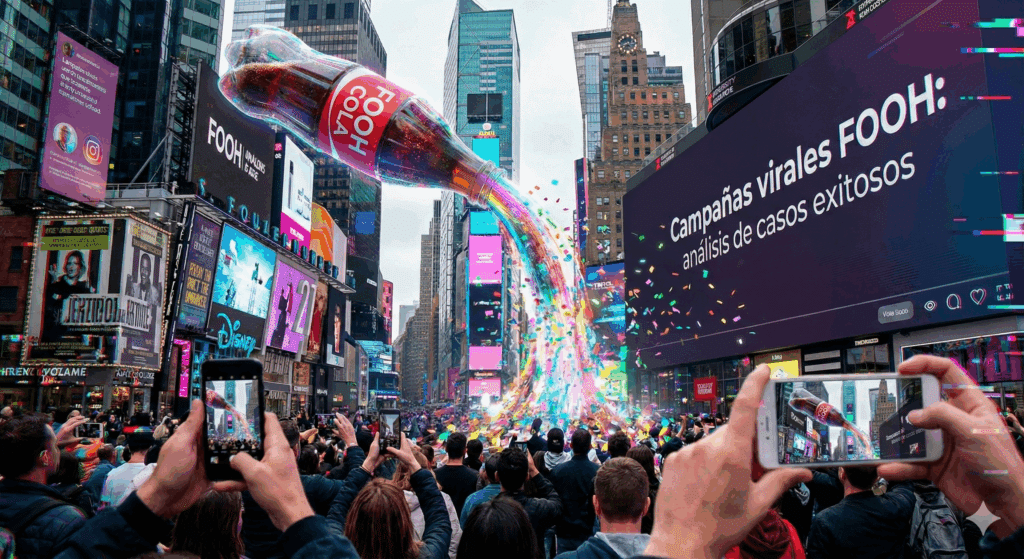
Descubre cómo las campañas FOOH combinan realidad aumentada y prueba social para crear marketing viral con alto impacto. Las campañas virales FOOH están cambiando la forma en que las marcas captan la atención en entornos digitales saturados. En un momento donde los anuncios tradicionales compiten por segundos de atención, el uso de realidad aumentada aplicada al marketing ha demostrado ser una herramienta poderosa para generar impacto, conversación y credibilidad. FOOH (Fake Out Of Home) combina creatividad digital con escenarios del mundo real para crear experiencias visuales tan sorprendentes que parecen imposibles… pero creíbles. Y ahí está la clave: cuando estas campañas se apoyan en prueba social, el efecto viral se multiplica. Las personas no solo miran el contenido, lo comparten, lo comentan y lo validan. En este artículo analizamos casos exitosos de campañas FOOH que lograron posicionarse orgánicamente en redes sociales, dar de que hablar y fortalecer la percepción de marca. ¿Qué tienen en común? ¿Por qué funcionan? ¿Y cómo pueden las marcas replicar esta estrategia de forma inteligente? Si querés entender por qué el FOOH se convirtió en una de las estrategias más efectivas del marketing digital actual, este artículo te lo explica. ¿Qué son las campañas FOOH y por qué se vuelven virales? Las campañas FOOH (Fake Out Of Home) simulan intervenciones publicitarias en espacios físicos mediante efectos digitales y realidad aumentada. Aunque no ocurren realmente en el espacio público, están diseñadas para parecer auténticas. Su viralidad se explica por tres factores clave: Llaman la atención de inmediato Son fáciles de compartir en redes sociales Dan la sensación de que la marca es innovadora y diferente A diferencia de un anuncio tradicional, el FOOH no interrumpe: despierta curiosidad. Y cuando el contenido parece “demasiado real para ser falso”, las personas no solo lo miran, sino que lo comparten y ayudan a que llegue a muchos más. El rol de la prueba social en las campañas FOOH La prueba social es uno de los factores más importantes en marketing porque genera confianza. En las campañas FOOH, ayuda a que el contenido se sienta más real y creíble desde el primer momento. Cuando las personas ven que: otros comentan cosas como “¿esto es real?”, influencers reaccionan de forma auténtica, el contenido se comparte una y otra vez, La campaña se valida sola. Aunque después se sepa que usó efectos digitales, el impacto ya está hecho y el mensaje ya llegó Comentarios, reacciones y credibilidad Los comentarios orgánicos, las reacciones espontáneas y los duetos o stitches en redes sociales refuerzan la sensación de autenticidad. El público confía más en lo que otras personas validan que en lo que una marca afirma directamente. Análisis de casos exitosos de campañas FOOH Las campañas FOOH más efectivas comparten patrones claros: Integran el producto de forma natural No explican demasiado Dejan que la audiencia descubra el “truco” En varios casos virales recientes, el foco no está en vender de inmediato, sino en posicionar la marca como innovadora y y construir una presencia fuerte que la gente recuerde. Creatividad + tecnología bien aplicada No se trata solo de efectos visuales impresionantes. La clave está en usar la tecnología para contar una historia breve, clara y memorable. Cuando el mensaje es simple, el impacto es mayo ¿Por qué el FOOH funciona para marcas innovadoras? Las marcas que apuestan por FOOH suelen tener algo en común: buscan diferenciarse. Este formato es ideal para: Lanzamientos de productos Rebranding Posicionamiento tecnológico Generación de awareness Además, permite maximizar alcance orgánico con una inversión menor que la publicidad tradicional de alto impacto. FOOH y el futuro del marketing experiencial El crecimiento del FOOH demuestra que el consumidor ya no busca solo información, sino experiencias visuales memorables. La combinación de realidad aumentada, creatividad y prueba social marca una nueva etapa del marketing digital. En Hyperreality Company, entendemos el FOOH como una herramienta estratégica: no solo para sorprender, sino para comunicar valor, innovación y visión de futuro. No se trata de hacer más anuncios, sino de crear algo imposible de ignorar. Descubre más en hyperrealitycompany.com
Make Your Brand Not Just Seen, But Lived
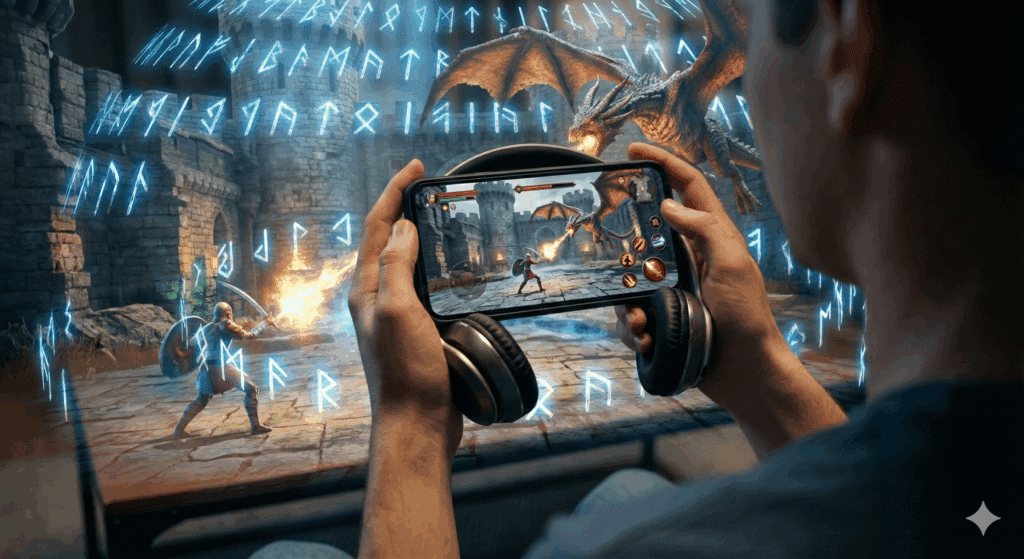
HyperPlay: Turn Your Booth into a Participation, Leads, and Sales Machine Learn how immersive experiences and interactive technology transform booths into spaces for engagement, connection, and lead generation. Today, capturing attention at events is no longer easy. Simply being present isn’t enough: brands need to interact, connect, and generate real results. Yet, many still rely on the same old formulas that make their booths go unnoticed. That’s where immersive experiences come in. With technologies like 3D mini-games, augmented reality (AR), and virtual reality (VR), you can transform an ordinary space into something surprising, entertaining, and memorable. When people participate and get involved, the brand stops being just a logo and becomes an experience. And that’s what truly makes the difference today. Immersive Experiences: The Key to Standing Out at EventsAt an event, you only have a few seconds to grab attention. Immersive experiences work because they break the routine and make people approach, participate, and stay a little longer. It’s not just about looking good—it’s about offering something worth experiencing. This is where HyperPlay comes in. With 3D mini-games, augmented reality, and virtual reality, it transforms an ordinary booth into an interactive experience that engages, invites participation, and connects people with the brand in a much closer way. What is HyperPlay?HyperPlay is a different way to connect brands with people. Instead of just displaying a message, it invites people to play, interact, and have fun while learning about the brand. It works through experiences that quickly grab attention: 3D mini-games that encourage participation effortlessly Augmented reality (AR) that surprises and sparks curiosity Virtual reality (VR) that fully immerses users in the experience . HyperPlay isn’t just “something pretty to look at”—it’s designed to make things happen: What Makes It Different? It truly engages people Helps brands connect, not just show themselves Allows lead capture without being intrusive Includes instant prizes and interactive activities Adapts to any brand, campaign, or idea In short, HyperPlay turns any interaction into an experience that’s enjoyable, memorable, and delivers results. Key Benefits of HyperPlay for Brands at Events and ActivationsImplementing HyperPlay offers clear advantages for any brand looking to stand out: Real, entertaining interaction Memorable brand experiences Experiences tailored to your audience Tangible, measurable impact HyperPlay is the key tool to stand out at events, offering immersive experiences that connect with audiences, boost engagement, and increase lead generation and measurable results. Discover more at hyperrealitycompany.com
