Gamification and dopamine: how interactive content dominates digital marketing
What really dominates nowadays How interactive content dominates marketing Gamification and dopamine Today we compete in the attention economy. Content that truly works isn’t the longest or most technical, but the kind that triggers dopamine, satisfaction, and active participation. In this scenario, gamification stopped being a trend and became a standard. Why is everything gamifiable today? Gamification works because it aligns with how the human brain responds to stimuli. Mechanics such as progress, rewards, challenges, and immediate feedback activate dopamine pathways, reinforcing motivation, engagement, and a sense of achievement, which encourages users to stay longer and participate repeatedly. Key Factors: Need for immediate gratification Saturation of traditional content Lower tolerances for complex interfaces Preference for dynamic and visual experiences Gamifying is not about playing games; it’s about designing experiences that feel satisfying. Dopamine and digital content: the new invisible metric Dopamine is activated when the user experiences: Progress (visual progression) Control (interaction) Achievement (micro-rewards) Curiosity (discovery) Content that generates these sensations is remembered more, shared more, and adopted more quickly. From static content to interactive experiences Traditional content is passive. Modern content is participatory. Content evolution: Long text → visual experiences PDFs → interactive interfaces Technical explanations → visual storytelling Reading → exploration When something is visual and interactive, it reduces cognitive friction and accelerates understanding. Hyper and gamification applied to real-world experiences At Hyper, we design products that turn complex processes into clear, visual, and intuitive experiences. We don’t aim to display information, but to activate emotions and actions. Our products: Transform information into interactive experiences Use visuals as a tool for understanding Reduce friction in technology adoption Generate real engagement, not superficial engagement Gamification is part of the design, not an add-on. Conclusion: the future of content is experiential In a world where everything competes for dopamine, the brands that win aren’t the ones that talk the most, but the ones that design better experiences. Content is no longer consumed. It is experienced. And that’s the game we’re building at Hyper. Discover more at hyperrealitycompany.com
Gamificación y dopamina: cómo el contenido interactivo domina el marketing digital
El contenido del futuro Cómo el contenido interactivo domina el marketing Gamificación y dopamina Hoy competimos en la economía de la atención. El contenido que realmente funciona no es el más largo ni el más técnico, sino el que genera dopamina, satisfacción y participación activa. En este escenario, la gamificación dejó de ser tendencia y se volvió estándar. ¿Por qué hoy todo es gamificable? La gamificación funciona porque está alineada con cómo responde el cerebro humano. Elementos como progreso, recompensa y feedback inmediato activan la dopamina, generando motivación y permanencia. Factores clave: Necesidad de gratificación inmediata Saturación de contenido tradicional Menor tolerancia a interfaces complejas Preferencia por experiencias dinámicas y visuales Gamificar no es jugar: es diseñar experiencias que se sientan satisfactorias. Dopamina y contenido digital: la nueva métrica invisible La dopamina se activa cuando el usuario siente: Avance (progreso visual) Control (interacción) Logro (micro-recompensas) Curiosidad (descubrimiento) El contenido que genera estas sensaciones se recuerda más, se comparte más y se adopta más rápido. De contenido estático a experiencias interactivas El contenido tradicional es pasivo. El contenido moderno es participativo. Evolución del contenido: Texto largo → experiencias visuales PDFs → interfaces interactivas Explicaciones técnicas → storytelling visual Lectura → exploración Cuando algo es visual e interactivo, reduce la fricción cognitiva y acelera la comprensión. Hyper y la gamificación aplicada a experiencias reales En Hyper diseñamos productos que convierten procesos complejos en experiencias claras, visuales e intuitivas. No buscamos mostrar información, sino activar emociones y acciones. Nuestros productos: Transforman información en experiencias interactivas Utilizan lo visual como herramienta de comprensión Reducen fricción en la adopción tecnológica Generan engagement real, no superficial La gamificación es parte del diseño, no un accesorio. Conclusión: el futuro del contenido es experiencial En un mundo donde todo compite por dopamina, las marcas que ganan no son las que hablan más, sino las que diseñan mejores experiencias. El contenido ya no se consume. Se experimenta. Y ese es el juego que estamos construyendo en Hyper. Discover more at hyperrealitycompany.com
Connecting physical and online stores with AR
What if your physical store and your online store could feel like a single place? Connecting physical and online stores with AR Natural integration between physical and digital channels Connecting your physical store and your online store is no longer just a “nice to have”; today it is almost a necessity because customers expect to move between both worlds effortlessly. Augmented reality helps exactly there, because it creates a super natural bridge between the two spaces. People want to see, try, compare and understand without depending on the channel, and AR makes that much simpler. It is like your brand speaks the same language everywhere, something that makes everything feel more coherent. In the end, AR reduces that invisible friction that used to separate the physical from the digital. And the best part is that all of this feels uncomplicated, like something that simply flows. It also gives the customer a sense of freedom that feels very light. It makes the entire journey feel more intuitive. And in the end, it leaves the impression that everything is connected in a beautiful and effortless way. Expanding the catalog beyond physical space Some products simply do not fit in a showroom or it does not make sense to have all of them displayed. With AR, you can show full-scale 3D versions so the customer can explore, analyze and imagine the product without pressure. The nice part is that it does not feel like reading a spec sheet, but like interacting with something that is almost right there. This reduces doubts, changes the experience and makes the store visit much more efficient. It also allows you to show variety without overwhelming the physical space or complicating operations. And in the end, the customer feels like they saw everything without it actually being there. It also opens space for the customer’s curiosity to become part of the process. It allows them to play visually without discomfort. And it makes everything feel more modern without losing the warmth of a physical store. Increasing safety and confidence in online shopping Online purchases fail when the customer is not fully sure of what they are choosing. Here, AR improves the experience because it lets them “try before buying” from anywhere. Seeing how a piece of furniture looks in their living room, how glasses fit their face or how a product looks in 360° eliminates that classic “what if I don’t like it?”. It basically gives the customer the same confidence they would have in a physical store but without leaving the couch. And when the decision feels safe, the chance of returns also drops a lot. This creates a sense of calm that makes the entire process more pleasant. It also gives the customer that excitement of making an informed decision. It makes them feel more in control of their purchase. And it transforms the online experience into something much more trustworthy and close. Maintaining continuity in the customer journey across both worlds Many times the customer starts their process in one channel and finishes it in another, and that is where AR makes everything more fluid. For example, they can scan a code in the store to see more colors or save their virtual tests in their online account and continue the purchase later. This prevents the experience from breaking and keeps the customer from getting lost halfway. The brand accompanies the entire journey no matter where the person is. This creates a sense of continuity that makes the purchase feel more thoughtful and personalized. And the nicest part is that the customer feels the brand is truly accompanying them at every moment. It also creates a more natural rhythm between one channel and the other. It makes the customer feel that nothing is interrupted. And it turns the entire process into something much smoother. Strengthening the role of the sales team with digital tools AR not only supports the customer, it also boosts the work of the in-store team. A salesperson can show 3D models from a tablet, show variations that are not physically present or allow the customer to “try” virtual products on the spot. This transforms the interaction because the salesperson no longer depends on what is on the shelves and can offer a more complete experience. The physical store gains flexibility and the online store feels warmer. In the end, salespeople feel more prepared and the service becomes more professional. And this greatly improves the brand perception because the experience feels more complete. It also gives them more tools to answer difficult questions instantly. It makes the customer trust more in their recommendations. And it makes every interaction richer and more memorable. Brand consistency across all touchpoints AR helps keep the brand’s style, personality and essence consistent no matter where the interaction happens. You are not only presenting products but also the atmosphere, the aesthetic and the feeling you want to communicate. This makes both the physical store and the online store feel like part of the same universe, without strange contrasts. And when the experience is coherent, the customer perceives a stronger and more premium brand. This reinforces the idea that your brand truly cares about every detail, even in digital. It also creates a much more immersive atmosphere for the customer. It makes the experience instantly recognizable. And it shows that everything is aligned with intention. Conclusion: a unified experience for the modern customer Connecting your physical store and online store with augmented reality is not just about integrating technology, but about creating an experience that flows from beginning to end. AR accompanies the customer wherever they are, showing what they need to see, giving them confidence to decide and keeping your style present. When both channels complement each other like this, you not only sell more; you build a closer relationship and an experience people want to repeat. It is the smartest way for your brand to live fully in every space where your customer finds you. And
Uniendo lo físico y digital: Realidad Aumentada en tiendas
¿Y si tu tienda física y tu tienda online pudieran sentirse como un solo lugar? Uniendo lo físico y digital: Realidad Aumentada en tiendas Integración natural entre canales físicos y digitales Unir tienda física y tienda online ya no es solo algo “bueno de tener”; hoy es casi una necesidad porque los clientes esperan moverse entre ambos mundos sin esfuerzo. La realidad aumentada ayuda justo ahí, porque crea un puente súper natural entre los dos espacios. La gente quiere ver, probar, comparar y entender sin depender del canal, y la RA vuelve eso mucho más simple. Es como si tu marca hablara el mismo idioma en todos lados, algo que hace que todo se sienta más coherente. Al final, la RA reduce esa fricción invisible que antes separaba lo físico de lo digital. Y lo mejor es que todo esto se siente sin complicaciones, como algo que simplemente fluye. Además, le da al cliente una sensación de libertad que se siente súper ligera. Hace que todo el recorrido se viva mucho más intuitivo. Y al final, deja esa impresión de que todo está conectado de una forma bonita y sin esfuerzo. Expansión del catálogo más allá del espacio físico Hay productos que simplemente no caben en un showroom o no tiene sentido tenerlos todos expuestos. Con RA, puedes mostrar versiones 3D en tamaño real para que el cliente explore, analice y se imagine el producto sin presión. Lo bonito es que no se siente como una ficha técnica, sino como interactuar con algo que casi está ahí mismo. Eso disminuye dudas, cambia la experiencia y ayuda a que la visita en tienda se vuelva mucho más eficiente. Además, permite enseñar variedad sin saturar el espacio físico ni complicar la operación. Y al final, el cliente siente que vio todo sin necesidad de que realmente esté ahí. También abre un espacio donde la curiosidad del cliente se vuelve parte del proceso. Permite jugar visualmente sin incomodidad. Y hace que todo se sienta más moderno sin perder esa calidez de tienda física. Incremento de la seguridad y confianza en la compra online Las compras en línea fallan cuando el cliente no está completamente seguro de lo que está eligiendo. Aquí la RA mejora la experiencia porque deja “probar antes de comprar” desde cualquier lugar. Ver cómo se ve un mueble en su sala, cómo se ajustan unos lentes a su cara o cómo luce un producto en 360° elimina ese típico “¿y si no me gusta?”. Es básicamente darle al cliente la misma confianza que tendría en tienda física pero sin moverse del sillón. Y cuando la decisión se siente segura, la probabilidad de devolución también baja muchísimo. Eso crea una sensación de tranquilidad que hace que el proceso completo sea más agradable. Además, le da al cliente esa emoción de estar tomando una decisión informada. Lo hace sentir más en control de su compra. Y transforma la experiencia online en algo mucho más confiable y cercano. Continuidad del recorrido del cliente entre ambos mundos Muchas veces el cliente empieza su proceso en un canal y lo termina en otro, y ahí es donde la RA hace todo más fluido. Por ejemplo, puede escanear un código en la tienda para ver más colores o guardar sus pruebas virtuales en su cuenta online y continuar la compra después. Eso evita que la experiencia se rompa y hace que el cliente no se pierda a mitad del camino. La marca acompaña todo el viaje sin importar dónde esté la persona. Esto genera una sensación de continuidad que hace que la compra se sienta más pensada y personalizada. Y lo más lindo es que el cliente siente que la marca sí lo está acompañando en todo momento. También crea un ritmo más natural entre un canal y otro. Hace que el cliente sienta que nada se interrumpe. Y convierte el proceso completo en algo mucho más suave. Fortalecimiento del rol del equipo de ventas con herramientas digitales La RA no solo apoya al cliente, también potencia el trabajo del equipo en tienda. Un vendedor puede mostrar modelos 3D desde una tablet, enseñar variaciones que no están físicamente o permitir “probar” productos virtualmente en ese momento. Eso transforma la interacción, porque el vendedor deja de depender de lo que hay en estantes y puede ofrecer una experiencia más completa. La tienda física gana flexibilidad y la online se vuelve más cálida. Al final, los vendedores se sienten más preparados y la atención se vuelve más profesional. Y eso mejora mucho la percepción de la marca porque la experiencia se siente más completa. También les da más herramientas para responder dudas difíciles al instante. Hace que el cliente confíe más en lo que le recomiendan. Y vuelve cada interacción más rica y más memorable. Consistencia de marca en todos los puntos de contacto La RA ayuda a que el estilo, personalidad y esencia de la marca se mantengan iguales sin importar desde dónde se interactúa con ella. No solo presentas productos, sino también el ambiente, la estética y la sensación que quieres transmitir. Eso hace que tanto la tienda física como la online se sientan como parte del mismo universo, sin contrastes raros. Y cuando la experiencia es coherente, el cliente percibe una marca más sólida y más premium. Esto refuerza la idea de que tu marca realmente cuida cada detalle, incluso en digital. Además, crea una atmósfera mucho más envolvente para el cliente. Hace que la experiencia sea reconocible al instante. Y deja claro que todo está alineado con intención. Conclusión: una experiencia unificada para el cliente moderno Unir tienda física y online con realidad aumentada no se trata solo de integrar tecnología, sino de crear una experiencia que fluya de principio a fin. La RA acompaña al cliente donde sea que esté, mostrando lo que necesita ver, dándole seguridad para decidir y manteniendo tu estilo presente. Cuando ambos canales se complementan así, no solo vendes más; construyes una relación más cercana y una experiencia
Create Viral Experiences: The Future of Interaction!
When screens are no longer enough, the future of the digital experience is immersive. Discover how AR is revolutionizing interaction with your customers. La interacción con clientes está viviendo una metamorfosis sin precedentes hacia el mundo de la Realidad Aumentada (AR). En la era actual, el consumidor ya no se conforma con ser un espectador pasivo detrás de una pantalla de cristal; ahora busca ser el protagonista de una narrativa digital que se despliega en su propio salón. El futuro de los negocios depende de la capacidad de las marcas para romper la barrera de lo bidimensional y ofrecer soluciones que se sientan tangibles y reales. En este artículo, desglosaremos cómo la tecnología inmersiva está elevando los estándares de servicio y por qué las pantallas tradicionales están empezando a ser insuficientes. Aprenderás a utilizar la AR no solo como un efecto visual, sino como un puente sólido para generar confianza y lealtad. ¿Estás preparado para descubrir cómo transformar cada punto de contacto en una experiencia inolvidable que cautive a tu audiencia? What is an immersive digital experience? An immersive experience is one that uses technology to blur the line between the physical and digital worlds. By integrating interaction into a 3D environment, you allow customers to «live» the product before purchasing it. Strategies for more customer interaction Real-time visualization: Allows the user to place 3D models of products in their physical space. Service gamification: Transforms the resolution of doubts into an interactive and entertaining process. Extreme personalization: Adapts the digital interface to the needs and specific environment of each user. How to generate more leads with AR experiences The ability to surprise is the first step toward converting a visitor into a potential customer. When you offer a useful and futuristic tool, the capture of leads becomes organic. Immersive Catalogs: Replacing static PDFs with AR viewers increases the time spent on your website. Visual Technical Support: Solving problems through «remote over-the-shoulder assistance» drastically reduces returns and complaints. Virtual Showrooms: Allows your customers to visit your store from anywhere in the world, eliminating geographical barriers. Quick Response: The Impact of AR How does augmented reality affect customer interaction? AR improves the brand-consumer relationship through three fundamental pillars: Clarity: Eliminates ambiguities by showing the product in its real context. Confidence: Reduces the fear of error in online shopping. Retention: Immersive experiences are more memorable than traditional advertising. Success Stories and Real Examples Brands like Amazon and Warby Parker have shown that the future is already here. While Amazon allows you to see how a television looks on your wall, Warby Parker uses facial recognition so you can try on glasses virtually with amazing precision. Conclusion In summary, when screens are no longer enough, augmented reality becomes the language of modern business. Fostering a customer interaction that is immersive, useful, and emotional is the key to ensuring success in the market of tomorrow. Do not limit yourself to showing your products; allow your customers to experience them. Are you ready to integrate augmented reality into your business? Contact us today to learn about our personalized solutions and start designing the future of your brand. Discover more at hyperrealitycompany.com Section Title Blog Create Viral Experiences: The Future of Interaction! ByMaria Granillo December 17, 2025 Blog When screens are no longer enough, the future of the digital experience is immersive. Discover how AR is revolutionizing interaction with your customers. La interacción con clientes está viviendo… Read More Blog ¡Crea experiencias virales: el futuro de la interacción! ByMaria Granillo December 17, 2025 Blog When screens are no longer enough, the future of the digital experience is immersive. Discover how AR is revolutionizing interaction with your customers. Customer interaction is undergoing an… Read More Blog How to improve customer experience with augmented reality? ByDaniella Manzo December 16, 2025 Blog How does augmented reality improve the experience after buying? How to improve customer experience with augmented reality? Accompanying beyond the click After buying something, many customers… Read More Blog La realidad aumentada mejora la experiencia después de comprar ByDaniella Manzo December 16, 2025 Blog ¿Cómo mejora la realidad aumentada la experiencia después de comprar? La realidad aumentada mejora la experiencia después de comprar Acompañar más allá del clic Después de comprar, muchos… Read More Blog Realidad Aumentada para Artistas ByDiego S. Murillo December 15, 2025 Blog Innovación y Creatividad: Texaco y su Impacto en la Publicidad con VFX Integrado Innovación en Realidad Aumentada para Canella: Cómo Hyper Reality Company Transformó la Experiencia de los Autos En… Read More Blog Implementation of Digital Twins for your brand ByRossmery Garnica December 15, 2025 Blog LinkedIn Introduction In today’s business landscape defined by volatility and the constant need for optimization relying on flat data and static reports is a luxury organizations can no longer afford… Read More Blog Implementación de Gemelos Digitales para tu marca ByRossmery Garnica December 15, 2025 Blog LinkedIn Introducción En el panorama empresarial actual, regido por la volatilidad y la necesidad de optimización constante, la dependencia de datos planos y reportes estáticos es un lujo que las… Read More Blog Augmented reality: Increase the perceived value of luxury products ByDaniella Manzo December 12, 2025 Blog How does augmented reality make luxury feel even more luxurious? Augmented reality: Increase the perceived value of luxury products Breaking the barrier of the intangible In luxury products… Read More Blog Realidad Aumentada (RA): Aumentar el valor del lujo ByDaniella Manzo December 12, 2025 Blog ¿Cómo hace la realidad aumentada que el lujo se sienta aún más lujo? Realidad Aumentada (RA): Aumentar el valor del lujo Rompiendo la barrera de lo intangible En los productos de lujo siempre existe… Read More Click here Section Title Create Viral Experiences: The Future of Interaction! ByMaria Granillo December 17, 2025 Blog When screens are no longer enough, the future of the digital experience is immersive. Discover how AR is revolutionizing interaction with your customers. La interacción con clientes está viviendo… Read More ¡Crea experiencias virales: el futuro
¡Crea experiencias virales: el futuro de la interacción!
When screens are no longer enough, the future of the digital experience is immersive. Discover how AR is revolutionizing interaction with your customers. Customer interaction is undergoing an unprecedented metamorphosis toward the world of Augmented Reality (AR). In the current era, consumers are no longer content with being passive spectators behind a glass screen; now they seek to be the protagonists of a digital narrative that unfolds in their own living room. The future of business depends on the ability of brands to break the two-dimensional barrier and offer solutions that feel tangible and real. In this article, we will break down how immersive technology is raising service standards and why traditional screens are beginning to be insufficient. You will learn to use AR not only as a visual effect, but as a solid bridge to build trust and loyalty. Are you ready to discover how to transform every touchpoint into an unforgettable experience that captivates your audience? What is an immersive digital experience? An immersive experience is one that uses technology to blur the line between the physical and digital worlds. By integrating interaction into a 3D environment, you allow customers to «live» the product before purchasing it. Strategies for more customer interaction Real-time visualization: Allows the user to place 3D models of products in their physical space. Service gamification: Transforms the resolution of doubts into an interactive and entertaining process. Extreme personalization: Adapts the digital interface to the needs and specific environment of each user. How to generate more leads with AR experiences The ability to surprise is the first step toward converting a visitor into a potential customer. When you offer a useful and futuristic tool, the capture of leads becomes organic. Immersive Catalogs: Replacing static PDFs with AR viewers increases the time spent on your website. Visual Technical Support: Solving problems through «remote over-the-shoulder assistance» drastically reduces returns and complaints. Virtual Showrooms: Allows your customers to visit your store from anywhere in the world, eliminating geographical barriers. Quick Response: The Impact of AR How does augmented reality affect customer interaction? AR improves the brand-consumer relationship through three fundamental pillars: Clarity: Eliminates ambiguities by showing the product in its real context. Confidence: Reduces the fear of error in online shopping. Retention: Immersive experiences are more memorable than traditional advertising. Success Stories and Real Examples Brands like Amazon and Warby Parker have shown that the future is already here. While Amazon allows you to see how a television looks on your wall, Warby Parker uses facial recognition so you can try on glasses virtually with amazing precision. Discover more at hyperrealitycompany.com
How to improve customer experience with augmented reality?
How does augmented reality improve the experience after buying? How to improve customer experience with augmented reality? Accompanying beyond the click After buying something, many customers are left wondering if they really chose well or if the product will be exactly what they imagined. Augmented reality helps reduce that feeling because it allows the person to keep exploring their purchase even after having it in their hands. Being able to review it in 360 degrees, compare it with other objects in the space or simply revisit certain details from their phone makes the experience continue in a more relaxed and clearer way. It is like accompanying the customer even when they are no longer in the store but still want to feel confident about what they bought. It also gives that comforting feeling of “I’m not alone in this” without making it complicated. It makes everything flow more naturally and helps the customer feel that the brand thought of them from beginning to end. It is like extending the experience without it feeling forced. Reducing the uncertainty of first impressions When someone receives something new, there is always that moment when they wonder if it fits well, if it matches or if it truly looks as expected. Augmented reality eliminates many of those doubts because it allows the product to be projected in different real contexts. This way, the customer can confirm that they made the right decision without pressure and without having to guess. This calmness makes the experience feel more trustworthy and allows the person to enjoy their purchase from day one, without the stress of “I hope it works the way I thought.” It also helps the person relax and not feel like they made a mistake. It gives them time to explore calmly and see everything from a more realistic perspective. And all of this adds up to a much nicer feeling after unboxing. Showing uses and possibilities that were not visible before Many times a customer buys something without fully understanding all its functions, and that is where augmented reality really stands out. This technology allows for clear, visual explanations of how to use the product, how to combine it, how to adjust it or how to explore its variations, all without heavy technical explanations. By seeing how something works directly from the phone, the person discovers options they may not have imagined and gets more value from their purchase. When a product reveals its possibilities in this way, its value feels higher and satisfaction grows. It also makes everything more intuitive and not intimidating at all. It allows experimentation without fear of breaking anything and without the pressure of “What do I do now?”. It is almost like having someone next to you teaching you, but even more practical. A closer experience no matter where the customer is Augmented reality creates the feeling that the brand remains present even after the purchase, but without being intrusive. It is a way of offering direct support from anywhere, whether the customer is in their living room, office or a café checking how their new product fits. This convenience makes everything feel more personal and more thoughtful, as if the brand truly cares about the customer’s experience without making things complicated. This closeness helps strengthen the relationship and trust. It also brings a very human vibe that makes the customer feel seen and considered. It allows them to interact at their own pace without depending on schedules or long processes. And that freedom makes the post-purchase experience feel lighter. More practical and less frustrating support One of the most complicated moments after buying something is when help is needed and the process becomes long or confusing. Augmented reality simplifies this support because it offers visual guides that show exactly what to do, how to adjust something or where the problem is. Instead of endless explanations or instructions nobody wants to read, the customer receives direct, clear help right in their own space. This avoids frustration and makes after-sales service feel kinder, faster and more useful. It also helps the customer feel more capable and less lost. It reduces that awful feeling of “Why is this so difficult?”. And it turns a normally stressful moment into something much simpler and easier to manage. Strengthening the bond between brand and customer When a brand offers tools that support the customer after the purchase, the customer notices instantly. But when that support comes with such a comfortable digital experience as augmented reality, the effect is even stronger. It creates a relationship where the person feels that the brand truly cares about how they are using and enjoying the product. This builds trust and makes the customer feel more connected and more willing to return. It also creates a nice feeling that the brand does not disappear after payment. It makes the experience feel more complete and coherent. And it builds a connection that stays in the customer’s mind for much longer. An extra moment that elevates satisfaction Augmented reality also opens a small space where the customer can fall in love with their purchase again. Reviewing details, trying different variations, seeing how it fits in their environment or even sharing the experience with someone else creates an emotional moment that did not exist before. This extra moment adds a lot because it transforms a regular purchase into something more personal, interactive and memorable. And when that emotion appears, satisfaction grows without needing anything else. It also makes the customer feel more proud of their decision. It allows them to play a little more with their purchase without time limits. And it turns a simple object into an experience. Conclusion: augmented reality as a natural extension of the experience Augmented reality is making the customer experience continue beyond payment, in a clearer, closer and more useful way. When someone receives visual support, practical solutions and an easy way to explore their purchase without complications, everything becomes safer and more pleasant.
La realidad aumentada mejora la experiencia después de comprar
¿Cómo mejora la realidad aumentada la experiencia después de comprar? La realidad aumentada mejora la experiencia después de comprar Acompañar más allá del clic Después de comprar, muchos clientes se quedan con la duda de si realmente eligieron bien o si el producto será igual a lo que imaginaron. La realidad aumentada ayuda muchísimo a reducir esa sensación porque permite que la persona siga explorando su compra incluso después de tenerla en sus manos. Poder revisarla en 360 grados, compararla con otros objetos del espacio o simplemente volver a ver ciertos detalles desde el celular hace que la experiencia continúe de una forma más relajada y más clara. Es como acompañar al cliente cuando ya no está en la tienda, pero igual quiere sentirse seguro con lo que compró. Además, le da esa sensación linda de “no estoy solo en esto” sin hacerlo complicado. Hace que todo fluya más natural y que el cliente sienta que la marca pensó en él de principio a fin. Es como extender la experiencia sin que se note forzado. Reducir la incertidumbre de las primeras impresiones Cuando alguien recibe algo nuevo siempre existe ese momento en el que se pregunta si encaja bien, si combina o si realmente se ve como esperaba. La realidad aumentada elimina muchas de esas dudas porque permite proyectar el producto en distintos contextos reales. Así, el cliente puede confirmar si tomó la decisión correcta sin sentir presión ni tener que adivinar. Esta tranquilidad hace que la experiencia se sienta más confiable y que la persona disfrute más su compra desde el primer día, sin ese estrés de “ojalá funcione como pensé”. También ayuda a que la persona se relaje y no sienta que cometió un error. Le da tiempo de explorar con calma y ver todo desde una perspectiva más realista. Y todo esto suma a una sensación mucho más bonita después del unboxing. Enseñar usos y posibilidades que antes no se veían Muchas veces un cliente compra algo sin entender del todo todas sus funciones, y ahí es donde la realidad aumentada realmente brilla. Esta tecnología permite enseñar formas de uso, combinaciones, ajustes y variaciones del producto de una manera visual, clara y sin tanta explicación técnica. Al ver cómo funciona algo directamente desde el celular, la persona descubre opciones que tal vez no imaginaba y aprovecha más su compra. Cuando un producto revela todas sus posibilidades de esta forma, su valor se siente más alto y la satisfacción crece. Además, hace que todo se sienta más intuitivo y cero intimidante. Permite experimentar sin miedo a arruinar nada y sin la presión de “¿y ahora qué hago?”. Es casi como tener a alguien al lado enseñándote, pero más práctico. Una experiencia más cercana sin importar dónde esté La realidad aumentada crea esa sensación de que la marca sigue presente incluso después de la compra, pero sin invadir. Es una manera de brindar acompañamiento directo desde cualquier lugar, ya sea la sala, la oficina o un café donde el cliente está revisando cómo encaja su nuevo producto. Esa facilidad hace que todo se sienta más personal y más pensado, como si la marca realmente estuviera pendiente de la experiencia del cliente sin complicarle la vida. Esta cercanía ayuda muchísimo a reforzar la relación y la confianza. También genera una vibra muy humana que hace que el cliente se sienta visto y tomado en cuenta. Le permite interactuar a su ritmo sin depender de horarios o procesos largos. Y esa libertad hace que la experiencia post–compra se sienta más ligera. Un soporte más práctico y menos frustrante Uno de los momentos más complicados después de comprar algo es cuando se necesita ayuda y el proceso se vuelve largo o confuso. La realidad aumentada simplifica ese soporte porque permite guías visuales que muestran exactamente qué hacer, cómo ajustar algo o dónde está el problema. En vez de explicaciones eternas o instrucciones que nadie quiere leer, el cliente recibe ayuda directa, clara y en su propio espacio. Esto evita frustraciones y hace que la posventa se sienta más amable, más rápida y más útil. Además, hace que el cliente se sienta más capaz y menos perdido. Reduce esa sensación de “¿por qué esto es tan difícil?” que todos odiamos. Y convierte un momento que normalmente es estresante en algo mucho más simple y manejable. Refuerza el vínculo entre marca y cliente Cuando una marca ofrece herramientas que acompañan después de la compra, el cliente lo nota de inmediato. Pero cuando ese acompañamiento viene con una experiencia digital tan cómoda como la realidad aumentada, el efecto es aún más fuerte. Se crea una relación donde la persona siente que la marca realmente se preocupa por cómo está usando y disfrutando el producto. Esa sensación construye confianza y hace que el cliente se sienta más conectado y más dispuesto a volver. Además, genera una emoción bonita de sentir que la marca no desaparece después del pago. Hace que la experiencia se sienta más completa y más coherente. Y crea una conexión que se queda en la mente del cliente por más tiempo. Un momento extra que eleva la satisfacción La realidad aumentada también abre un pequeño espacio donde el cliente puede volver a enamorarse de su compra. Revisar detalles, probar distintas variaciones, ver cómo encaja en su entorno o incluso compartir la experiencia con alguien más crea un momento emocional que antes no existía. Ese instante extra suma mucho porque transforma una compra común en algo más personal, más interactivo y más memorable. Y cuando esa emoción aparece, la satisfacción crece sin necesidad de agregar nada más. Además, hace que el cliente se sienta más orgulloso de su decisión. Le permite jugar un poquito más con su compra sin límite de tiempo. Y convierte un simple objeto en una experiencia. Conclusión: la realidad aumentada como extensión natural de la experiencia La realidad aumentada está logrando que la experiencia del cliente no termine en el momento del pago, sino que continúe de una forma
Realidad Aumentada para Artistas
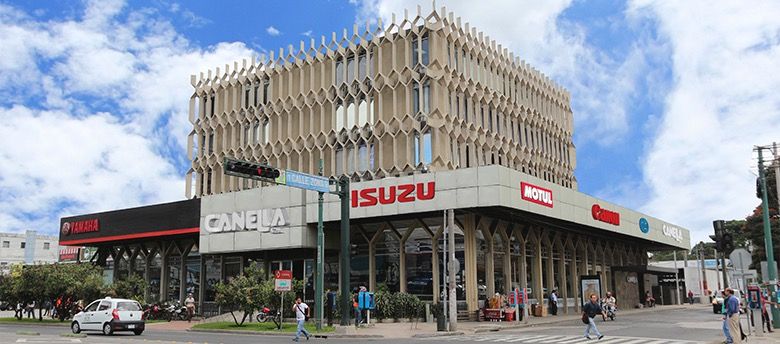
Innovación y Creatividad: Texaco y su Impacto en la Publicidad con VFX Integrado Innovación en Realidad Aumentada para Canella: Cómo Hyper Reality Company Transformó la Experiencia de los Autos En Hyper Reality Company, nos enorgullece llevar la tecnología al siguiente nivel para crear experiencias inmersivas que conecten a las marcas con su público de manera innovadora. Un ejemplo de ello fue nuestro reciente proyecto con Canella, una empresa guatemalteca que ha sido un referente en la venta de vehículos durante 75 años. El Desafío: Crear una Experiencia Única en Realidad Aumentada Canella buscaba celebrar su historia y legado en la industria automotriz de una manera única y moderna. Para ello, colaboraron con nosotros para diseñar una experiencia en realidad aumentada (AR) que permitiera a los usuarios interactuar con tres de sus modelos de automóviles de manera sorprendente. Nuestro objetivo era simple pero ambicioso: permitir que los clientes pudieran visualizar estos autos y personalizarlos en tiempo real mediante AR, cambiando los colores de los vehículos con tan solo un toque en sus dispositivos móviles. La Creación de los Modelos de Autos en 3D Para lograr esta experiencia, creamos tres modelos de automóviles en 3D con un nivel de detalle asombroso, asegurándonos de que cada curva, línea y textura fuera fiel al diseño original de Canella. Estos modelos fueron integrados en una plataforma de realidad aumentada que los usuarios podían acceder fácilmente desde sus teléfonos o tablets. Personalización de Color en Tiempo Real Uno de los aspectos más emocionantes de la experiencia fue la posibilidad de cambiar el color de los autos en tiempo real. Esto no solo ofreció una experiencia interactiva para los usuarios, sino que también les permitió visualizar las distintas opciones de personalización que Canella ofrece en su línea de vehículos. La funcionalidad fue desarrollada con una tecnología avanzada que permite que los colores se actualicen instantáneamente al seleccionar entre las diversas opciones, brindando una sensación realista y atractiva. El Impacto de la Realidad Aumentada en la Experiencia del Cliente La realidad aumentada transformó por completo la experiencia del cliente. En lugar de limitarse a observar un auto estático en una exhibición, los usuarios podían interactuar virtualmente con los vehículos, explorar sus características y personalizarlos a su gusto desde cualquier lugar. Esto permitió a Canella ofrecer un recorrido virtual inmersivo de sus modelos, mejorando significativamente la experiencia de compra. La Colaboración con una Marca con 75 Años de Trayectoria Trabajar con una marca que lleva 75 años en la industria automotriz fue un honor para nosotros. Canella ha sido un pilar en Guatemala, y este proyecto con tecnología de realidad aumentada les permitió continuar innovando, mientras mantienen su compromiso con la calidad y el servicio al cliente. El Rol de Hyper Reality Company En Hyper Reality Company, nuestro compromiso es integrar las últimas tecnologías, como la realidad aumentada, en proyectos que generen valor para las marcas y sus clientes. Este proyecto con Canella es un claro ejemplo de cómo la tecnología puede ser un motor para la innovación en cualquier industria, especialmente en el sector automotriz. Conclusión La realidad aumentada ofrece nuevas posibilidades para que las marcas interactúen con sus clientes de maneras únicas y memorables. Si tu empresa está interesada en explorar las infinitas posibilidades de esta tecnología, en Hyper Reality Company tenemos la experiencia y las herramientas para hacer que esa visión se convierta en realidad. https://hyperrealitycompany.com/wp-content/uploads/2024/09/Grupo-UMA-FOOH-1.2.mp4
Implementation of Digital Twins for your brand
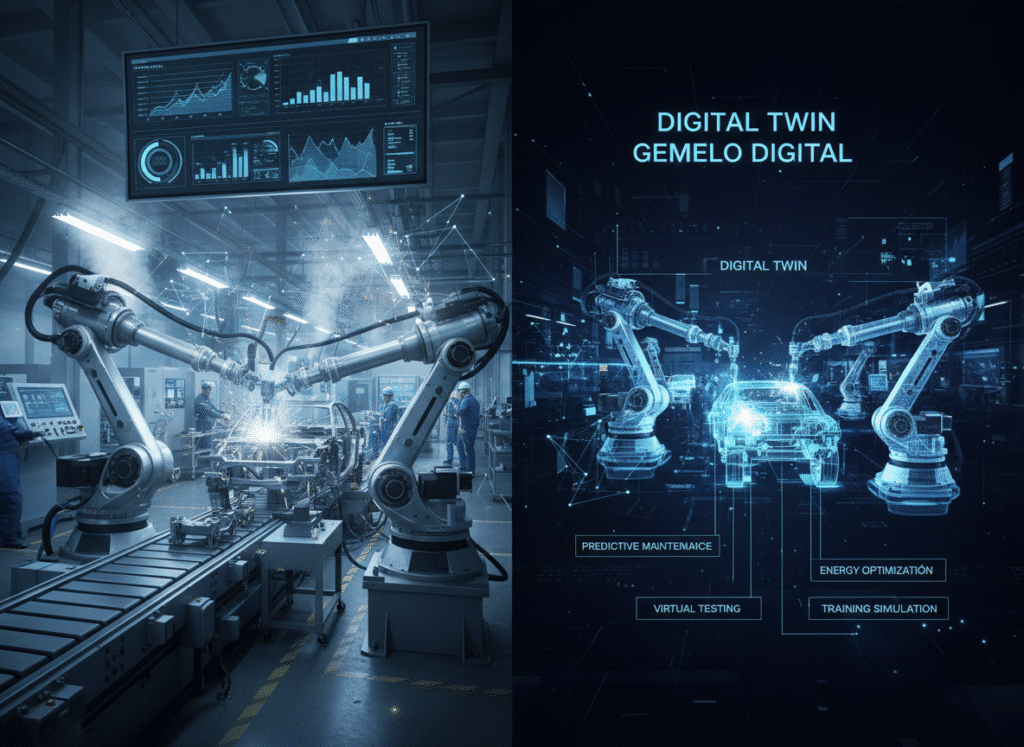
LinkedIn Introduction In today’s business landscape defined by volatility and the constant need for optimization relying on flat data and static reports is a luxury organizations can no longer afford. True disruption lies in going beyond visualization and into full-scale simulation.This is where the Digital Twin comes into play: a dynamic, real time virtual replica of a physical asset, a process, or an entire supply chain. It is not a simple 3D animation; it is a living model that breathes with operational data, allowing business leaders to see the future before it happens. The Return on Investment (ROI) of 3D Vision For CEOs, the central question is: what is the financial benefit of investing in such a sophisticated virtual replica? The value lies in three pillars of efficiency and risk management: Intelligent Predictive Maintenance: The Digital Twin monitors machinery and infrastructure performance in real time. By analyzing performance patterns and correlating sensor (IoT) data, the model can accurately predict when a component is likely to fail.a shift from reactive maintenance (costly and unpredictable) to preventive, scheduled maintenance—dramatically minimizing downtime and its associated losses. Radical Supply Chain Optimization: A Digital Twin of a warehouse or logistics network simulates the flow of inventory, vehicles, and personnel. It allows managers to test changes in layout, routing, or stock capacity to ensure maximum operational efficiency—before moving a single physical brick. Risk and Scenario Simulation: Businesses operate under uncertainty. Digital Twins allow leadership to test the impact of external or internal variables: What happens if raw material prices double? How does a port strike affect safety stock levels? Digital Twins provide a safe platform to manage uncertainty. The Three Key Phases of Implementation Building a robust, functional Digital Twin requires a precise methodology that combines high-fidelity 3D modeling expertise with real-time data engineering. Phase I: The Solid Foundation – Data Capture and 3D Modeling This is the critical phase where physical reality is translated into the digital environment. The accuracy of the Digital Twin depends entirely on the quality of this input. Reality Capture: Using technologies such as 3D laser scanning (LiDAR) and photogrammetry, millions of data points are collected to generate a point cloud that maps infrastructure with millimeter-level accuracy. High-Fidelity 3D Modeling: Captured data is converted into an optimized 3D model. It is vital that the model is not only visually accurate but also functionally structured. Each machine, wall, or conveyor belt must be an individual digital object capable of receiving and transmitting data. Leadership’s Role: Ensure that this initial 3D asset is reusable for other purposes (Augmented Reality, web configurators), maximizing the initial investment. Phase II: Neural Connection – Live Data and IoT Sensors A static 3D model is not a Digital Twin. It becomes one only when connected to the pulse of real operations. Data Integration: The 3D model is connected to existing enterprise data sources: IoT Sensors: Real-time data on temperature, vibration, energy consumption, and asset location. ERP/SCM Systems: Information on inventory, orders, costs, and the supply chain. Real-Time Visualization: The 3D model becomes an intuitive interface where abstract data (numbers, tables) is spatially visualized. If a machine’s temperature rises, its virtual replica in the Digital Twin changes color instantly alerting the operations team. Phase III: Intelligence – Predictive Analysis and Simulation This is where the Digital Twin stops being a monitor and becomes a predictive tool. What-If Scenarios: Leaders can drag and drop virtual variables: What happens if Line A is shut down for maintenance for 8 hours? The Twin simulates the cascading effect on Lines B and C, instantly projecting costs and timelines. Predictive Algorithms: Machine learning models are applied to historical and real-time Twin data to project equipment lifespan or supply chain responses to demand spikes. Rapid Innovation Iteration: The Digital Twin becomes the organization’s “laboratory,” enabling continuous process and product iteration without incurring the high costs of physical errors. The Dual Advantage: From Factory to Customer (B2B and B2C) Investing in Digital Twin implementation delivers double value for forward-thinking brands: Operational Value (Internal B2B): Logistics, optimization, and asset management. Experience Value (External B2C): The same high-fidelity 3D assets used in the Digital Twin can be reused to create compelling immersive customer experiences (e.g., AR product try-ons, interactive web configurators). Standardizing 3D assets ensures that investment in operational efficiency also powers immersive marketing. Conclusion Digital Twin implementation is not a passing trend; it is the natural evolution of asset management and data-driven decision-making. For brands seeking a sustainable competitive advantage, Digital Twins provide the ability to operate in a predictive dimension leaving behind costly, slow reactionary models.Ready to see your assets in action before you invest?At Hyper Reality Company, we specialize in high-fidelity 3D modeling and the data engineering required to build functional, strategic Digital Twins. Contact us today for an initial assessment of your infrastructure and the potential of your first Digital Twin and start operating in the predictive dimension.
