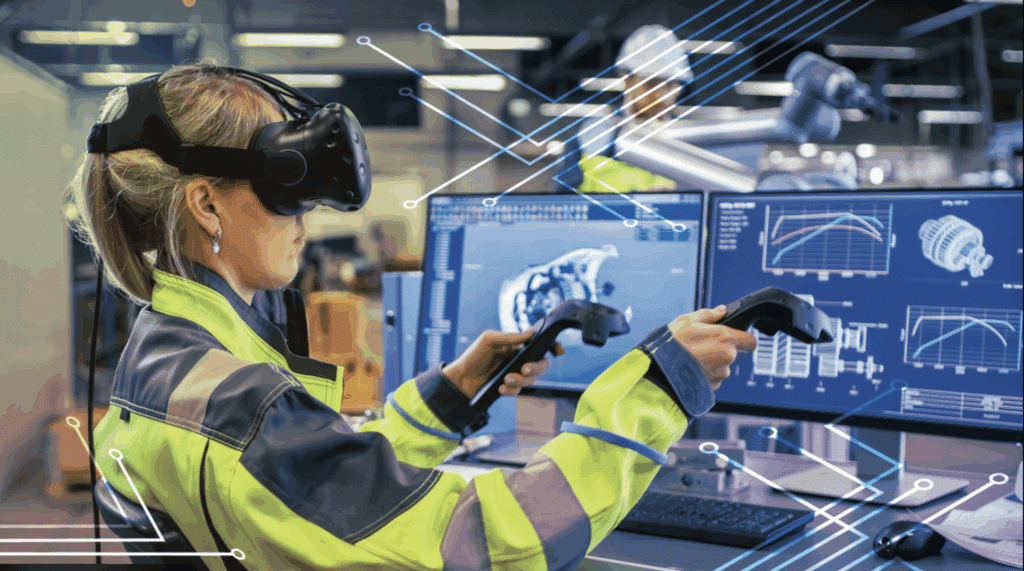
Discover how virtual reality training reduces costs, improves learning outcomes, and delivers clear, measurable ROI for technical teams.
Virtual reality for training is no longer a “nice-to-have” or a futuristic experiment. Today, companies using VR aren’t chasing trends — they’re chasing results.
Technical training has always been expensive. Real equipment, operational downtime, travel costs, constant supervision, and the risk of costly mistakes all add up fast. In high-risk environments, those costs multiply. More time, more money, more exposure.
That’s where HyperVR comes in.
With virtual reality–based technical training, teams can practice inside realistic simulated environments without putting people, equipment, or operations at risk. Employees learn by doing, make mistakes safely, correct them, and repeat the process until mastery — all before stepping into the real-world scenario.
The result?
Fewer on-the-job errors, fewer incidents, faster learning curves, and measurable cost savings from the very first training cycle.
In this article, you’ll learn:
How VR reduces operational training costs
Why immersive learning improves performance
How to calculate ROI for virtual reality training
The question isn’t whether VR works.
It’s how much money you’re losing by not using it.
Why Traditional Technical Training Is So Expensive
Because it relies on limited and costly resources:
Real machinery and equipment
High-risk environments
Operational downtime during training
Constant need for specialized instructors
Every mistake has a cost.
Every repetition consumes resources.
Virtual Reality for Training: What It Is and How It Works
Virtual reality training uses immersive simulated environments where employees interact with equipment, processes, and scenarios as if they were real.
The key difference is simple:
In the real world, mistakes are expensive
In VR, mistakes are part of learning
HyperVR allows teams to train safely, efficiently, and consistently.
Immersive Training Without Real-World Risk
With VR, companies can simulate:
Complex technical operations
Hazardous environments
Critical failure scenarios
High-risk procedures
All without putting people or assets in danger.
Hands-On, Repeatable Learning
VR improves training effectiveness because:
Learning is active, not passive
Employees learn by doing
Processes can be repeated as many times as needed
This increases knowledge retention and shortens learning curves.
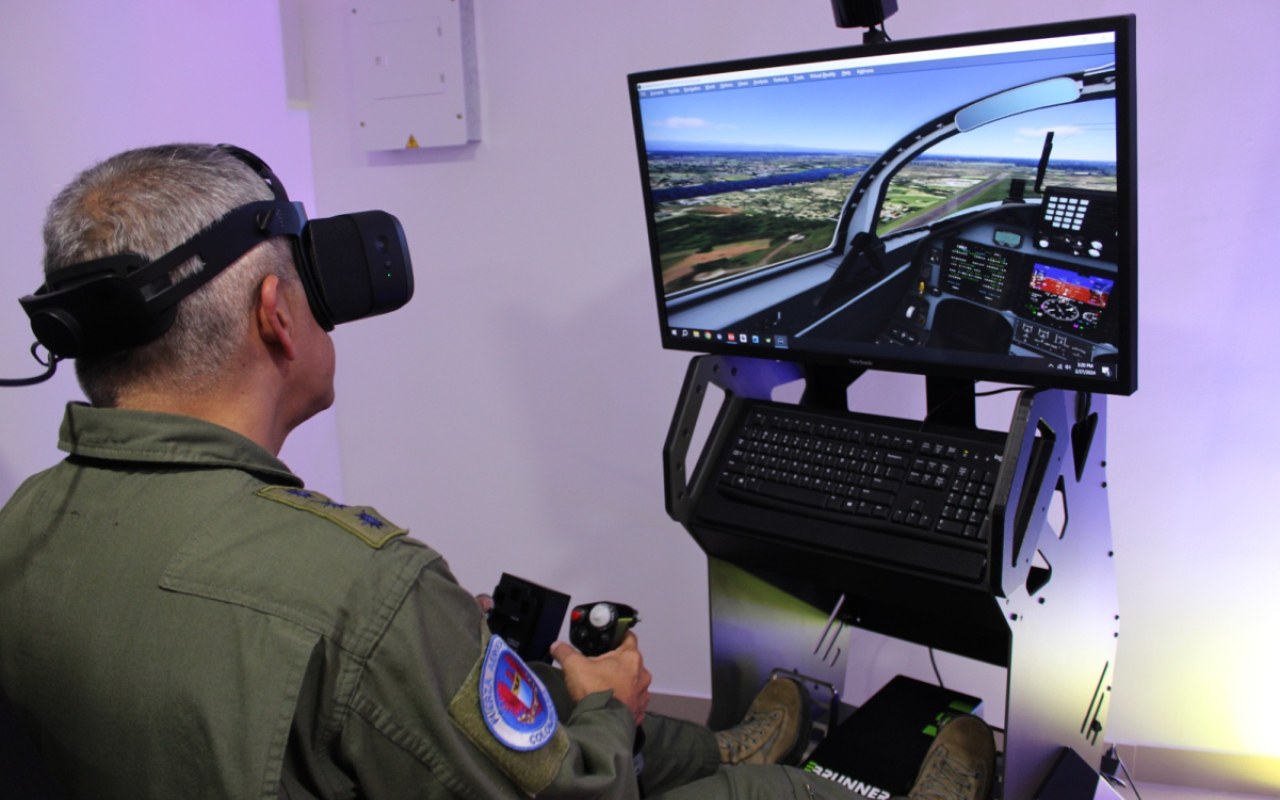

Key Benefits of HyperVR for Technical Training
Reduced training costs
Fewer field errors
Improved workplace safety
Standardized training processes
Performance tracking and analytics
Training stops being an expense.
It becomes an investment.
How to Measure ROI in Virtual Reality Training
ROI in VR training is calculated by comparing:
Traditional training costs vs VR training costs
Reduction in errors and accidents
Decreased training time
Productivity improvements after training
When teams learn faster and make fewer mistakes, ROI becomes obvious.
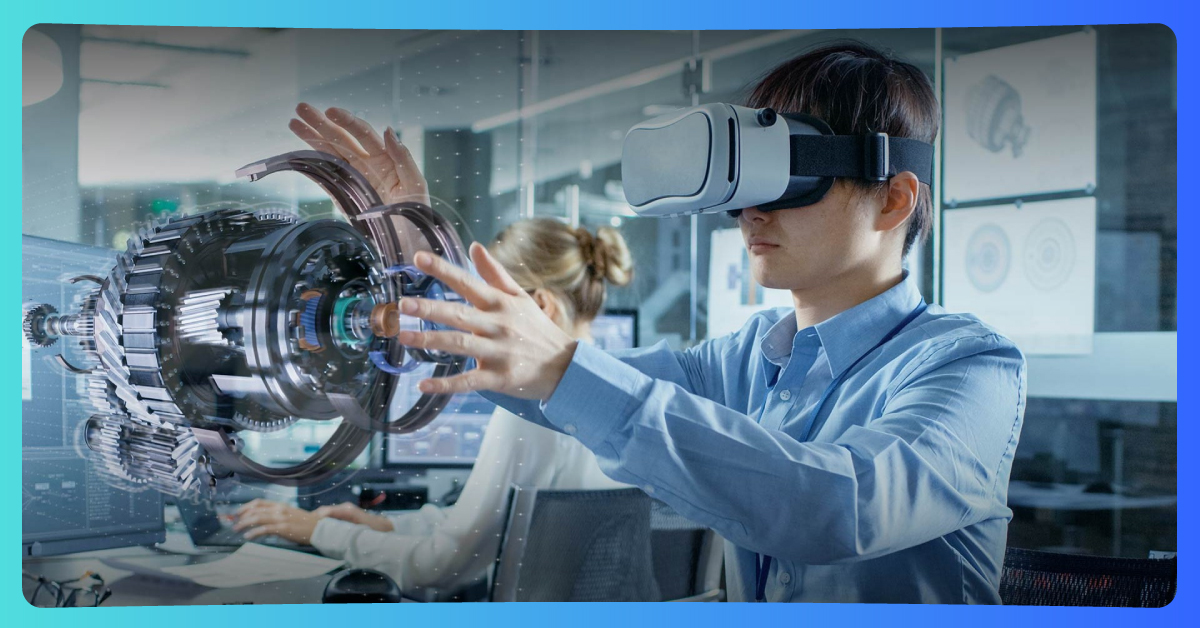


What is virtual reality training for technical teams?
Virtual reality training uses immersive simulations to train employees safely, reduce costs, and improve learning outcomes without real-world risks.
Smarter training isn’t optional anymore.
Smarter training is the competitive advantage.
Discover how HyperVR can reduce costs and improve technical performance from day one.
Virtual reality training isn’t a future promise.
It’s a present-day solution for safer, faster, and more cost-effective training.
With HyperVR, technical training no longer depends on trial and error in the real world. It becomes measurable, scalable, and controlled.
If efficiency, safety, and ROI matter, the choice is clear.
