Key AR Tools for Marketing in 2025
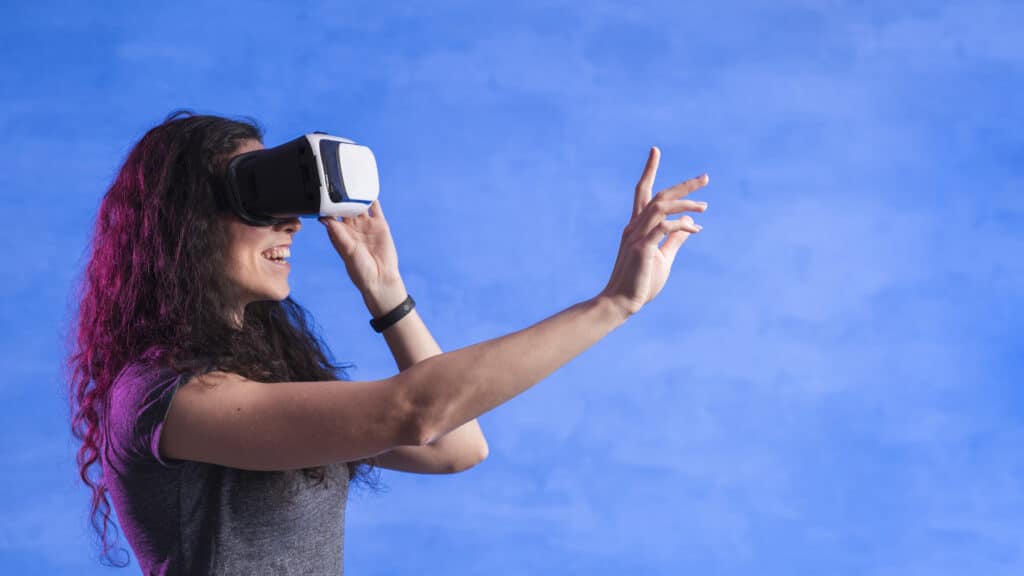
AR en in Marketing LinkedIn Introduction: Augmented reality (AR) is revolutionizing the way brands engage with their consumers. By 2025, AR is no longer an emerging technology but a key tool that allows companies to create immersive and interactive experiences that enhance customer engagement and loyalty. With the ability to overlay virtual elements onto the real world, businesses can offer more attractive and personalized experiences.AR tools are becoming an essential part of marketing strategies for many brands, as they enable consumers to interact more directly and entertainingly with products and services. In this article, we will explore the best AR tools for marketing in 2025, highlighting their main features, how they are used in successful campaigns, and examples of companies already implementing them.If you’re looking for innovative ways to connect with your customers and transform your marketing strategy, this article will provide you with the necessary information to take the next step towards the future of marketing with AR. The Best Augmented Reality Tools for Marketing in 2025 Augmented reality (AR) is making a difference in marketing strategies around the world. With the right tools, brands can create innovative experiences that enhance their relationship with customers. Below, we present some of the best AR tools for marketing in 2025: Spark AR Studio: Spark AR is a platform by Facebook that allows creators to design AR filters and effects for Instagram and Facebook. This tool is popular among brands because it offers an easy interface to create interactive experiences that can be quickly shared across social media. It is ideal for visual campaigns aiming to attract a young, active audience on social platforms. Brands can use Spark AR to launch branded filters, interactive games, or personalized experiences that drive higher audience engagement. Vuforia: Vuforia is one of the most powerful and comprehensive platforms for developing AR experiences. This tool enables brands to integrate AR into mobile apps or even wearable devices. With Vuforia, businesses can offer immersive experiences where consumers interact with virtual products superimposed onto the real world, such as viewing 3D products or running real-time simulations. It’s perfect for e-commerce, retail, and the manufacturing industry. Adobe Aero: Adobe Aero allows users to create AR experiences without needing to be an expert in programming. The platform is accessible and allows designers and creators to add interactive elements to their environment with just a few clicks. Aero is particularly useful for marketing campaigns that require rapid implementation without sacrificing quality. Companies can use this tool to create interactive presentations, brand activations, or visual content for e-commerce platforms. How AR Tools Are Transforming Marketing Augmented reality is not only transforming how brands present themselves but also how consumers interact with them. Here are some of the ways these tools are impacting marketing: Personalization and Immersive Experience: AR allows brands to offer personalized experiences in real-time. For example, consumers can virtually try on products or visualize how a piece of furniture would look in their home before making a purchase. Increased Customer Interaction: AR experiences encourage consumers to interact more deeply with brands. This not only boosts engagement but also enhances brand recall, as consumers remember experiences more than traditional ads. Examples of Brands Using AR in Marketing Several examples of major brands that have implemented AR in their marketing campaigns demonstrate how this technology is changing the way businesses interact with their customers: IKEA and its AR for Furniture Visualization: With the IKEA Place app, users can see how the store’s furniture would look in their home using AR. This not only enhances the shopping experience but also eliminates doubts about product fit, which increases sales and reduces returns. L’Oreal and its AR for Virtual Makeup Try-Ons: L’Oreal’s Style My Hair app allows users to virtually try different hair colors and makeup styles. This technology has made the shopping process more fun and convenient, boosting consumer confidence in their purchasing decisions. Conclusion: Augmented reality is proving to be a powerful tool in marketing, allowing brands to create unique, interactive, and personalized experiences for their customers. As more companies adopt these technologies, AR marketing will continue to be one of the top trends in 2025. If you’re looking to take your marketing to the next level, it’s time to consider implementing AR in your strategy! Ready to integrate augmented reality into your marketing strategy? Contact us to discover how Hyper Reality Company can provide AR solutions to transform your brand and enhance the customer experience.
Herramientas Clave de AR para Marketing en 2025
AR en el Marketing LinkedIn Introducción: La realidad aumentada (AR) está revolucionando la forma en que las marcas se relacionan con sus consumidores. En 2025, la AR ya no es una tecnología emergente, sino una herramienta clave que permite a las empresas crear experiencias inmersivas e interactivas que mejoran la participación y la lealtad del cliente. Con la capacidad de superponer elementos virtuales en el mundo real, las empresas pueden ofrecer experiencias más atractivas y personalizadas.Las herramientas de AR se están convirtiendo en una parte esencial de las estrategias de marketing de muchas marcas, ya que permiten que los consumidores interactúen de manera más directa y entretenida con los productos y servicios. En este artículo, exploraremos las mejores herramientas de AR para marketing en 2025, destacando sus características principales, cómo se utilizan en campañas exitosas y ejemplos de empresas que ya las están implementando.Si estás buscando formas innovadoras de conectar con tus clientes y transformar tu estrategia de marketing, este artículo te ofrecerá la información necesaria para dar el siguiente paso hacia el futuro del marketing con AR. Las Mejores Herramientas de Realidad Aumentada para Marketing en 2025 La realidad aumentada (AR) está marcando una diferencia en las estrategias de marketing de todo el mundo. Con las herramientas adecuadas, las marcas pueden crear experiencias innovadoras que mejoren la relación con sus clientes. A continuación, te presentamos algunas de las mejores herramientas de AR para marketing en 2025: Spark AR Studio: Spark AR es una plataforma de Facebook que permite a los creadores diseñar filtros y efectos de AR para Instagram y Facebook. Esta herramienta es popular entre las marcas porque ofrece una interfaz sencilla para crear experiencias interactivas que pueden ser compartidas rápidamente a través de las redes sociales. Es ideal para campañas visuales que buscan atraer a la audiencia joven y activa en plataformas sociales. Las empresas pueden usar Spark AR para lanzar filtros de marca, juegos interactivos o experiencias personalizadas que ayuden a crear mayor participación del público. Vuforia: Vuforia es una de las plataformas más poderosas y completas para desarrollar experiencias AR. Esta herramienta permite a las marcas integrar AR en aplicaciones móviles o incluso en dispositivos wearables. Con Vuforia, las empresas pueden ofrecer experiencias inmersivas donde los consumidores pueden interactuar con productos virtuales superpuestos en el mundo real, como visualizar productos en 3D o realizar simulaciones en tiempo real. Es perfecta para el comercio electrónico, el retail y la industria manufacturera. Adobe Aero: Adobe Aero permite crear experiencias de AR sin necesidad de ser un experto en programación. La plataforma es accesible y permite a los diseñadores y creadores agregar elementos interactivos a su entorno con solo unos pocos clics. Aero es particularmente útil para campañas de marketing que requieren una rápida implementación, sin sacrificar calidad. Las empresas pueden utilizar esta herramienta para crear presentaciones interactivas, activaciones de marca o contenido visual para plataformas de comercio electrónico. Cómo las Herramientas de AR Están Transformando el Marketing La realidad aumentada no solo está transformando cómo las marcas se presentan, sino cómo los consumidores interactúan con ellas. Algunas de las formas en que estas herramientas están impactando el marketing son: Personalización y Experiencia Inmersiva: La AR permite a las marcas ofrecer experiencias personalizadas en tiempo real. Por ejemplo, los consumidores pueden probarse productos virtualmente o visualizar cómo quedaría un mueble en su casa antes de comprarlo. Aumento de la Interacción con el Cliente: Las experiencias de AR invitan a los consumidores a interactuar más profundamente con las marcas. Esto no solo aumenta la participación, sino que también mejora la recordación de marca, ya que los consumidores recuerdan las experiencias más que los anuncios tradicionales. Ejemplos de Marcas que Usan AR en Marketing Varios ejemplos de grandes marcas que han implementado AR en sus campañas de marketing demuestran cómo esta tecnología está cambiando la forma en que las empresas interactúan con sus clientes: IKEA y su AR para Visualización de Muebles: Con la aplicación IKEA Place, los usuarios pueden ver cómo los muebles de la tienda quedarían en su hogar utilizando AR. Esto no solo mejora la experiencia de compra, sino que también elimina las dudas sobre el encaje de los productos, lo que aumenta las ventas y reduce las devoluciones. L’Oreal y su AR para Pruebas Virtuales de Maquillaje: La aplicación Style My Hair de L’Oreal permite a los usuarios probar diferentes colores de cabello y estilos de maquillaje virtualmente. Esta tecnología ha hecho que el proceso de compra sea más entretenido y conveniente, aumentando la confianza del consumidor en sus decisiones de compra. Conclusión: La realidad aumentada está demostrando ser una herramienta poderosa en el marketing, permitiendo a las marcas crear experiencias únicas, interactivas y personalizadas para sus clientes. A medida que más empresas adoptan estas tecnologías, el marketing de AR seguirá siendo una de las principales tendencias en 2025. Si deseas llevar tu marketing al siguiente nivel, ¡es hora de considerar la implementación de AR en tu estrategia! ¿Listo para integrar la realidad aumentada en tu estrategia de marketing? Contáctanos para descubrir cómo Hyper Reality Company te da soluciones de AR para que pueden transformar tu marca y mejorar la experiencia del cliente.
How to Create an Effective AR Experience for Your Brand
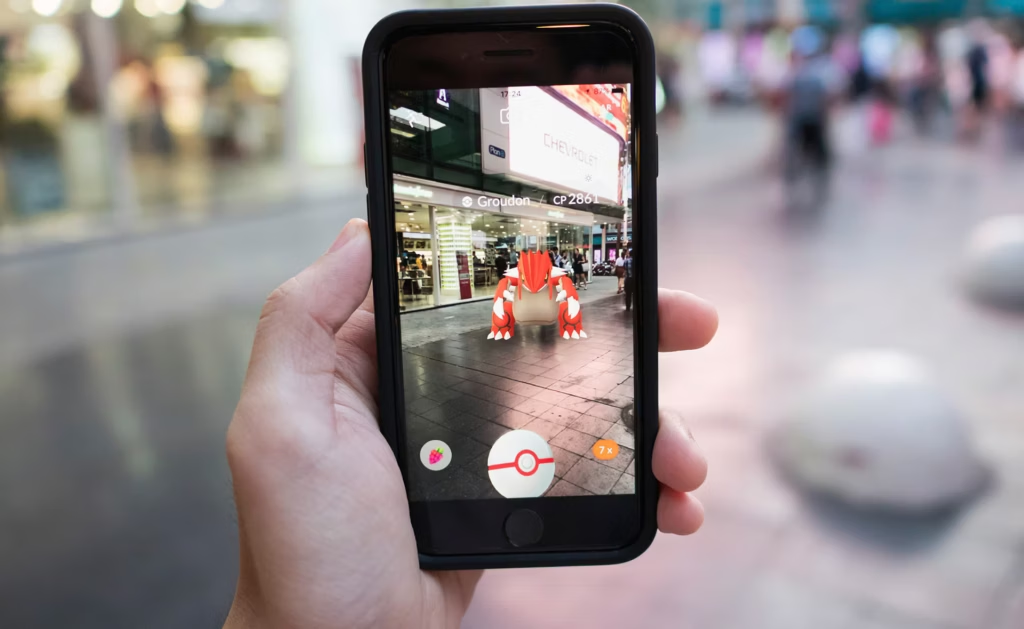
Make an impact on your customers with AR LinkedIn Introduction Augmented Reality (AR) has revolutionized the way brands interact with their consumers by providing immersive experiences that not only grab attention but also foster customer loyalty. If your company is looking for innovative solutions, you’re in the right place. In this article, we’ll explore how you can use AR to create immersive experiences that transform how your customers interact with your brand. 1. Define the Objectives of Your AR Experience Before you start designing your AR experience, it’s crucial to be clear about the objectives you want to achieve. Are you looking to increase brand awareness? Improve customer interaction? Or perhaps increase conversions in your online store?Some examples of specific objectives include: Increasing product interaction. Improving the shopping experience. Boosting customer retention. Having these goals clear will help guide the design of your experience and ensure that it meets your brand’s expectations. 2. Know Your Audience Understanding your audience is key to designing an experience that resonates with them. How do they consume content? What devices do they use? Be sure to create experiences that are adapted to their level of knowledge and technological preferences.Points to consider: The age and interests of your audience. The most common devices (smartphones, tablets, AR glasses). Your audience’s familiarity with AR technology. 3. Choose the Type of AR Experience There are different types of AR experiences you can use depending on your brand’s objectives.Some options include: AR filters on social media: Perfect for increasing engagement on platforms like Instagram or Facebook. Virtual try-ons: Like clothing or makeup try-ons, allowing users to try products from their phone. 3D tours or interactive maps: Ideal for real estate or brands wanting to offer a more immersive experience. FOOH activations: A great option for creating interactive experiences in public spaces. Choose the type of experience that best aligns with your audience’s interests and your brand’s goals. 4. Design an Attractive and Simple Interface The AR experience must be intuitive and easy to use. If the design is complicated, users may get frustrated and abandon the experience. Make sure the interface is clear, with visible buttons and simple processes.Tips: Keep the interface clean and simple. Provide clear instructions for users interacting with the experience for the first time. Optimize the experience to work well on different devices. 5. Optimize for Conversion A successful AR experience must have a clear goal: conversion. Whether it’s making a purchase, signing up on a website, or sharing the experience on social media, make sure each interaction guides users toward the desired action.Examples of calls to action (CTA): “Buy now and get an exclusive discount” “Download our app for full access” “Share your AR experience and win prizes” 6. Test and Continuously Improve Once your AR experience is live, it’s essential to test and optimize it. Analyze user behavior and adjust the experience based on feedback and data you receive. Continuous improvement is key to maintaining user interest.Key metrics to track: Product interaction rate. Average experience duration. Completed actions (purchase, sign-up, share). 7. Promote Your AR Experience Promoting the experience is crucial to ensure your audience is aware of it. Use social media, email marketing, and influencers to spread the word.Promotion strategies: Social media: Post on Instagram, TikTok, and Facebook to generate engagement. Email marketing: Send emails to your current customers inviting them to try the experience. Collaborations with influencers: Let influencers interact with your experience and share it with their followers. Conclusion Creating an effective AR experience for your brand not only increases engagement but also improves conversions and builds customer loyalty. By following these steps, you can offer an immersive experience that combines innovation, technology, and a great return on investment.Are you ready to take your brand to the next level with AR? Contact us and discover how our personalized AR, CGI, and VR solutions can help you achieve it. Ready to integrate AR into your business? Contact Hyper Reality Company to get a personalized solution and transform your digital marketing.
Cómo Crear una Experiencia AR Efectiva para Tu Marca
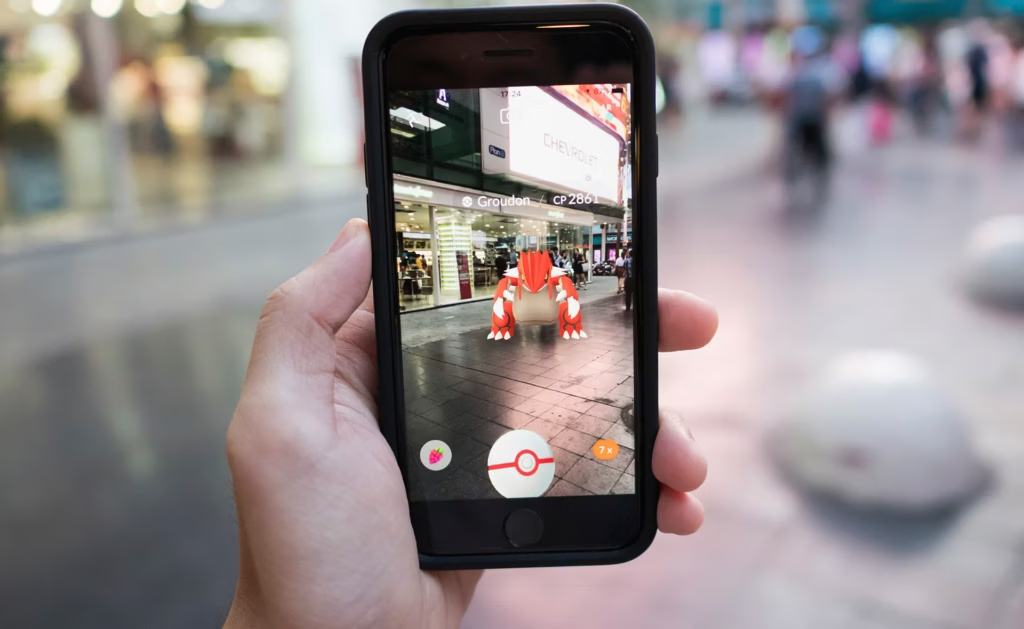
Impacta a tus clientes con AR LinkedIn Introducción La Realidad Aumentada (AR) ha revolucionado la manera en que las marcas interactúan con sus consumidores, brindando experiencias inmersivas que no solo captan la atención, sino que también fomentan la lealtad del cliente. Si tu empresa esta buscando soluciones innovadoras estás en el lugar adecuado. En este artículo, exploraremos cómo puedes utilizar AR para crear experiencias inmersivas que transformen la forma en que tus clientes interactúan con tu marca. 1. Define los Objetivos de tu Experiencia AR Antes de empezar a diseñar tu experiencia AR, es fundamental tener claro qué objetivos quieres alcanzar. ¿Buscas aumentar el conocimiento de marca? ¿Mejorar la interacción del cliente? ¿O tal vez incrementar las conversiones en tu tienda online?Algunos ejemplos de objetivos específicos incluyen: Aumentar la interacción con productos. Mejorar la experiencia de compra. Incrementar la retención de clientes. Tener estos objetivos claros ayudará a guiar el diseño de tu experiencia y asegurar que cumpla con las expectativas de tu marca. 2. Conoce a Tu Audiencia Conocer a tu audiencia es clave para diseñar una experiencia que resuene con ellos. ¿Cómo consumen contenido? ¿Qué dispositivos utilizan? Asegúrate de crear experiencias adaptadas a su nivel de conocimiento y preferencias tecnológicas.Algunos puntos a considerar:La edad y los intereses de tu audiencia.Los dispositivos más comunes (smartphones, tablets, gafas AR).La familiaridad de tu audiencia con la tecnología AR. 3. Elige el Tipo de Experiencia AR Existen diferentes tipos de experiencias AR que puedes usar según los objetivos de tu marca. Algunas opciones incluyen: Filtros AR en redes sociales: Perfectos para aumentar la interacción en plataformas como Instagram o Facebook. Pruebas virtuales: Como los probadores de ropa o maquillaje, que permiten a los usuarios probar productos desde su teléfono. Recorridos 3D o mapas interactivos: Ideales para inmobiliarias o marcas que deseen ofrecer una experiencia más inmersiva. Activaciones de FOOH: Una excelente opción para crear experiencias interactivas en el espacio público. Elige el tipo de experiencia que mejor se alinee con los intereses de tu audiencia y los objetivos de tu marca. 4. Diseña una Interfaz Atractiva y Sencilla La experiencia AR debe ser intuitiva y fácil de usar. Si el diseño es complicado, los usuarios pueden frustrarse y abandonar la experiencia. Asegúrate de que la interfaz sea clara, con botones visibles y procesos sencillos. Consejos: Mantén la interfaz limpia y sencilla. Ofrece instrucciones claras para los usuarios que interactúan con la experiencia por primera vez. Optimiza la experiencia para que funcione bien en diferentes dispositivos. 5. Optimiza para la Conversión Una experiencia AR exitosa debe tener un objetivo claro: convertir. Ya sea para realizar una compra, registrarse en un sitio web o compartir la experiencia en redes sociales, asegúrate de que cada interacción guíe a los usuarios hacia la acción que deseas. Ejemplos de llamados a la acción (CTA): “Compra ahora y recibe un descuento exclusivo” “Descarga nuestra app para obtener acceso completo” “Comparte tu experiencia AR y gana premios» 6. Realiza Pruebas y Mejora Continuamente Una vez que tu experiencia AR esté en marcha, es esencial probarla y optimizarla. Analiza el comportamiento de los usuarios y ajusta la experiencia en función de los comentarios y los datos que recibas. La mejora continua es clave para mantener el interés de los usuarios.Métricas clave a seguir: Tasa de interacción con el producto. Duración promedio de la experiencia. Acciones completadas (compra, registro, compartir). 7. Promociona tu Experiencia AR La promoción de la experiencia es crucial para asegurarte de que tu audiencia se entere. Utiliza redes sociales, email marketing e influencers para darla a conocer.Estrategias de promoción:Redes sociales: Publica en Instagram, TikTok, y Facebook para generar interacción.Email marketing: Envía correos electrónicos a tus clientes actuales invitándolos a probar la experiencia.Colaboraciones con influencers: Permite que influencers interactúen con tu experiencia y la compartan con sus seguidores. Conclusión Crear una experiencia AR efectiva para tu marca no solo aumenta la interacción, sino que también mejora las conversiones y fideliza a los clientes. Al seguir estos pasos, podrás ofrecer una experiencia inmersiva que combine innovación, tecnología y un gran retorno de inversión.¿Listo para llevar tu marca al siguiente nivel con AR? Contáctanos y descubre cómo nuestras soluciones personalizadas de AR, CGI y VR pueden ayudarte a lograrlo. ¿Estás listo para integrar AR en tu negocio? Contacta a Hyper Reality Company para obtener una solución personalizada y transformar tu marketing digital.
Virtual Reality: Redefining Trade Shows and Commercial Events

VR and its impact LinkedIn Introducción In recent years, virtual reality (VR) has evolved from a technological curiosity into a strategic tool for brands seeking to innovate their marketing and event experiences. Trade shows, conferences, and exhibitions, once confined to physical aisles and traditional booths, can now be entirely digital, interactive, and limitless.Thanks to VR, attendees can walk through a virtual pavilion, explore booths, interact with products, and even engage with brand representatives in real-time all from a three-dimensional environment that mirrors the in-person experience, but enhanced by technology.What once required travel, accommodation, and physical limitations can now be experienced from anywhere in the world, with the same sense of presence and immersion.Virtual reality not only offers efficiency and reach but also a more emotional, personalized, and sustainable way to connect brands with consumers. In this article, we will explore how VR is redefining commercial events, the benefits it offers, real-world success stories, and how innovative companies like Hyper Reality Company are leading this transformation. How Virtual Reality is Transforming Trade Shows and Commercial Events Traditionally, trade shows and exhibitions have been one of the most powerful tools in B2B marketing. However, their reach has always been limited by physical space and logistical costs. VR removes these barriers, offering an unlimited experience where attendees can explore, try products, and connect with brands in fully immersive environments. Immersive Interaction and Active Participation With VR, attendees stop being passive spectators. They become active participants in the event.They can walk through a virtual booth, touch simulated 3D products, see how they work, and even engage in interactive experiences like contests, demos, or brand games.This participation fosters a stronger emotional connection, as the user feels immersed in the brand’s universe, not just observing from the outside. Global Accessibility and Boundless Experiences Another radical change brought by VR is the democratization of events. Anyone, from anywhere in the world, can attend a virtual trade show without needing to travel.This not only increases reach but also reduces costs and environmental footprint, aligning with the sustainability trends that businesses are seeking today.For brands, this presents the opportunity to multiply their visibility, reach new markets, and collect valuable data on user behavior in virtual environments. Benefits of Implementing VR in Commercial Events 1. Unique and Memorable Experiences In a world saturated with digital stimuli, VR offers something that very few tools can: total immersion.When attendees wear a VR headset, they disconnect from the real world and fully immerse themselves in the brand’s universe.This not only increases attention and recall but turns the event into an emotional, multisensory experience that is impossible to replicate with traditional media. 2. Increased Global Reach and Participation A virtual trade show has no limits in terms of space or location.A brand can gather thousands of attendees simultaneously from different countries without worrying about capacity.Moreover, VR breaks language and cultural barriers, as content can be dynamically translated and adapted.This enables a local company to make an international impact, even without a physical global infrastructure. 3. Engagement and Real-Time Data In physical events, measuring attendee attention and interest can be difficult.However, in a VR environment, everything can be measured precisely: which booths a user visited, how long they stayed, which product they explored, what interactions they generated, or if they completed a specific action (e.g., a purchase or download).This data allows for optimizing future experiences and personalizing communication with each attendee. 4. Sustainability and Efficiency Implementing VR in events drastically reduces the use of physical materials, transportation, and waste.This not only lowers operational costs but also positions the brand as a sustainability advocate.More and more companies are looking for green tech solutions, and VR is the perfect tool to meet that goal. Examples of Brands Using VR in Trade Shows and Events 1. Audi: Virtual Test Drives Audi transformed its exhibitions by allowing visitors to virtually test drive its cars.With a VR headset, attendees can «drive» a new model through scenic or urban roads, with sound, movement, and visual effects that replicate the real experience.The result: more interaction, greater excitement, and a direct connection with the product without needing the car physically present. 2. L’Oréal: Digital Beauty Experiences L’Oréal brought VR to its beauty events, allowing users to virtually experience cosmetic products.From trying lipstick shades to viewing complete looks in a VR smart mirror, this strategy not only attracts more people but also generates an emotional experience based on personalization. 3. Samsung: Immersive Stands and 360° Experiences Samsung integrated VR into its tech presentations with 360° virtual spaces where visitors can interact with products, access interactive demos, and even participate in usage simulations.This turns a simple exhibition into a tech show that leaves a lasting impression. 4. Hyper Reality Company: 3D Brand Experiences Innovative companies like Hyper Reality Company are designing customized VR environments for brands, where every detail, from lighting to visual storytelling, aligns with the company’s values.With the integration of AI and 3D modeling, these experiences not only showcase products but also tell immersive stories that strengthen brand identity.Working with brands like Eucerin, Hyper Reality is taking brand experiences to new heights. They recently participated in the Red de Gestores activity, where they shared the talk «From Human to Hyper.» The talk explored how technological ideas emerge from human emotions, thoughts, and perceptions. During the event, attendees were directly involved, experiencing VR technology through innovative VR headsets. Conclusion Virtual reality is changing how brands conceive, organize, and experience commercial events.It’s no longer just about gathering people in a physical space; it’s about creating memorable experiences that connect emotionally with attendees and transcend time and distance.VR offers a unique combination of creativity, interactivity, and data analysis, becoming an essential tool for modern experiential marketing.Brands that adopt this technology today will not only stand out as innovators but will also be building the future of global events. Want to take your trade shows and events to the next level with VR? At Hyper Reality Company, we create customized immersive experiences that transform
Realidad Virtual: Redefiniendo Ferias y Eventos Comerciales
VR y su impacto LinkedIn Introducción En los últimos años, la realidad virtual (VR) ha pasado de ser una curiosidad tecnológica a convertirse en una herramienta estratégica para las marcas que buscan innovar en sus experiencias de marketing y eventos. Las ferias comerciales, conferencias y exposiciones, lo cual limitan a los pasillos físicos y a los stands tradicionales: ahora, el espacio puede ser totalmente digital, interactivo y sin fronteras.Gracias a la VR, los asistentes pueden caminar por un pabellón virtual, explorar stands, interactuar con productos y hasta conversar con representantes de marca en tiempo real todo desde un entorno tridimensional que imita la experiencia presencial, pero amplificada por la tecnología.Lo que antes requería traslados, hospedajes y limitaciones físicas, hoy se puede vivir desde cualquier parte del mundo, con la misma sensación de presencia e inmersión.La realidad virtual no solo ofrece eficiencia y alcance, sino también una forma más emocional, personalizada y sostenible de conectar marcas y consumidores. En este artículo, exploraremos cómo la VR está redefiniendo los eventos comerciales, los beneficios que ofrece, casos reales de éxito, y cómo empresas innovadoras como Hyper Reality Company están liderando esta transformación. ¿Cómo la Realidad Virtual Está Transformando las Ferias y Eventos Comerciales? Tradicionalmente, las ferias y exposiciones han sido una de las herramientas más poderosas del marketing B2B. Sin embargo, su alcance siempre ha estado limitado por el espacio físico y los costos logísticos. La VR elimina esas barreras, ofreciendo una experiencia ilimitada donde los asistentes pueden explorar, probar productos y conectarse con las marcas en entornos completamente inmersivos. Interacción Inmersiva y Participación Activa Con la VR, los asistentes dejan de ser simples espectadores. Se convierten en participantes activos dentro del evento.Pueden caminar por un stand virtual, tocar productos simulados en 3D, ver cómo funcionan, e incluso participar en experiencias interactivas como concursos, demostraciones o juegos de marca.Esta participación genera un vínculo emocional más fuerte, ya que el usuario se siente dentro del universo de la marca, no solo observando desde fuera. Accesibilidad Global y Experiencias Sin Fronteras Otro cambio radical que trae la VR es la democratización de los eventos. Cualquier persona, desde cualquier parte del mundo, puede asistir a una feria virtual sin necesidad de moverse. Esto no solo aumenta el alcance, sino que reduce costos y huella ambiental, alineándose con las tendencias de sostenibilidad que las empresas buscan hoy.Para las marcas, esto representa la oportunidad de multiplicar su visibilidad, llegar a nuevos mercados y recopilar datos valiosos sobre el comportamiento de los usuarios en entornos virtuales. Beneficios de Implementar VR en Eventos Comerciales 1. Experiencias Únicas y Memorables En un mundo saturado de estímulos digitales, la VR ofrece algo que muy pocas herramientas logran: inmersión total.Cuando los asistentes usan un visor VR, se desconectan del mundo real y se sumergen por completo en el universo de la marca. Esto no solo aumenta la atención y la recordación, sino que convierte el evento en una experiencia emocional y multisensorial, imposible de replicar con medios tradicionales. 2. Aumento del Alcance y la Participación Global Una feria virtual no tiene límites de espacio ni de ubicación.Una marca puede reunir a miles de asistentes simultáneos de diferentes países sin preocuparse por el aforo.Además, la VR rompe barreras idiomáticas y culturales, ya que los contenidos pueden traducirse y adaptarse dinámicamente.Esto hace posible que una empresa local tenga un impacto internacional, incluso sin una infraestructura física global. 3. Engagement y Data en Tiempo Real En los eventos físicos, medir la atención y el interés del público puede ser difícil.En cambio, en un entorno de VR, todo puede medirse con precisión: qué stands visitó un usuario, cuánto tiempo permaneció, qué producto exploró, qué interacción generó o si completó una acción específica (por ejemplo, una compra o descarga).Estos datos permiten optimizar futuras experiencias y personalizar la comunicación con cada asistente. 4. Sostenibilidad y Eficiencia Implementar VR en eventos reduce drásticamente el uso de materiales físicos, transporte y residuos.Esto no solo disminuye los costos operativos, sino que también convierte a la marca en un agente comprometido con la sostenibilidad.Cada vez más empresas buscan soluciones tecnológicas verdes, y la VR es una herramienta perfecta para cumplir ese objetivo. Ejemplos de Marcas que Están Usando VR en Ferias y Eventos 1. Audi: Test Drives Virtuales Audi transformó sus exhibiciones al permitir que los visitantes probaran sus autos de manera virtual.Con un visor VR, los asistentes pueden “conducir” un nuevo modelo por una carretera escénica o urbana, con sonido, movimiento y efectos visuales que replican la experiencia real.El resultado: mayor interacción, más emoción y una conexión directa con el producto sin necesidad de tener el auto físicamente presente. 2. L’Oréal: Experiencias de Belleza Digital L’Oréal ha llevado la VR a sus eventos de belleza permitiendo que los usuarios experimenten productos cosméticos virtualmente.Desde probar tonos de labial hasta ver looks completos en un espejo inteligente VR, esta estrategia no solo atrae más público, sino que genera una experiencia emocional basada en la personalización. 3. Samsung: Stands Inmersivos y Experiencias 360° Samsung ha integrado VR en sus presentaciones tecnológicas con espacios virtuales 360° donde los visitantes pueden interactuar con los productos, acceder a demostraciones interactivas e incluso participar en simulaciones de su uso.Esto convierte una simple exhibición en un espectáculo tecnológico que deja huella. 4. Hyper Reality Company: Experiencias de Marca en 3D Empresas innovadoras como Hyper Reality Company están diseñando entornos VR personalizados para marcas, donde cada detalle desde la iluminación hasta la narrativa visual se adapta a los valores de la empresa.Con la integración de IA y modelado 3D, estas experiencias no solo muestran productos, sino que cuentan historias inmersivas que fortalecen la identidad de marca. Trabajando con marcas como Eucerin, llevando la experiencia de marca a nuevas alturas. Además, recientemente participaron activamente en la actividad Red de Gestores, donde compartieron la charla titulada «De lo humano a lo Hyper«. En ella, exploraron cómo las ideas tecnológicas nacen del ser humano, de lo que sentimos, pensamos y percibimos. Durante el evento, también involucramos a los asistentes
Implement AR and VR in Your Marketing Strategy

AR and VR in Marketing LinkedIn Introduction Augmented reality (AR) and virtual reality (VR) are two technologies that are radically transforming digital marketing. While traditional marketing techniques such as static ads and TV commercials are still effective, smart brands are adopting AR and VR to create immersive and personalized experiences for consumers. These advancements allow brands to connect with customers on a deeper emotional level, changing the way they interact with products and services.Instead of just showing a product, AR and VR enable users to experience and try products before purchasing, all from the comfort of their devices. From virtual try-ons to interactive storefronts, these technologies provide consumers with a unique shopping experience that goes beyond traditional interactions.In this article, we will explore how to integrate AR and VR into your marketing strategy, the benefits they offer, examples of brands that are already leading the way, and how you can start implementing these technologies effectively to stand out your brand. What is Virtual Reality? Virtual Reality (VR), also known as ‘Artificial Reality’ or ‘Cyberspace’, is a digital environment that simulates scenes or objects that appear real, creating the sensation of the user being fully immersed in it. By using interactive devices such as VR headsets (HMD), along with sensors and actuators, VR allows the user to experience a computer generated artificial environment, simulating reality through sensory stimuli like sight, sound, and, to a lesser extent, touch.VR requires technology that isolates the user from the real world, providing a total sensory experience within a virtual environment. In addition to headsets, other devices like headphones, gloves, or special suits can be used to enhance the experience. Although smell and taste are still underdeveloped, VR is constantly evolving to provide an even more immersive experience. What is Augmented Reality? Augmented reality (AR) refers to a representation of reality viewed through a technological device, with digital information added by the device. This way, tangible physical elements are combined with virtual elements, creating an augmented (enhanced) reality in real time.In this manner, AR complements the perception of the real world with layers of digital information (static images, sounds, videos, data, 3D models, etc.), which are superimposed on the reality (the perception of the physical world) in real time.Virtual reality (VR), as explained, builds a completely new, virtual world. In contrast, with augmented reality (AR), the real world serves as the base, and elements not present in the real world can be viewed and interacted with.Thus, AR involves the combination of the real and virtual worlds, real-time interaction, and 3D object modeling in real-world environments. AR alters (enhances) reality, while VR replaces it. How Augmented Reality (AR) and Virtual Reality (VR) Work in Marketing Augmented Reality (AR) and Virtual Reality (VR) are transforming the marketing landscape by offering immersive experiences that connect brands and consumers on a much deeper level. Both technologies allow brands to interact with users in innovative and personalized ways, but they work differently and provide distinct advantages within marketing. Augmented Reality (AR) in MarketingAugmented reality in marketing involves overlaying virtual elements onto the real world through a technological device, such as a mobile phone, tablet, or AR glasses. Unlike virtual reality, which replaces the real environment, AR enriches reality by adding layers of information, images, sounds, videos, or 3D models.Applications of AR in Marketing: 1. Virtual Try-OnsBrands like IKEA and L’Oréal have used AR to create virtual try-ons, where consumers can see how products will look in the real world without having to physically try them on. For instance, IKEA allows users to see how furniture would look in their home using their device’s camera. 2. Interactive AdvertisingBrands also use AR in interactive advertising campaigns. Consumers can scan printed ads or store posters with their phones and see additional information, 3D products, or special discounts. This not only boosts engagement but also creates a more engaging brand experience. 3. Enhancing the Shopping ExperienceAR is also used to enhance the online shopping experience. Consumers can see how certain products, such as clothing or accessories, would look in their environment before buying. This enables more confident purchasing decisions, potentially leading to fewer returns. Virtual Reality (VR) in MarketingVirtual Reality (VR) creates an entirely digital environment in which users can interact in an immersive way and experience products or services in a completely simulated space. Unlike AR, VR replaces reality and allows consumers to live experiences in a virtual environment, as if they were physically present.Applications of VR in Marketing: 1. Product or Service SimulationsAutomobile brands like Audi and BMW use VR to allow consumers to test drive cars virtually without needing to be at a dealership. Similarly, some travel brands offer simulations of tourist destinations, so travelers can experience a place without physically being there. 2. Immersive Brand ExperiencesVR is also used to create immersive experiences at events or in advertising campaigns. Brands like Nike have created experiences where consumers can participate in a virtual sports event, such as a race or a match, to connect emotionally with the brand. 3. Virtual Shopping EnvironmentsVirtual reality is also paving the way for virtual stores where consumers can purchase clothing, electronics, or any other product within an entirely virtual environment. Platforms like The Mall by Virtually allow users to navigate a 3D store, select products, and make purchases within the virtual environment. How to Integrate AR and VR into Your Marketing Strategy 1. Define Your ObjectivesBefore implementing AR or VR in your marketing strategy, it’s essential to define what you want to achieve. Are you looking to increase consumer engagement? Improve the shopping experience? Reduce returns?. 2. Research Tools and PlatformsThere are multiple tools and platforms that allow you to integrate AR and VR into your campaigns. For AR, you can use platforms like ARKit (Apple) and ARCore (Google). For VR, devices like Oculus Rift and HTC Vive will allow you to create immersive experiences. 3. Create Engaging ContentIt’s important that the content you create is interactive, relevant, and personalized. Think about
Implementa AR y VR en tu Estrategia de Marketing
AR y VR en el Marketing LinkedIn Introducción La realidad aumentada (AR) y la realidad virtual (VR) son dos tecnologías que están transformando radicalmente el marketing digital. Si bien las técnicas tradicionales de marketing como los anuncios estáticos y los comerciales de televisión siguen siendo efectivos, las marcas inteligentes están adoptando AR y VR para crear experiencias inmersivas y personalizadas para los consumidores. Estos avances permiten conectar emocionalmente con los clientes de una manera más profunda, transformando la forma en que interactúan con productos y servicios.En lugar de solo mostrar un producto, AR y VR permiten que los usuarios experimenten y prueben productos antes de comprar, todo desde la comodidad de sus dispositivos. Desde probadores virtuales hasta escaparates interactivos, estas tecnologías ofrecen a los consumidores una experiencia de compra única que va más allá de las interacciones tradicionales.En este artículo, exploraremos cómo integrar AR y VR en tu estrategia de marketing, los beneficios que ofrecen, ejemplos de marcas que ya están liderando el camino y cómo puedes empezar a implementar estas tecnologías de manera efectiva para destacar tu marca. ¿Qué es Realidad Virtual? La Realidad Virtual (RV), también conocida como ‘Realidad Artificial’ o ‘Ciberespacio’, es un entorno digital que simula escenas u objetos de apariencia real, creando en el usuario la sensación de estar completamente inmerso en él. Utilizando dispositivos interactivos como gafas o cascos de RV (HMD), junto con sensores y actuadores, la RV permite al usuario experimentar un ambiente artificial generado por ordenador, que simula la realidad a través de estímulos sensoriales como la vista, el oído y, en menor medida, el tacto.La RV requiere tecnología que aísle al usuario del mundo real, ofreciendo una experiencia sensorial total dentro de un entorno virtual. Además de los cascos, otros dispositivos como auriculares, guantes o trajes especiales pueden ser utilizados para enriquecer la experiencia. Aunque el olfato y el gusto aún están poco desarrollados, la RV está constantemente evolucionando para ofrecer una experiencia más inmersiva. ¿Qué es Realidad Aumentada? La realidad aumentada se refiere a una representación de la realidad visualizada a través de un dispositivo tecnológico, con información digital añadida por este. De esta manera, se combinan elementos físicos tangibles con elementos virtuales, creando una realidad aumentada (enriquecida) en tiempo real.Así, complementa la percepción del mundo real con capas de información digital (imágenes fijas, sonidos, vídeos, datos, modelos 3D, etc.), que se superponen a la realidad (a la percepción del mundo físico) en tiempo real.La realidad virtual (RV), como se ha explicado, construye un mundo completamente nuevo, virtual. En contraste, en realidad aumentada (RA), el mundo real se convierte en el soporte. Se pueden ver elementos no presentes en el mundo real y interactuar con ellos.Por tanto, la RA implica la combinación de mundos real y virtual, interacción en tiempo real y modelado de objetos 3D en entornos reales. La RA altera (complementa) la realidad, mientras que la RV la reemplaza. Cómo Funciona la Realidad Aumentada (AR) y la Realidad Virtual (VR) en el Marketing La realidad aumentada (AR) y la realidad virtual (VR) están transformando el panorama del marketing al ofrecer experiencias inmersivas que conectan de manera más profunda a las marcas con los consumidores. Ambas tecnologías permiten a las marcas interactuar con los usuarios de formas innovadoras y personalizadas, pero funcionan de manera distinta y aportan diferentes ventajas dentro del marketing. Realidad Aumentada (AR) en Marketing La realidad aumentada en marketing consiste en superponer elementos virtuales sobre el mundo real a través de un dispositivo tecnológico, como un teléfono móvil, tablet o gafas AR. A diferencia de la realidad virtual, que reemplaza el entorno real, la AR enriquece la realidad al añadir capas de información, imágenes, sonidos, videos, o modelos 3D. Aplicaciones de AR en Marketing: 1. Probadores Virtuales Marcas como IKEA o L’Oreal han utilizado la AR para crear probadores virtuales donde los consumidores pueden ver cómo quedarán los productos en el mundo real sin necesidad de probárselos físicamente. Por ejemplo, IKEA permite a los usuarios ver cómo quedarían los muebles en su hogar usando la cámara de su dispositivo móvil. 2. Publicidad InteractivaLas marcas también utilizan AR en campañas publicitarias interactivas. Los consumidores pueden escanear anuncios impresos o carteles de tiendas con sus teléfonos y ver información adicional, productos en 3D o descuentos especiales. Esto no solo aumenta el engagement, sino que crea una experiencia de marca más atractiva. 3. Mejora de la Experiencia de CompraLa AR también se usa para mejorar la experiencia de compra en línea. Los consumidores pueden ver cómo se verían ciertos productos en su entorno, como ropa o accesorios, antes de comprarlos. Esto facilita una decisión de compra más confiable, lo que puede llevar a menos devoluciones. Realidad Virtual (VR) en MarketingLa realidad virtual cMall by Virtuallympletamente digital en el que los usuarios pueden interactuar de manera inmersiva y experimentar productos o servicios en un espacio completamente simulado. A diferencia de la AR, la VR sustituye la realidad y permite a los consumidores vivir experiencias en un entorno virtual, como si estuvieran físicamente presentes.Aplicaciones de VR en Marketing: 1. Simulaciones de Productos o ServiciosMarcas de automóviles como Audi o BMW utilizan VR para permitir que los consumidores prueben un automóvil virtualmente sin necesidad de estar en un concesionario. De manera similar, algunas marcas de viajes ofrecen simulaciones de destinos turísticos para que los viajeros puedan experimentar un lugar sin tener que ir físicamente. 2. Experiencias Inmersivas de MarcaLa VR también se utiliza para crear experiencias inmersivas en eventos o campañas publicitarias. Marcas como Nike han creado experiencias donde los consumidores pueden participar en un evento deportivo virtual, como una carrera o un partido, para conectar emocionalmente con la marca. Entornos Virtuales de ComprasLa realidad virtual también está abriendo camino a las tiendas virtuales donde los consumidores pueden comprar ropa, electrónica o cualquier otro producto dentro de un entorno completamente virtual. Plataformas como The Mall by Virtually permiten a los usuarios navegar por una tienda 3D, elegir productos y hacer compras dentro del entorno virtual. Cómo Integrar AR y
Augmented Reality in Fashion: What You Need to Know

Augmented Reality + Fashion: LinkedIn Introduction Augmented Reality (AR) is completely transforming the way we interact with fashion. In a world where technology continually redefines our daily experiences, fashion brands are using AR to offer a more immersive, personalized, and interactive way to shop. What once required visiting a store, trying on clothes, and browsing catalogs can now be done with just a mobile device or a smart mirror.This innovation not only changes the shopping experience but also redefines the emotional connection between brands and consumers. Thanks to AR, users can virtually try on clothing, see how products look in real time, and make more confident purchasing decisions all without leaving home.But beyond convenience, augmented reality is reshaping the very concept of fashion. Brands are no longer just selling clothes they’re selling experiences, and every digital interaction becomes an opportunity to connect with customers on a deeper level.In this article, you’ll discover how AR is revolutionizing the fashion industry, the benefits it offers, real-world examples of brands already using it, and where the future of this powerful fusion between technology and creativity is headed. What Is Augmented Reality in Fashion? Augmented reality is a technology that overlays digital elements onto the real world, creating interactive experiences that blend the physical and the virtual. In the fashion industry, this translates into virtual fitting rooms, digital fashion shows, interactive storefronts, and shopping experiences where users can view, try on, or customize garments before purchasing them.For example, someone can use their smartphone camera to see how a coat, a pair of glasses, or sneakers would look on them all without being physically present in the store. This technology not only enhances purchasing decisions but also reduces returns, increases customer satisfaction, and strengthens the emotional connection between consumers and brands. Benefits of Augmented Reality in the Fashion Industry1. Personalized Shopping Experiences AR allows consumers to try on different styles, sizes, and colors in seconds, tailoring the shopping experience to their personal tastes and preferences. This eliminates the frustration of not finding the right size or not knowing how a garment will look before buying it.Brands can use this data to recommend personalized products, creating a more emotional and engaging experience for each customer. 2. Increased Sales and Fewer Returns When shoppers can visualize how a garment will look before purchasing, their decisions become more confident and reliable. Studies show that brands incorporating AR have seen up to a 40% increase in online sales and a significant reduction in returns, thanks to greater accuracy in product selection and customer satisfaction. 3. Stronger Emotional Connection with the Customer Augmented reality is not only functional it’s also emotionally powerful. By allowing customers to actively participate in the experience, AR creates a deeper emotional bond between the consumer and the brand. Immersive experiences evoke emotion, curiosity, and loyalty, turning a simple purchase into a memorable moment. 4. Innovation and Brand Differentiation In a highly competitive industry like fashion, standing out is essential. AR positions brands as leaders in innovation, offering experiences that go beyond selling they connect, surprise, and inspire loyalty. By integrating AR, brands not only showcase products but also create moments that customers remember and share. Examples of Augmented Reality in Fashion1. Gucci and Its Virtual Try-On Gucci was one of the first brands to introduce a virtual try-on feature in its mobile app. Through the phone’s camera, users can try on shoes, accessories, or clothing in real time, view how they look from different angles, and share the experience on social media.This innovation not only boosted sales but also increased digital engagement and enhanced the brand’s perceived value among consumers. 2. Zara and Its Interactive Storefronts Zara introduced an experience where consumers can point their smartphones at a physical store window or catalog to see 3D models wearing the brand’s latest collection.This strategy bridges the physical and digital worlds, creating a modern, visual, and captivating shopping experience that draws attention both online and in-store. 3. Nike and Its AR Scanning Technology Nike developed “Nike Fit”, a feature that allows users to scan their feet using their phone’s camera to determine their exact shoe size.This innovation significantly reduced sizing errors and increased customer confidence in online purchases, reinforcing Nike’s position as a leader in digital retail innovation. he Future of Augmented Reality in Fashion AR is not just a passing trend it’s an evolution of retail. In the coming years, we’ll see an even deeper integration between digital fashion and the metaverse, where consumers will be able to attend virtual fashion shows, purchase digital clothing for their avatars, or even customize garments in real time.Moreover, augmented reality promotes sustainability, as it allows consumers to try on clothes virtually without the need to produce physical samples. This not only reduces textile waste but also optimizes design and production processes, making the industry more efficient and environmentally responsible.Brands that integrate this technology strategically will not only boost their sales but also shape the future of fashion consumption. Conclusion Augmented reality is changing the rules of the fashion industry. It’s no longer just about selling clothes it’s about creating interactive, personalized, and memorable experiences that forge emotional connections with consumers.This technology empowers both brands and customers, offering a more modern, sustainable, and engaging way to experience fashion.The brands that embrace AR today will be the ones leading the industry tomorrow, paving the way toward a smarter, more immersive, and connected fashion world. Want to take your brand to the next level with Augmented Reality? At Hyper Reality Company, we design immersive and creative experiences that merge fashion and technology.Contact us and transform the way your customers experience your brand.
Realidad Aumentada en la Moda: Lo que Debes Saber

Realidad Aumentada + Moda LinkedIn Introducción La realidad aumentada (AR) está cambiando por completo la forma en que interactuamos con la moda. En un mundo donde la tecnología redefine nuestras experiencias diarias, las marcas de moda están utilizando la AR para ofrecer una forma más inmersiva, personalizada e interactiva de comprar. Lo que antes implicaba entrar a una tienda, probarse prendas y mirar catálogos, ahora puede hacerse con tan solo un dispositivo móvil o un espejo inteligente.Esta innovación no solo transforma la experiencia de compra, sino también la relación emocional entre marcas y consumidores. Gracias a la AR, los usuarios pueden probarse ropa virtualmente, visualizar cómo lucen los productos en tiempo real y tomar decisiones más seguras sin necesidad de desplazarse.Pero más allá de la comodidad, la realidad aumentada está redefiniendo el concepto de moda. Las marcas ya no solo venden prendas, sino experiencias, y cada interacción digital se convierte en una oportunidad para conectar de manera más profunda con sus clientes.En este artículo descubrirás cómo la AR está revolucionando la industria de la moda, los beneficios que ofrece, ejemplos de marcas que ya la aplican y hacia dónde se dirige el futuro de esta fusión entre tecnología y creatividad. ¿Qué es la Realidad Aumentada en la Moda? La realidad aumentada es una tecnología que superpone elementos digitales sobre el entorno real, creando experiencias interactivas que combinan lo físico y lo virtual. En la moda, esto se traduce en probadores virtuales, desfiles digitales, escaparates interactivos y experiencias de compra donde los usuarios pueden ver, probar o personalizar prendas antes de adquirirlas.Por ejemplo, una persona puede usar la cámara de su teléfono para ver cómo le quedaría un abrigo, un par de gafas o unas zapatillas, todo sin estar físicamente en la tienda. Esta tecnología no solo mejora la decisión de compra, sino que también reduce las devoluciones, aumenta la satisfacción del cliente y fortalece la conexión entre el consumidor y la marca. Beneficios de la Realidad Aumentada en la Industria de la Moda 1. Experiencias de Compra Personalizadas La AR permite a los consumidores probar diferentes estilos, tallas y colores en segundos, adaptando la experiencia a sus gustos y preferencias. Esto elimina la frustración de no encontrar la talla ideal o de no saber cómo se verá una prenda antes de comprarla.Las marcas pueden usar esta información para recomendar productos personalizados, generando una experiencia más emocional y cercana. 2. Incremento en las Ventas y Reducción de Devoluciones Cuando los consumidores pueden visualizar cómo lucirá una prenda antes de comprarla, las decisiones se vuelven más seguras y confiables. Estudios muestran que las marcas que incorporan AR han visto un aumento de hasta un 40% en las ventas online y una reducción notable en las devoluciones, gracias a la mayor precisión en la elección de productos. 3. Mayor Conexión Emocional con el Cliente La realidad aumentada no solo es funcional, también es emocionalmente poderosa. Al permitir que el cliente participe activamente en la experiencia, se genera una conexión más fuerte con la marca. Las experiencias inmersivas despiertan emociones, curiosidad y fidelidad, convirtiendo una simple compra en un momento memorable. 4. Innovación y Diferenciación de Marca En una industria tan competitiva como la moda, diferenciarse es clave. La AR posiciona a las marcas como líderes en innovación, ofreciendo experiencias que van más allá de la venta: conectan, sorprenden y fidelizan. Ejemplos de Realidad Aumentada en la Moda 1. Gucci y su Probador Virtual Gucci fue una de las primeras marcas en implementar un probador virtual en su aplicación móvil. A través de la cámara del teléfono, los usuarios pueden probarse zapatos, accesorios o prendas en tiempo real, ver cómo lucen desde diferentes ángulos y compartir la experiencia en redes sociales. Esto no solo aumentó las ventas, sino también la interacción digital y el valor percibido de la marca. 2. Zara y sus Escaparates Interactivos Zara introdujo una experiencia donde los consumidores pueden apuntar su teléfono hacia un escaparate físico o catálogo y ver modelos en 3D vistiendo las prendas de la colección. Esta estrategia conecta el mundo físico con el digital, creando una experiencia moderna, visual y atractiva. 3. Nike y la Tecnología de Escaneo AR Nike desarrolló “Nike Fit”, una función que permite escanear los pies del usuario mediante la cámara del teléfono para encontrar su talla exacta. Gracias a esto, la marca redujo significativamente los errores de talla y mejoró la confianza del cliente en las compras online. El Futuro de la Realidad Aumentada en la Moda La AR no es solo una tendencia pasajera, es una evolución del retail. En los próximos años, veremos una integración aún más profunda entre la moda digital y el metaverso, donde los consumidores podrán asistir a desfiles virtuales, adquirir ropa digital para sus avatares o incluso personalizar prendas en tiempo real.Además, la realidad aumentada impulsa la sostenibilidad, ya que permite probar virtualmente las prendas sin necesidad de producir muestras físicas. Esto reduce el desperdicio textil y optimiza los procesos de diseño y producción.Las marcas que integren esta tecnología de manera estratégica no solo mejorarán sus ventas, sino que también definirán el futuro del consumo de moda. Conclusión La realidad aumentada está cambiando las reglas del juego en la moda. Ya no se trata solo de vender ropa, sino de crear experiencias interactivas, personalizadas y memorables que conectan emocionalmente con los consumidores.Esta tecnología empodera tanto a las marcas como a los usuarios, ofreciendo una forma más moderna, sostenible y atractiva de consumir moda. Aquellas marcas que apuesten por la AR hoy estarán liderando la industria del mañana, marcando el camino hacia una moda más inteligente, inmersiva y conectada. ¿Quieres llevar tu marca al siguiente nivel con realidad aumentada? En Hyper Reality Company, diseñamos experiencias inmersivas y creativas que fusionan la moda y la tecnología.Contáctanos y transforma la forma en que tus clientes viven tu marca.
